
Contrary to what you might expect, antiques are not sentimental. We’ve hardened over time and sentimentality is soft. We do hold a special spot in our hearts, which beat at the sluggish pace of a large whale’s heart, for the tiny subset of humans who look after us daily, our guardians. Without their attendance, our already rigid joints and hardened arteries would, in a word, plasticize.
I didn’t know I had the genetic mutation to become an antique until I was in my late 70s. Prior to that I knew little of what being an antique meant. Although, in my defense, that was in the early days of the disease, if you want to call it that, even before scientists realized our DNA was infected by microplastics.
The other week — my sense of time is so warped it might be more accurate to say the other month — Liza, my primary guardian, told me the government now estimated the antique population to be over 50,000, ranging in age from 67 to 214. She also told me NASA was preparing an antique mission to Mars, where our unique traits – and we are quite robust in some ways – could prove useful in establishing a permanent colony.
I spent nearly two decades in the New Mexico desert designing private rocket ships before I retired, and Liza, knowing this, said she was considering recommending me. I know I said we antiques aren’t nostalgic, but both this gesture and my hazy recollections of those teeming days in the expansive rocket bays — and my limber body navigating through them — sent a shockwave of emotion through me. Liza detected none of this though as she waited patiently for my response as she does for every one of my responses, which can seem to take eons to travel from my neocortex to my lips. I spent all morning consuming my microplastic-contaminated shellfish tacos, which provide the ideal mix of nutrients and chemical compounds for antique sustenance, and she conveyed my bowl to the kitchen sink as I prepared to speak.
“Thanks, but no thanks,” I said in the doleful tone all antiques speak with.
Liza is young, bright, easygoing. Her parents emigrated to the U.S. as part of the northern wave when Canada joined the union and before that her mother’s parents came over from Taiwan following their war with China. She received a scholarship to study organic robotics and upon graduating, an entry-level government job as my caretaker. The role of antique guardian formerly appealed primarily to late-career government employees looking for stress-free postings to coast into retirement on. But more and more, the younger generation is taking an interest in antiques. My theory is that we represent something from the past lacking in their lives. We embody nostalgia, even though we ourselves eschew it. We are akin to living, breathing (slowly) Americana dolls. In an era of incessant change and pervasive fraud and fakery, we are proof that the past really is the past, a sort of epoch frozen in time or an inverted crystal ball. I can see the appeal. But you know what Faulkner said about that, “The past is never dead. It’s not even past.”
The reason I declined the space mission is that I’m in love with Liza. To clarify, we antiques lack a sex drive. For whatever reason, one of the mutated genome’s first targets is the reproductive system, including testosterone and estrogen. My theory is that those hormones don’t mix with plasticization and could turn us into some kind of sex zombies. But that’s just a theory. In any case, our mental and emotional capacity is unhindered. In fact, there’s evidence that plasticization’s effect on the brain’s neurotransmitters enhances cognition. Our mental faculties are lubed in petrochemical compounds as our physical bodies plasticize with age. Several billionaires are investing their fortunes in deriving a cure for mental atrophy based on our chemistry. I wish I could tell them to go find something to love other than themselves.
I haven’t informed Liza of my feelings because there’s no point. It could only create tension between us. But since Tuesday — and of this timeline I am certain — I’ve been reassessing this restraint because, having turned down the Mars mission, I’m now being sold to a permanent collection. Liza showed me the contract, but all I could focus on was the redness rimming her eyes. The document said an estate in Connecticut had acquired me from the government under a caretaker deal for the duration of 30 years.
“You’ll meet more antiques,” Liza said, attempting to assuage my concerns even before I had time to voice them. “And you’ll be living in luxury compared to this.” She gestured around my cozy living quarters.
I tried to imagine living in luxury, but all I could think of was a 3D-printed dollhouse with an empty pool awaiting refilling from the nearest sink and bland A.I. art adorning the walls. Maybe there’s an antique that would appreciate a decadent lifestyle, but for the most part our bodies are our temples. Any temperature-controlled room will do — ideally with a nice view but little direct sunlight.
“Sounds a little like slavery,” I told Liza. Her restrained reaction told me she’d had the same thought. Since the early days of antiques, there’d been a movement to grant us more freedom. The problem was we couldn’t take care of ourselves. The word slavery got thrown around a little too flippantly. Here I was, letting my emotions get the best of me and doing the same thing. Right now, my care is taxpayer-funded. In Connecticut, a wealth fund would deal with the finances.
Liza rubbed her fingers together in consternation. How docile and nimble they were. Had I ever moved like that? She had on a flower-print dress that displayed her lovely clavicles. She reminded me of everything I was missing or maybe missed. I wondered how much of love was intertwined with nostalgia. The abrupt transition I suddenly faced was getting to me and directing my thoughts in unusual directions.
“I think he wants to take you to the World’s Fair,” Liza said. “The theme is antiques. So at least that’s exciting.”
I observed the light filtering through the square pane of glass cut into the balcony door – a balcony I never used. The outside world was a mere 20 feet away. Yet I hadn’t been outdoors for more than a few minutes in years, and then only to be wheelchaired down the sidewalk to a van that chauffeured me to various events and presentations.
“World’s Fair?” I asked. “I thought those faded from relevance.”
“They did,” Liza said. “But they have a new sponsor trying to bring them back.”
I stared knowingly at Liza.
“Let me guess,” I said when she didn’t speak. “Organic Plasticization.”
Liza nodded meekly. In general, I avoided the news. Antiques could develop acute anxiety by staying too plugged into human affairs, which when viewed from our extended timeline often appeared exceptionally capricious and infuriating. We are not exactly human, anymore at least, and therefore can take a step back from the frustrating trials and travails of the human race. This sociocultural separation is one positive of being ridden with microplastics. But I keep up with germane topics, like billionaires throwing their weight behind the organic plasticization industry.
“That’s more the theme,” Liza said. “There’s multiple sponsors.”
When I was young, I read a lot of books. It wasn’t so unusual then. I must’ve read Albert Camus’ The Stranger four or five times. It was a bit like my existentialist bible. The scene where the main character, Meursault, shoots someone — an Arab — under the hot midday sun on the beach came to me as we discussed the World’s Fair. I remembered how there was no real reason for Meursault to shoot; how in a way he was challenging the universe to make something matter and to be less indifferent. Humans are ingenious at coming up with ways to make things matter.
Liza seemed to interpret my silence as acceptance. “I’ll make sure to visit you often,” she said.
This was just something people said. An antique would never utter such asininity. I sensed myself becoming annoyed with Liza. I didn’t want to remember her like this, grasping at ways to console me.
“When does the transfer take place?” I asked.
“As soon as tomorrow.”
Looking out the window again, I asked if it was hot outside. Liza rubbed her bare shoulder vigorously as if it itched from sunburn. I admired the few freckles populating it and even the mole, which I thought she should get removed.
“Very hot,” she said. “This summer is one of the hottest on record…although they say that every year.”
They say a lot of things every year, I thought.
“It might be nice for you to be around some other antiques with similar backgrounds,” Liza said. “You could, you know, reminisce about the old days. When you only dreamt of going to Mars.”
Liza’s lips clamped shut. I’d told her many times that antiques are not nostalgic and detest reminiscing. It was something we’d joked about. But there was no room for humor here. In fact, the air in the room was becoming stifling, like maybe the air conditioning had malfunctioned. Liza’s brow glistened with sweat, dampening the luscious eyebrows I often wanted to reach out and touch and that reminded me of hairy caterpillars. The stress could be getting to her. Or maybe it was actually getting hotter. Antiques are unreliable gauges of temperature due to our faulty pores. Liza glanced at her WristPad and looked up with trepidation.
“Oh shit, the building’s temp control unit is out,” she said. “We’ve got to get you to the basement.”
The building had nine stories, three of which were government-leased and occupied by antiques. There were eighteen of us, each with our own one-bedroom apartment. One of the other residents was an antique named Jenna. I’d once been in love with her, and she with me as far as I can recall. I’d never shared this with Liza. I just didn’t see the reason to. We rarely discussed my past, even if I knew she would’ve liked me to regale her with more tales of the old world. Jenna knew I lived on the floor beneath her. We were courteous but curt on the infrequent occasions when we crossed paths. I had no idea how long we’d be in the basement waiting for the air conditioning to kick back in. It’s possible to survive down there for months. Most buildings have doomsday bunkers nowadays. I supposed I might take the chance to say goodbye to her, although I wasn’t sure it was necessary. I felt overwhelmed with everything that was happening. As a rule, antiques don’t like a lot to happen.
Liza unfolded the wheelchair and helped me sit in it. My knees made a dry rubbing sound as they bent. I saw myself in the mirror as we wheeled into the hallway. My uncombed, thinning and graying (it had been graying for decades) hair was matted in front and disheveled in the back. I slid my foot onto the floor and when Liza stopped to see what was wrong, I asked if she could comb my hair.
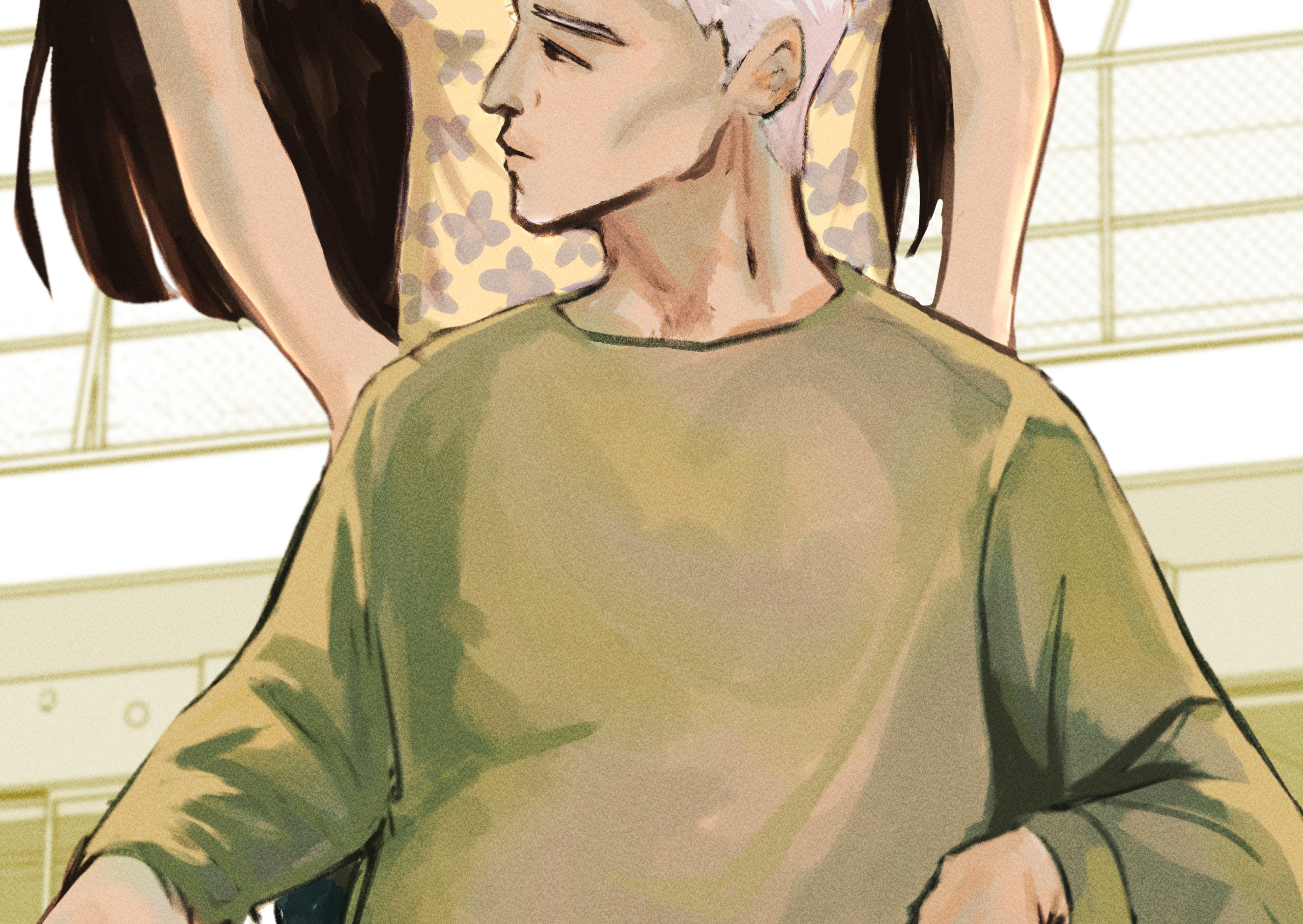
“Oh, of course,” she said, looking pleased. “You usually resist when I try to do anything like that.”
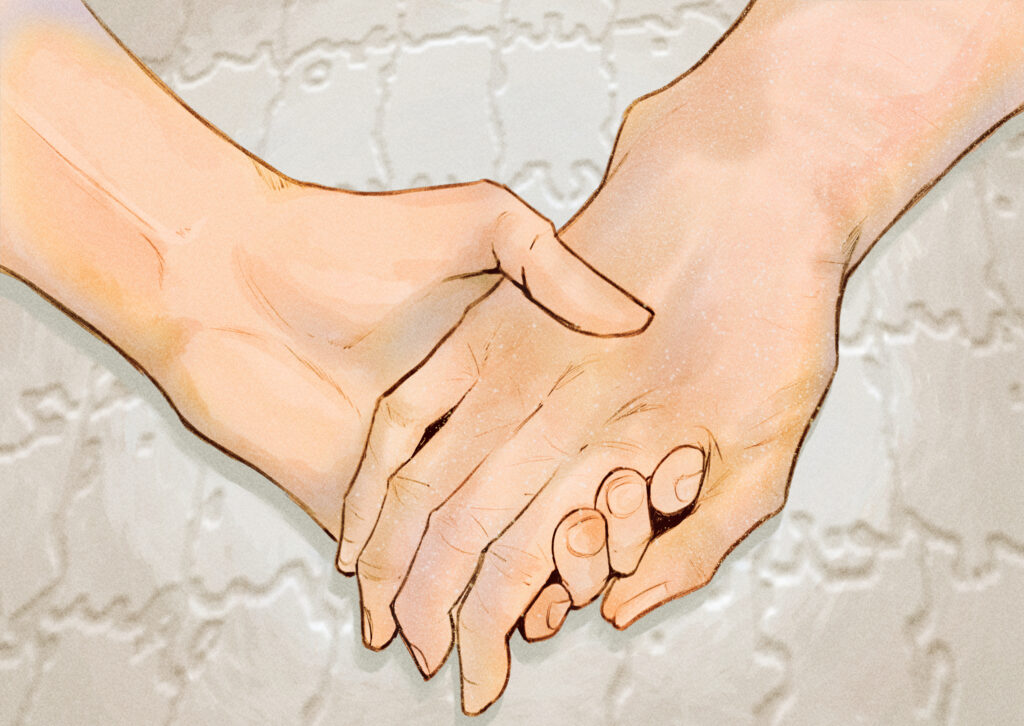
When we passed by the mirror again, I looked presentable. I thought I might as well start taking note of my appearance if I was going to be on display. I was feeling less and less human. Less and less connected to the human world. I couldn’t rotate my neck enough to see Liza but when we got in the elevator and she stood next to me, I reached out and took her hand. She flinched at first but then returned my gesture with a reconfirming grip.
The basement was cool and dim with furniture set up haphazardly throughout the open space. Several guardians worked out in the gym area while their antiques listened to a popular podcast and worked through our recommended stretching regimen. A short corridor led to a series of garage-sized storage units. A row of sleeping chambers about the size of jail cells lined one wall of the boxy room. I spotted Jenna standing next to her caretaker, a young man with lustrous black hair pulled into a bun who looked like he worked out regularly. I tried to remember why Jenna and I had broken up, or even how long we’d dated for, or even one instance of us copulating, but the memories refused to surface. In truth, I barely recognized her, and I don’t think this was because of how different she looked. But my heart picked up on something, because it started pounding faster, perhaps a dozen beats a minute.
“There’s someone I want you to meet,” Liza said. “I probably should’ve introduced you before.”
I barely registered what Liza said as she pushed me straight towards Jenna. I put my foot down again. Liza stopped and looked at me. I gestured for her to help me up. I stepped behind the wheelchair, leaned into the handles, and walked slowly forward. The man at Jenna’s side made a funny face.
“That’s Carlos next to Jenna,” Liza said as we neared. “He’s my boyfriend.”
I stopped walking. Why hadn’t I ever asked if Liza had a boyfriend? I guess it wouldn’t have mattered. We had what we had, regardless of what went on outside of her caretaking hours. Carlos came over, pecked Liza on the cheek, and reached out a hand to shake mine. He waited patiently as I slid my stiff fingers into his warm, padded palm.
Liza told me about Carlos, but I couldn’t concentrate. Jenna approached us from her position along the wall. She moved better than I did. She had a certain grace to her, even if she still exhibited the robotic shuffle that antiques have. She stopped a few feet away and we both observed Carlos and Liza. He was clearly over the moon for her, and they unabashedly flirted. I looked at Jenna, thinking it would be a good time to bring up our shared past. I was certain she’d remember details that had slipped away from me. As I watched her, I swear I could almost read her mind. At a break in the conversation, I prepared to speak but Jenna cut me off.
“My name’s Jenna,” she said, her voice languid and husky. Her head tilted ever so slightly as she reached out her hand towards me. “What’s yours?”