
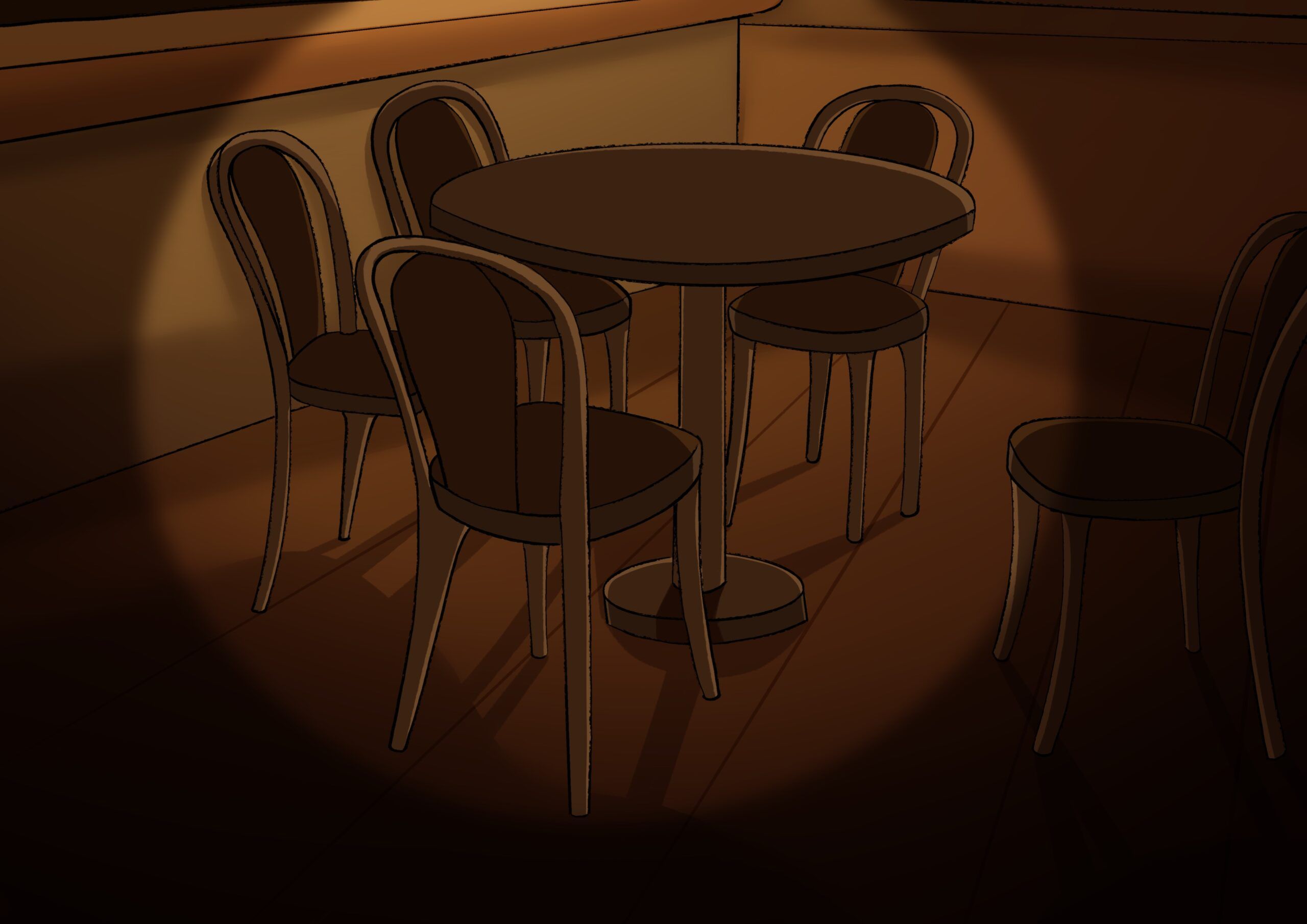
At first they had gathered as a small group every Thursday evening at Rowley’s on the pretense of discussing their own writing. In retrospect, Geoff, Paul, and Parvinder hated this suggestion for its earnestness—especially when they remembered how a couple of the attendees had once dared to bring something to read aloud—but fortunately the meeting had become after a few months a place for greater discussions about more trivial subjects. They met at Rowley’s because although it was unfashionably close to Piccadilly Circus it employed an aggressively bisexual waiter who would flirt with each of the boys, even septuagenarian Geoff (age 53) with his faintly botched blepharoplasty. And they had decided on Thursday because it was the one evening they all had free; that uniquely un-noteworthy day whose name is easiest to forget when learning another language, as Paul once quipped, elided so slickly between Wednesday (“an event, so often stripping off all flesh, exposing the soul to the living catastrophe”) and Friday (“the elastic Vendredi or bombastic Pyatnitsa that promises forgetting”).
“And so you summarise a canon novel—could be anything, from plot to characters—as if you hadn’t read it, from purely the title,” Parvinder explained for the fourth attendee, Stephen, who, in the middle of a shouty breakup with his older boyfriend, had missed the previous two evenings.
“Catcher in the Rye: a story about a baker from Kansas who discovers his wife getting fucked in all holes by the farmhands,” coughed up Paul, fiddling with the edge of his napkin, “although, you know, a bit cleverer than that.”
“Ulysses,” said Geoff. “That book, published five years ago, about a letting agent in Harlow who discovers under a tenant’s floorboards a portal to a whole other world ripe for exploration… but boards it up to preserve the resale value.”
Out of the group, I had first met Geoff, as most do. He was (and I suppose still is) magnetic: handsome despite his advanced age, with a deep commanding voice, lyrical and lilting, that would quiet a group with just the opening extrusion of air; a mock-hesitant hitch to be followed by ideas fully formed, as if fruit plucked from the branches of some golden tree and then diced filigree into a dessert: rarefied, witty, gleaming with specks of innuendo. He would have called himself ironic, cynical and cold… if these weren’t to him gauche words, adolescent.
As the only man in London to still insist on using ‘sofa’ over ‘couch’ or ‘lift’ over ‘elevator’, Geoff had a sinecure at Goldsmiths University and two erotic novels published in addition to a travelogue on shuttered gay saunas across the Middle East (since translated into seven European languages, as well as Korean). He was a regular contributor to the TLS, LRB and NLR.
He had a couple of years before taken an interest in me, though the academic sort. After the crisis of my early thirties I had pushed aside my work enough to learn a couple of ancient languages, and wrote a long essay for an under-read zine on the question as to why the Graeco-Roman Muses had conspired to bestow their divine wisdom only upon those in the ancient Mediterranean who had means, had property, had slaves. Verbose and effete—something that wouldn’t have gone unnoticed in the 1860s—it stuck out to Geoff as showing a bit of talent, and he approached me one day in the London Library stacks to suggest that I should meet him for lunch. He was, he promised, interesting. I was, I admit, flattered.
I had by this point lost my job, but was thankful at least that it had ended so definitively. One week, after seven years of consistent labour, I simply stopped turning up. And nobody noticed. I kept up with the work remotely over a couple of hours in the evenings, but eventually steeled myself to do less and less. And to begin with, it had been if anything a successful decision to take professionally: the financial predictions I made on the couch outperformed any I had made prior, especially those that made use of the usual elaborate mathematical models I had long come to doubt, suspecting they only superficially resembled reality, like the complex and right-seeming equations medieval scholars made to explain the orbit of the sun around the earth. And as a result of this success I was awarded a significant bonus, as well as a sliced geode atop a plaque. But as it sat there on my desk for several weeks the rock drew attention to my absence. Then, in a final fit when fearing the unknown I manically tried to claw back my role I lost a hefty chunk of the fund I was promoted to manage (incidentally using the old models, by the way). They checked the keycard records electronically and I was, at last, found out.
Left with a small sum of interest to get by on, in the region of £50,000 a year, I decided that I wouldn’t apply for anything new. Given my dead mother’s ex-council flat was paid for and my (at the time) dislike of travel, cars, clothes—a dowdy frame, if nice tits—I figured I could live for the rest of my life on that amount. My husband, too, was still barely employed, though I needn’t rely on him.
As for Paul and Parvinder? Well, I can’t say I ever really knew what they did. In a kind of omertà, they refused to talk about it, surely because it would have been unforgivably boring and, as it were, not real life. In their mid-thirties, an on-and-off couple, I suspect they both worked long hours as higher-ups at Deloitte—or maybe in the civil service—yet could reliably be found every evening at whatever club, bar, sex party, drag show, play, show opening, or art exhibition you or someone you knew happened to be at, whether in London or Europe. Only once did I meet them outside of leisure, when I was speaking at a fintech conference. I caught them at the end of my panel, sitting suited near the back, avoiding all eye contact.
And all right I—Jessica, also there every Thursday—would soon hate them all. And for good reason: I had then bitterly loved them all.
“I’ll go, I’ll go,” Stephen then said.
“No, wait,” interjected Parvinder, placing his hand on Stephen’s wrist, “It’s not how it works. You are given a title otherwise it’s not much of a game at all. So, how about… War and Peace?”
“My God,” said Stephen, too quickly, “Easy that one. The newest Marian Keyes? About a spinster with a house in Surrey waging a battle with the council because she owns too many yapping dogs. She wins… to great applause.”
As Stephen stretched out his legs to the side of the table, he yawned, making clear through callow insouciance that he would rather be somewhere else. Yet I knew, since I quietly kept attendance on a spreadsheet, that like me he had turned up to every evening at Rowley’s without fail (though the previous two evenings excepted) and also like me seemed in the glint of a stolen glance or fumble of a clever phrase to show that he desperately thirsted to belong.
“I say, I say,” Geoff exclaimed then in mock-Geoff, as the waiter poured out another bottle of albariño. “I think a toast is in order.”
“Oh?” I whimpered, squirming.
“Yes, yes!” he continued. “Not content with her other deal, aforementioned a year or so ago—“
“Don’t tell me…” Paul said, cloying and generous. “I want to vomit I’m so envious.”
“A postmodern Marguerite Yourcenar sits right here at this table. Another collection set to be published, following—what is it again?—in the modern day footsteps of some long-dead emperor traveling across Europe.”
“If you keep this up,” I say, “I might read one of them to you all, here and now.”
“It’s funny, you know, because I have the review right here,” said Parvinder, nudging Paul, who awakened from his performative grief and rifled through his coat pocket for the clipping.
“Horatian odes,” said Geoff, snapping the sheet from Paul’s hand, “Have never been so SEXY. Nor has travel ever been so pointedly SKEWERED; travelers old and new so finely SPIKED…”
“I wonder who wrote that,” I say to the table, bowing mutely over my steak.
“Enough, enough,” said Parvinder, taking back the clipping and (I saw) folding it back into Paul’s coat pocket to the side of the chair. “No jumping ahead. It’s Paul’s turn now. And afterwards Jessica’s.”
I caught then some unsaid impression transfer between Geoff and Stephen which at the time confused me. I cleared my throat. “I suppose I’d go for… To Kill a Mockingbird.”
“My God, how dire,” sighed Paul. “Well, Harper Lee, wasn’t it? He was some tedious author of the postbellum South. Hicks, Jim Crowe, racism—Alabama. Something about cousins who fuck their neighbour. A lawyer called, fittingly, Atticus Finch.”
“Very funny,” said Geoff. “But not really in the spirit of things. Yet here we come to—what was the suggestion you had Stephen?”
“Giovanni’s Room.” He smiled while softly elbowing Geoff under the table (though perhaps again I misremember).
I am ashamed to say that, at the time, I hadn’t read it. Truly hadn’t read anything about it, in fact. I knew it existed, as it did then in my mental archive, somewhere between Ezra Pound and Naked Lunch… but more as a dull ceramic pot one might pass over in a cluttered museum than anything desirably living or as it were to be read. I was even confused for a moment as to whether it had been written by Ralph Ellison or James Baldwin, both of whom I, perhaps in a kind of barely conscious Powellism, had reduced to authors of works to be ranked just above genre fiction; historically, perhaps politically important, but stylistically irrelevant. And then in a double shame I clocked that this was indeed how as a writer people, even or especially these people, or so I feared, treated me. Had treated my work. As feminine fiction written by a woman. Dainty, aristocratic, sentimental, ponderous, imitative… or one of thirty-thousand other synonyms for female.
So I blushed. And so to avoid the social catatonia which was fast drowning me, in the spirit of the game I hastily went for something as far as I could imaginably expect from a novel written by a black, American author sometime between the 1940s and 1960s.
“James Baldwin,” I stuttered. “Giovanni’s Room. Uh, a—set in a European city after the Second World War… a white, American Dorian Gray works his way through the gay underworld. Meets a beautiful man, Giovanni—”
“—but that,” Parvinder interrupted. “That’s the actual plot… again.”
I would like to say that I noticed each of their responses to the stonking faux pas, but after that first turn of my head—realizing through their expressions the depth of the preposterous and impossible mistake I had made—over my eyes fell a film, thick and hot, which I could only remedy by clamping them shut for an uncomfortably long time, until finally Geoff, laughing, broke the mood and signaled to the waiter for sticky toffee pudding.
Less than a week later, as the London spring grew milky, Geoff invited me one evening to eat and drink in his small, south-facing terrace garden, which was shaded by a row of barberry bushes. He pooh-poohed that last Thursday, which broke up soon after my mistake, saying that it was nothing to be ashamed about; that anyone could make a similar one. That, by the way, there were “actual, serious things in the world to get upset about. So you hadn’t actually read the book? So you, at best, repeated a joke? So what?”
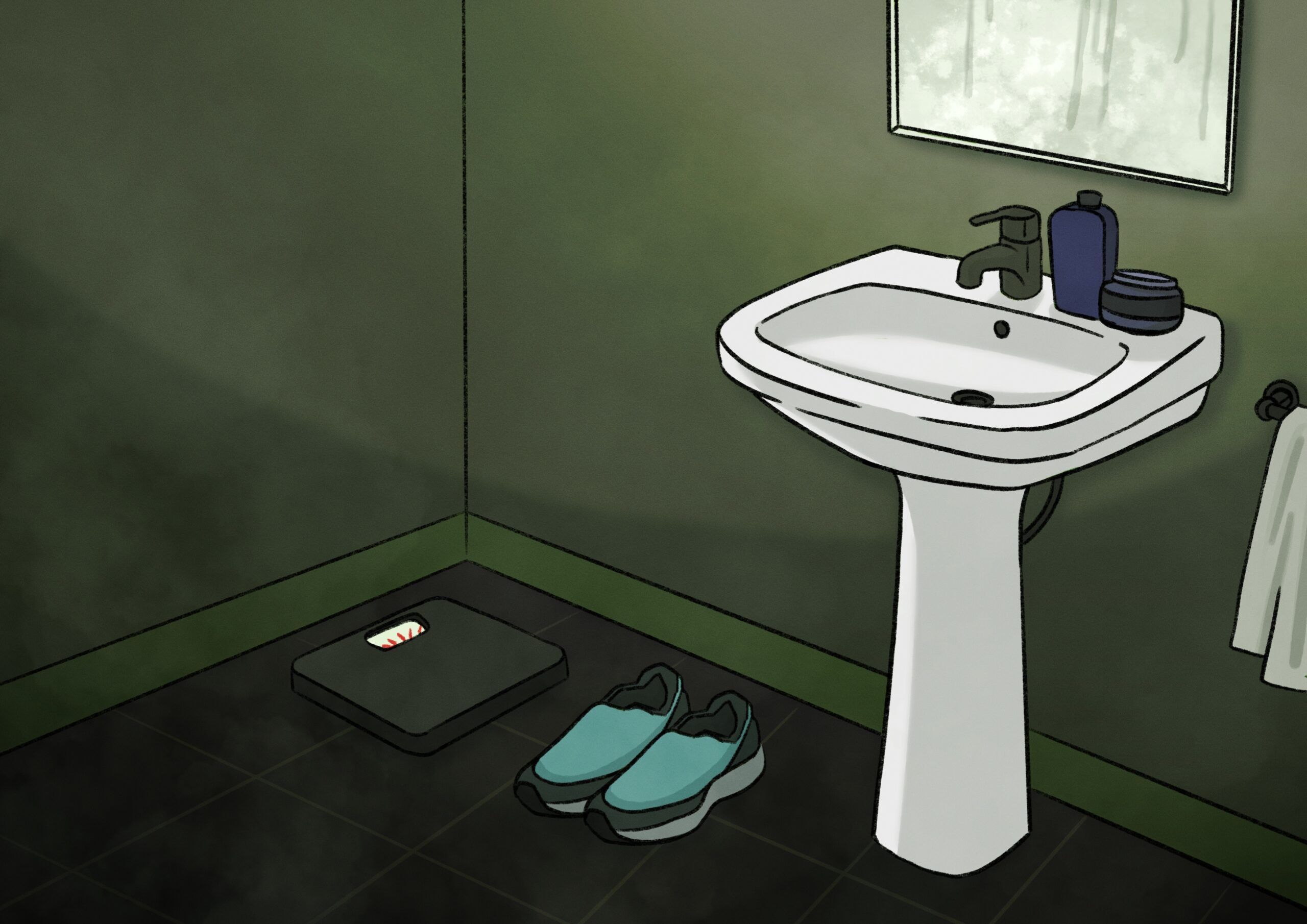
Yet even though I know I am prone to seeing events as far worse than they in fact are, I understood through this avoidance of the subject that what I had done was, in fact, serious and probably unforgivable, a wooden knot on my mask that one couldn’t simply gouge out. After all, the mistake lay in trying to pretend to have read the book at all instead of just accepting and admitting plainly—to acceptable hah-hah derision—that I was almost entirely ignorant of not just its content, but its plot and characters. I also understood that Geoff should have rewarded this, my lesser counterfactual peccadillo, not with kindness, but with exaggerated and (for a short while at least) frequent mockery; a witty repetition of the events; an embellishment of the details. And if I were Stephen, Paul or Parvinder he would have packaged all of this for me into a self-deprecating anecdote to be rehearsed and repeated in company. I couldn’t help but feel that this unusual kindness of his was, therefore, a cruel and intentional insult.
Of course Michalakis, my husband, had comforted me similarly; he genuinely believed in that pseudopsychiatric tone common to the ever-online that I was ‘overthinking things, catastrophising.’ And yet in my quiet panic that week I came to suspect that he too had niggling doubts as to my intelligence, my presence of mind, and that he avoided sharing with me his true thoughts only because he was, to some extent, financially reliant on me.
I was, in short, a mess.
So after downing several glasses of cava, not able to hide it at all very skillfully by the end, I begged Geoff to be honest about what he thought, to explain frankly the depth of my humiliation. I was relentlessly, humorlessly earnest. On his continued silence, I begged him again to be as honest as he could be. That his approval, the approval of his friends, sincerely mattered to me. Yet even then he demurred, instead coming up with something—the rehearsed explanation—which was laughable, but also, it turned out, true, and which would come to shape the interpretation of my fumble for posterity: Stephen, the young penniless student, had lost a significant sum of money that night. And what was to be inferred? That this was my fault.
Rather than laugh it off, as I should have, in my weakness I prodded further. “What do you mean?”
“It’s really nothing,” Geoff said, “It’s all my arrogance, I suppose.”
“Tell me,” I said, tearily.
“I don’t think you’re in any state—look, it’s not even so… He’ll get over it.”
“What you’re saying makes no sense. How could he possibly have lost money?”
Stern now, Geoff looked away and winked into the sun, for that instant making himself so hateful to me that I winced at my stupidity in even coming here when I could have been anywhere… perhaps having a picnic by the Serpentine, a stupid suggestion which popped into my attention, as if it were something that, like visiting Billingsgate Market, people in London do… but which had in that moment a shallow logic and broad appeal. I must have then voiced the suggestion—or Geoff somehow intuited it—because he looked, after returning to my gaze, mildly shocked. He opened that glorious mouth of his: “He bet me two grand that you wouldn’t fall flat on your face. And yet here you are.”
I got up then, a little sozzled but clear-minded enough I thought to make it to the hallway. Yet halfway there, I stopped in the living room and meaningfully—loudly, demonstratively—knocked into one of Geoff’s elongated floor-vases from Gabon or Senegal, or some other African country, which rattled satisfyingly in its strange wire holder.
“Can we get back to normal now?” he said, appearing quietly at my side. “Stephen will get over it.”
“Yes,” I said. I patted myself down and adjusted my frock, ready to go. “I’m sure he will. When was Sitges again?”
“End of August.” He smiled. “Are you bringing Michalakis?”
“No,” I said, and then got up off my knees and opened the front door to the hot perfumed air of Richmond Avenue while Geoff handed me my bag.
In the cab home that evening, I determined to make good. And if I couldn’t do this through my appearance of intellect, which I had clearly relied on too strongly, or be carried by the prestige of a respectable career, which I had jettisoned, then I would do it through looks. To improve these was, after all, something which I had intended to do over that several months before Sitges anyway, the original invitation to which—as a place from which women and their straight boyfriends are usually excluded—I felt had, before my mistake, demonstrated my elevation in Geoff and the others’ esteem… and which could now be the means of my redemption.
Michalakis was not upset that I wasn’t bringing him along. It was, to be honest, not “his scene.” He said he was finishing up his part-time PhD thesis, anyway, which had something to do with postcolonialism in anime. I knew about it in broad, of course: it was a project that had taken him the better part of five years and meant that I had to vacate the lounge more frequently than I would have preferred, while he watched, once again, Code Geass or one or another of Evangelion’s (somehow clunkier) spin-offs.
I started going to a nearby Barry’s every morning at an impossible hour, knowing from prior failure that only workouts at 5.30am, when I was practically anesthetized, would stick. Cryotherapy, hair removal and non-invasive beauty procedures became things I could talk about encyclopedically, as if I had always known about them instead of hastily researching them online. I hired a personal shopper who claimed on her website she had worked with ‘minor celebrities,’ which at another time would have made for a fun anecdote—something to be laughed at with Geoff in his perfect, weedless garden—but in my rush persuaded me. I even considered what they call ‘augmentations’ to the jaw, brow, buttocks, pubic area and more, and would perhaps have gone ahead with all of them if the recovery time hadn’t been prohibitive, the swelling taking several months to a year to shrink back.
To make the eventual effect more pronounced, I avoided Geoff, Paul, Parvinder and Stephen as much as possible—and that included, of course, staying away from the Thursday evenings at Rowley’s. It was hardly difficult to do. I had decided to eat and drink little that whole summer, anyway, something I found easy enough to do ever since a fashionable spell of anorexia in my late teens; and since it was unlikely that I would be missed by the others there, I hardly missed it myself. Of course, you may think all of this ridiculous. It was no doubt ridiculous. And yet we all do ridiculous things. And if I had the means, I reasoned to myself, it was no loss to pursue all of this. I still think so.
And after so much effort, I thought—given it was a short flight to Barcelona, and the upgrade would only cost a small amount—it was, as well, no great luxury to fly business class (which on British Airways is nowadays fast becoming a necessity). Yet knowing Geoff, Parvinder and Paul were already in Sitges, their having arrived a couple of days before, I was surprised to see Stephen join the same flight and shuffle past on his way to economy as I got myself ready in my seat. He didn’t recognize me, I thought, and I hardly caught him.
“My God you’re skinny,” said Paul as I levered my suitcase out of the taxi once I arrived at the villa, a viciously edged thing rooted like a serrated muscle on the cliffs above the golf course. Parvinder was out for a cruisy stroll down near the Playa del Muerto and Geoff picking up Stephen from the airport, so it was just me and him by the pool for a couple of hours from then on.
“You’re serene,” he said, looking me up and down on the deckchairs.
I lowered my sunglasses then to reveal my polished brow. “You can’t tell anyone, but it’s botox.”
“Amazing,” he gasped. “You can hardly see anything.”
“I’ll send you the name of my clinician,” I whispered. “She’s one of the best. Used to work on the actresses for the later seasons of Skins. But how are you?”
“Not great,” he said. I pushed him ‘to spill’ in that exaggerated, camp way that I practiced so well (and I don’t say this meanly: I have often wondered whether I am in fact a gay man). He was at first reluctant, but after a little pushing enough gave way. “It’s work.”
“Oh,” I replied. He then proceeded, uncharacteristically, to tell me about his issues at work: his colleagues’ pettiness, the promised but undelivered promotion, and the agonies of having to work for a boss who treated very seriously her collection of executive MBAs (Insead, Stanford, LSE, with more to come). And he didn’t stop even when all three of the others arrived within five minutes of each other, gave their bisous, and plonked themselves down beside the pool.
Slowly detaching myself from Parvinder, who turned away from the others and lay wretchedly on his side, I could see that it looked too like Geoff himself was in a mood, no doubt so I thought because of the sullen Stephen, who looked even worse after his flight, with a rosacea-type flush and a clutch of acne on his chin which he couldn’t stop pawing at as he dangled his feet in the pool. The ends of his frayed jeans (not, I think, a deliberate fashion choice) soaked up the chlorinated water.
I sat down beside him.
“Was that you I saw on the plane?” I asked. He looked up at my sunglasses. I turned my head. “My God Geoff, you could have gotten the boy an upgrade—with British Airways it’s otherwise torture.”
Stephen let out a little sigh but was otherwise silent. Geoff nodded clemently, uncorking a bottle of vinho verde. “Took us a long time to get here—how’d you manage it?”
“Taxi.”
“All the way?”
“All the way.”
“And you didn’t think to give Stephen a lift?” He asked then, plainly, sourly. Of course I could have given Stephen a lift, but the two of us were hardly friends—mere acquaintances really—more alike in our shared silences at Rowley’s than anything else I could discern. With no shared interests, apart from perhaps Geoff, it would have been more than a little uncomfortable for each of us to have shared in the other’s company, stretched out as the journey would have seemed by an unfamiliar road.
Geoff cleared his throat. “It was a pain getting to-and-fro, let me tell you—“
“Leave it,” Stephen said. “It’s not a problem.”
Apart from this hiccup the remaining conversation went well. The heat of the late afternoon sun eventually gave way to a slight cool breeze that drove us all inside—after numerous asides about how we were really spoiled, and that even a supposedly ‘cold’ gust like this in London would be considered balmy—where each of us unwrapped the catering and set it all up on the long dining room table. And then everything was eaten. We were all drunk by nine, and as the sun started to set behind the villa I thought that I was doing quite well for myself: exuberant in ways I had not managed to be before, at least among this crowd, as if the burden of impressing everyone there had, in my earlier humiliation that spring, evaporated. Instead, I felt I could quite well enough rest my confidence on my appearance, my weight, my tanned, braceleted forearms; something unusual to me, as someone who had before this point never really tried to look good, to garnish myself with nice things, to be, really, an external spectacle as opposed to a diminutive, woolen, cerebral one. I was in a word monstrous and felt good being so. I wasn’t sure if I would return to Rowley’s, but was increasingly fine with either outcome.
And then Geoff spoke, in response to some frivolous comment I made about a rundown bus stop outside my flat, as well as the cast of weirdos who regularly waited there.
“Well, I have to say it… but really you should have given him a lift Jessica.”
“Who?” I asked. “Oh, Stephen. Look I’m sorry but it didn’t cross my mind, honestly.”
“Well isn’t that a problem…” Parvinder muttered.
“In fact, I think an apology is in order,” said Geoff, hands open like some prophet to wretched children. “No foul—just apologize.”
“For what?” I asked, still exuberant. “It was a genuine mistake—an oversight really.”
“What Geoff is trying to say, really, Jessica,” Paul piped up from my left. “Is that Stephen has had a hard time, couldn’t even come to Hampstead Heath the whole summer because of bonafide pneumonia from that awful HMO he lives in now…”
“And what has that got to do with me?” I asked, getting fiery now in ways that I couldn’t have imagined being before, whether it was from resentment, or arrogance, or that defensive spikiness of character that had for all my teenage years made me unlikeable.
“We talked about this,” Geoff whispered to me now.
“Ah, the bet!” I said, a little too loudly. “It makes no sense. Indeed, I fucked up with the book—for that I apologize—but I would think each of you has done worse. And besides, there was no need to keep Stephen to it, Geoff. I mean, my god, you’re a middle-aged man.”
“There was no need to fly business class either,” sniffled consumptive Stephen.
“I don’t want to get into it too much,” said Geoff. “But really, it needs said out loud I think, and then we can all move past: Jessica, I think you should apologize to Stephen—and while we’re at it maybe consider helping him, alongside all of us I’m sure we agree, and get him out of that dingy flatshare of his.”
The absurdity of it all was too much: that I was somehow responsible for Stephen’s minor deprivation, as opposed to Geoff, who had placed a bet he knew Stephen couldn’t afford, and even Stephen himself, who had after all chosen to leave his wealthy boyfriend. Crassly, I started then to see Geoff not as a deity, but an ignorant old man; the sort of old literary queen—perhaps a former trifling academic or archivist—who ends up lugging their groceries behind them in one of those cloth trolleys along the high street of some shitty university town. I excused myself and slipped into the kitchen.
Pouting with rage I didn’t notice at first that Paul had left his phone behind on the counter by the sink. I restrained myself too when I did notice, but not for long; it had been a running joke that Paul never locked his phone. And so when I saw the group chat I made sure the door was firmly held and began to scroll up.
Everything was there… that is, everything but me.
The prior mutual assistance pact made without my input, into which I was to be coralled, the jokes and minor insults. The literary criticism, as well as judgement on a film or television show here and there. The book recommendations. The often funny and sometimes crude humor. Links and memes and calendar invites aplenty. Rowley’s was mentioned frequently… but even as I scrolled back to that evening there was not a single mention of me (and I scanned for my name, or variations of it, for a good five minutes all the way back over two years’ worth of messages).
Simply enough, I had not once been brought up.
I would like to say that, in a harumph, I had my revenge. But putting down the phone carefully where I found it I slowly cracked open the door and headed to my room, fittingly near the front door on the ground floor of the villa. I hadn’t yet unpacked, so all I had to do was grab myself a shawl, clasp my luggage shut and wheel it out the front door… which in my cowardice I didn’t even slam, instead clasping it shut lightly, holding down the handle so that not even the latch scraped the doorjamb until I let go and the mechanism popped silently into its slot.
On my long way down the hill I saw some other gay men beneath a row of black pines, a beautiful, soft scene that reminded me of that Bournemouth poem by Verlaine.
Hearing me as I clip-clopped past they broke apart, stepping into the street-light. They watched me, I could tell, as I walked by and as soon as I turned a broken wall—just out of sight—they laughed.