
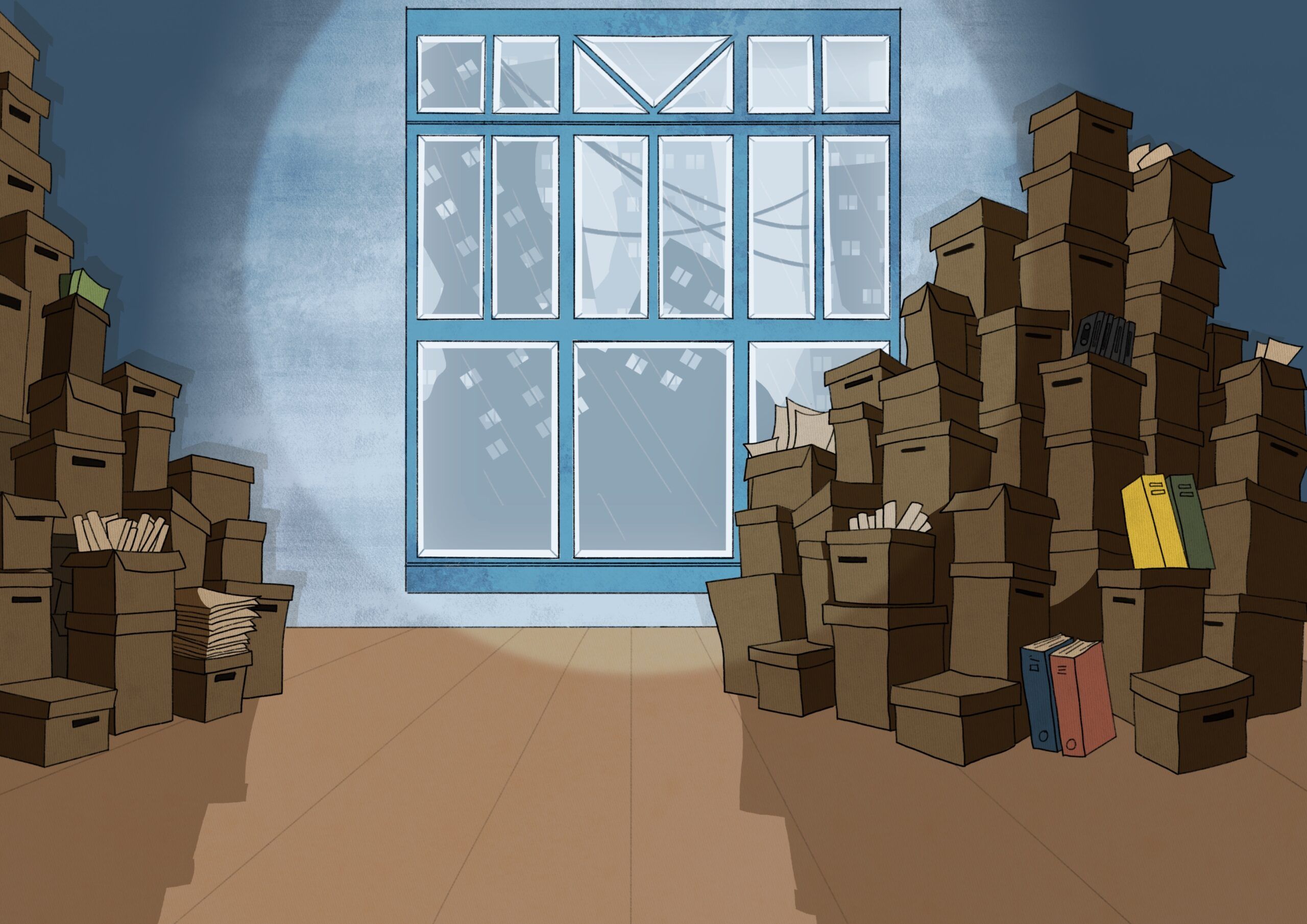
In the invisible city, there are invisible bridges. Someone is recording their names before they fade into the forgetting.
The Bridge of Sound
The number 42 bus had a specific rattle—metal on metal, a flat resonance in E-flat. It connected the hospital district to the university, carried students and the dying, six AM to midnight. She archived seventeen recordings. The route flooded in May. The depot closed in June. Now the street is silent except for the low hum of air conditioning units fighting heat they cannot defeat. A frequency that connects nothing to nothing.
The Bridge of Water
For fifty years, the fountain ran. Bronze woman with her urn, pouring an endless stream into the basin below. It was the piazza’s pulse, what made the district liveable—proof of abundance even as the aquifers dropped. She photographed it monthly for three years. In the first, water arcs cleanly. In the last: white bowl, empty. Yellow dust coats the statue’s shoulders. The pipes no longer bridge the deep earth to the air.
The Bridge of Seasons
There used to be a crossing between winter and spring. Pale February light giving way to March green, the city softening at its edges. She has recordings of April rain on cobblestones—a file she hasn’t opened in eight months. Now there is only summer extending in both directions. Extreme Heat Event: Day 14. Day 89. Day 203. The calendar still marks months, but they no longer bridge anything. Time has become a flat, hot sameness.
The Bridge of Memory
Three years ago, winter morning. Leo pointing to a hairline crack in their bedroom plaster. “It has character,” he’d said, smiling, pulling her close. She sees it now as prophecy. The first fissure through which the future began to seep. By spring, the crack had branched. By summer, a small chasm. By autumn, Leo had accepted the job in Auckland—green hills, full reservoirs, a country still in the present tense. The crack is wider now. The bedroom is empty. Some bridges you don’t notice collapsing until you’re standing on opposite sides.
The Bridge of Departure
The airport still operates, though departures outnumber arrivals four to one. The trains run when the grid allows. The highways lead north toward cooler latitudes. The young leave first. Then the wealthy. Then anyone with options. Leo sent her photographs from Auckland—digital postcards from a world that still believes in future. To leave feels like betrayal. To stay feels like drowning. The bridge of departure crosses in only one direction.
The Bridge of Touch
She sleeps on her side of the bed. His side has become a repository for notebooks, camera equipment, hard drives containing three years of documentation. The gap between them now holds the apparatus of witness. She cannot remember the last time she was touched with intention. The city is full of people maintaining careful distance—heat makes proximity unbearable. Skin to skin requires trust in tomorrow. The bridge of intimacy has retracted, drawbridge raised against the siege of now.
The Bridge of Archive
She is building something. Not preservation—that ship sailed when the fountain dried. Not memory—memory implies continuity. She is constructing a bridge made of sound files and photographs, metadata and timestamps. A crossing for whoever comes after, if anyone comes after. So they can know what was lost. Know the exact pitch of the church bells. The particular green of ivy before it browned. The shape of water in motion.
But she understands: archives are not bridges to the past. They are monuments to the chasm. Proof that a crossing once existed where now there is only air.
On the Nature of Bridges
The invisible bridges are not lost to sense. They persist as negative space, as phantom limbs. The mind still reaches for the sound of rain. The body still anticipates the cool of October. We are creatures adapted to crossing. When bridges fail, we reach into empty air, the cool memory of shelter from the two sides of burning shore.
A bridge is a wager against forgetting. Against losing connection between things that normally cannot touch. This is the cruelty of bridges: that we remember them so precisely. That we carry blueprints for crossings that no longer exist. The fountain’s specific splash. The exact green of spring. The weight of a hand on your hip in February darkness.
To document the bridges is to build new ones made of grief. To say: I was here when the world was still a place you could leave and return to. When distance was a thing you could cross rather than a condition you inhabited.
Perhaps this is the only bridge that remains—the one between what was and what we tell about what was. Elara understands this. Her archive is not preservation. It is translation. From the language of abundance to the language of loss. From the grammar of seasons to the syntax of endless, withering summer.
The Invisible City
From her window, she watches the piazza. The dry fountain. The cathedral sweating its dark fever-sheen. The city is forgetting its name, and she is its last fluent speaker.
Marco Polo described bridges of jasper, bridges suspended over chasms by iron chains, bridges where lovers met at dawn. But in the invisible city, the bridges are made of what is no longer there. The space where water flowed. The gap where seasons changed. The distance between I love you and goodbye.
She zooms her camera. Focuses on the bronze woman’s face, pitted and eroded. Clicks. Files the image: 47-fountain-empty-final.jpg.
Tonight, she will open her sound archive. Play back the April rain. Let herself cross that bridge one more time, knowing she cannot stay on the other side. Knowing that bearing witness is its own kind of crossing—a bridge built from goodbye to goodbye, from memory to the long, hot silence after.
In the invisible city, there are invisible bridges.
And she is the last one walking them.