
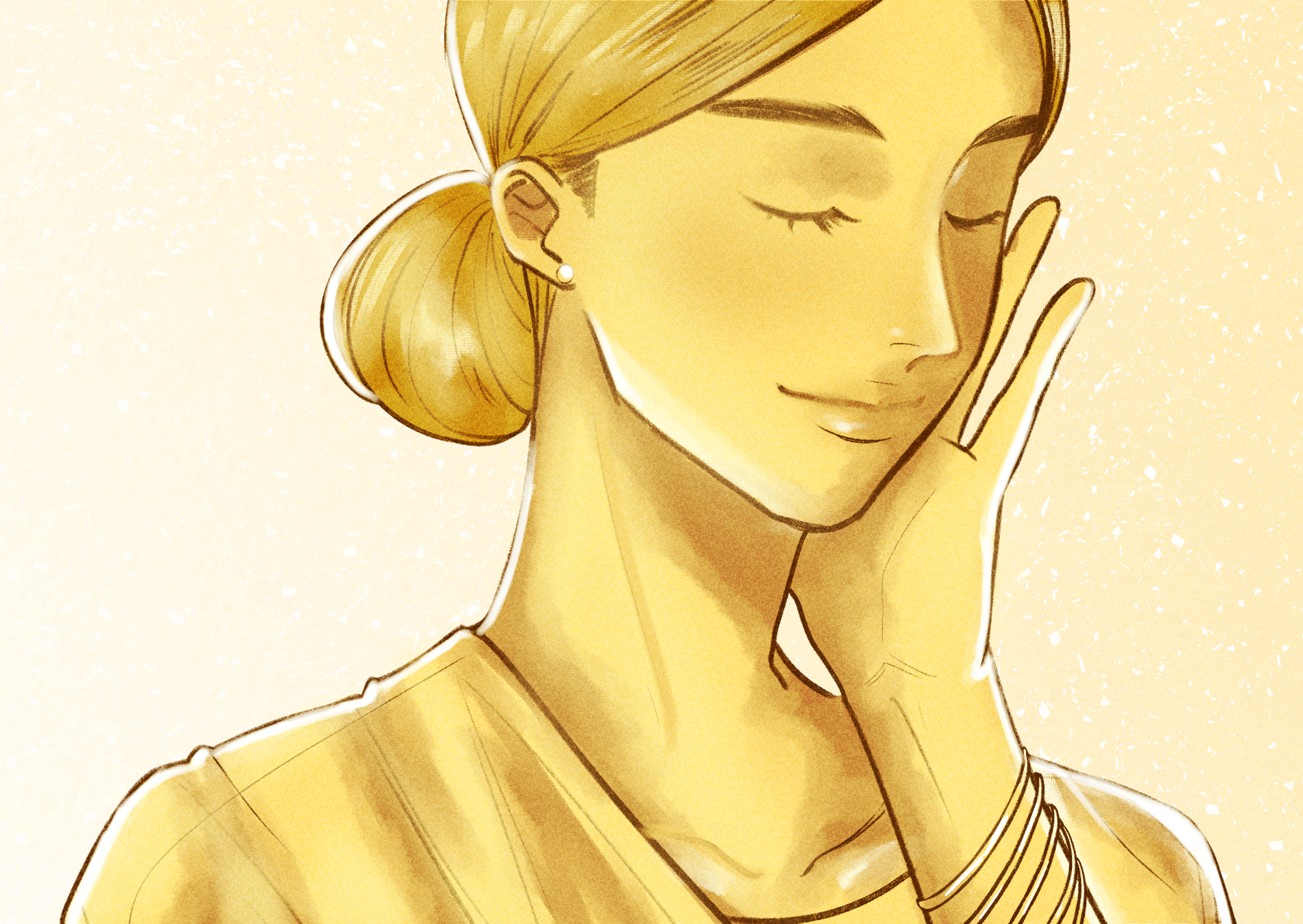
Gold learns early
how to survive pressure.
So do women.
My grandmother knew this
when the crops failed
and the earth cracked
like an old promise.
She loosened her anklet,
the one saved for festivals,
and turned its quiet shine
into grain and days.
Gold yielded.
So did she.
Her mother learned it differently-
the night the village locked itself in fear,
when shadows carried knives
and names were whispered like warnings.
She did not scream.
She opened the box,
counted bangles by weight, not memory,
and handed over her wrists
so the house could remain standing.
Gold is malleable-
it flattens without breaking.
Women learn this shape:
to thin themselves into endurance,
to lie smooth under force
and still reflect light.
Gold is ductile-
drawn into long, obedient lines.
Women learn this stretch too:
through famine, flight, childbirth, silence,
pulled across years
until the body remembers
what the mouth never says.
When women could not hold land,
or keys, or accounts,
they carried their future
on their bodies.
Necklaces listened to heartbeats.
Bangles memorised emergencies.
Gold became language-
spoken fluently in markets
when words failed.
It asked no permission,
needed no signature.
It turned beauty into survival.
Each time gold was sold,
it changed shape.
Each time a woman yielded,
she did too.
Neither returned unchanged.
Yet gold endures-
does not rust, does not vanish.
And women, like gold,
carry a resilience
forged by repeated transformation.
This is plasticity:
the science of survival-
how something precious
learns to bend
so that others may live.