
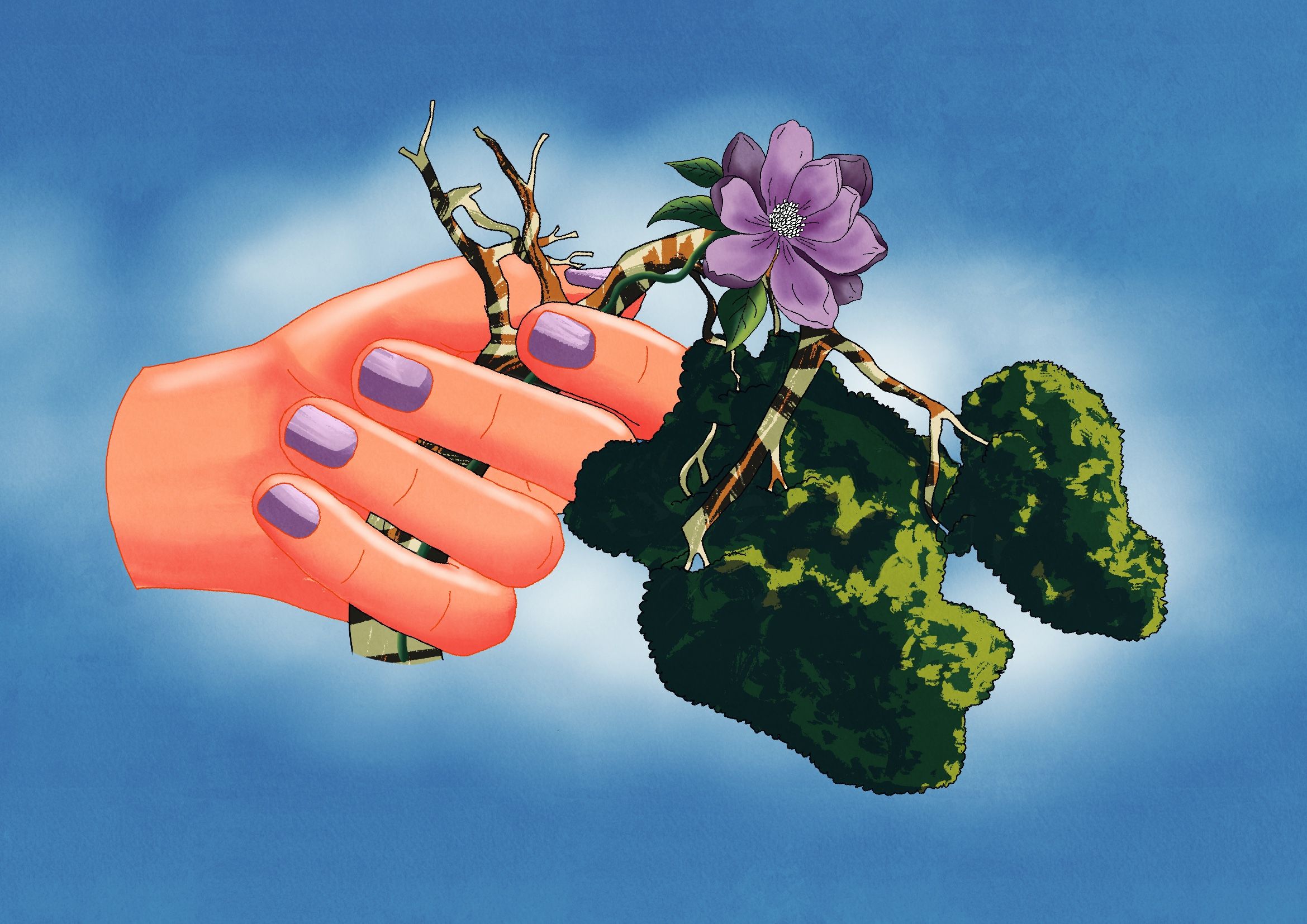
The ground hadn’t changed, the trees were much the same, only slightly larger, more filled out. It had been a lifetime since I’d been to the farm. A different lifetime. I stopped under the old eucalypt I used to climb when I was young and imaginative. The trunk was rotund and bent over like an elephant on its haunches. Even the bark looked like an elephant’s skin; wrinkly, thousands of aged lines in mottled infinite greys and browns. And charcoal, from the bushfire that burnt the farm years before. It was a survivor; outlasting everything so far. I think that’s why I felt the impulse to stop and place my hand against the bark, rough against my soft palms.
I picked up a crooked stick and drew shapes in the red dirt. The black ants abandoned their bending lines, spreading out in a frenzy. Another frenzied universe. I apologised to them for disrupting their paths. Ants, eucalypts, the scrub. They never did care what I said when I was out there. Having just come from the city, I found it comforting, sitting for a moment. A certain pressure, an all-consuming, watchful presence, was gone.
I hadn’t heard from my cousin, Jessie, in months and then I got a message from her on Instagram. From my dad’s side of the family, she was my only female cousin, and I’d always been closest with her. She’d helped make Christmases bearable, on the farm with eight rowdy boys. The long weekend was coming up and it seemed like a good opportunity to get out of the city. I’d decided I would make it a trip and visit mum on the way.
The drive from the property in Bundanoon was short but pretty. I remembered the trips driving down to go camping with my friend Blake. He and his mum would pick me up from home and drive me down to Kangaroo Valley. Blake and I would play corners, crushing the other against the car door depending on the right-hand or left-hand bend. The handle would dig into my side, and I’d pray the locked door held our weight.
That was about as much as I remembered of what I saw. Black trunks and bright green clumps lined the road all the way now. So much of the region had been burnt out. As I approached Moss Vale, rows and rows of low buildings sat on cleared land on the left. High fences and boom gates. Imposing signs. The new airbase. The Government had built several of these around the state in the last few years. They were supposed to have a dual purpose – to provide temporary accommodation for people who’d lost their homes, and more aircraft to fight fires. Two huge water-carrying planes sat on the tarmac like frozen birds. It was supposed to bring comfort to the locals but having an Air Force base here seemed intimidating. Everyone knew it was never enough. The more resources allocated the worse the fires and floods seemed to get. An endless chasing of tails.
I pulled up at the nursing home. There was nothing flash about it. The building would have been smart in its day but had decayed over time and hadn’t been renovated in decades. The lawn was sparse and yellowing next to the footpath.
In the foyer, a receptionist stared despondently at a ceiling-mounted screen. The staff wore the standard dark blue collared shirt and gender-neutral skirt of all state health employees. Ever since The Government bought out most aged facilities, things had become more standardised, including the gender-neutral uniforms. The downside was that now they were public, the buildings were just as underfunded as hospitals and waiting lists were even longer. Mum was lucky to be here; thanks to connections she’d made when she was a nurse. And she had money.
The receptionist pointed me down the hall to her room and I started walking, carrying the magnolias I’d picked up in town. It was only July but they were already blooming. My pink converse scuffed on the squeaky floor. There was a floral tinge in the air. Pictures of landscapes alternated with the same door over and over, landscapes still beautiful and unravaged. They looked unreal.
In the last room on the right, Mum was sitting in a chair that overlooked what should have been a garden. At the sound of my footsteps, she looked up and then turned back to the window.
“Look who still cares about his mother,” she said. Behind the snideness I could sense relief.
“How are you?” I asked, seeing the white pad on her left shin, which looked grubby and unchanged. She moved the leg in towards her and grabbed my wrist.
“I’m fine darling,” she said. She looked at my lilac-coloured nails as if she was pondering a complex moral dilemma. “They go with the magnolias!”
Acknowledgements like these were rare from her, so I smiled. After I came out to my parents they didn’t mention it again. Something, hovering and unsaid, left me thinking there was no point pressing further. They didn’t disown me and for that I felt like I couldn’t complain. My brother hadn’t spoken to me in years. I didn’t fit with his chrononormative life.
Sitting next to her, I nodded at her leg. “Is that okay?” I asked.
“Why don’t you ever bring someone down,” Mum said, staring across at me.
“Don’t change the subject,” I said. I didn’t want to talk about my love-avoidant tendencies right now.
She sighed. “The doctor hasn’t been since Tuesday. I think he’s gone back overseas. All these bloody fly-ins.”
I was disturbed, but not surprised.
“Can’t we talk about something nice?” Mum said.
I was about to tell her I had visited the old property but stopped, seeing she was in a rare good mood. The fire was always a traumatic subject to bring up. “I’m visiting Jessie. Driving down after this.”
“Oh,” she said. She never had warmed to Dad’s side of the family. Too many second-hand clothes and alternative views. When her sister-in-law married a ‘hippie’ she all but stopped speaking to her and my cousins, including Jessie.
I noticed the news was chattering on the screen in the corner of the room, a couple were being interviewed in a rural setting, a cattle dog pup weaving around the legs of the woman, tangling the leash. Below, the bright tagline read More dogs born without reproductive organs.
“I just don’t know how the vet didn’t notice when he did the first injections…” the woman was saying.
The man, probably a farmer judging by his tattered Akubra, said, “Can’t be good for the breeders.”
I watched the pup squirming, begging for attention, before it cut to a scientist in a laboratory.
“Things like this didn’t happen when you were growing up,” mum said suddenly. I didn’t know she’d been listening.
#
The drive to Kiama took an hour or so. In the car, I felt myself melting back into the present, like I’d been frozen in an uncomfortable but familiar shape for the past hour. I thought back to how we’d always had at least two dogs at the family farm; a pet for the house and a working dog. I felt now I took them for granted back then, an unquestioned part of farm life.
Jessie’s house was a few kilometres out of town at the end of a dirt road. It was surrounded by scrub and I always joked she lived in the middle of a jungle.
I arrived when everything was dark blue. The wooden door smacked as I got out of the car. Jessie was still thin but with short hair now. We hugged.
“Been a while,” she said.
“Christmas a couple of years ago?”
“I think so,” she replied. There was a look of exhaustion in her eyes, her cheekbones seemed more prominent than when I’d last seen her. But I brightened inside. Despite the change in appearance, hearing her speak, it was like barely any time had passed.
She invited me in and we sat on her couch, drinking tea, surrounded by old, intricate furniture items, many of which looked like they were from different countries.
“Still working for the gov then?” She asked.
I nodded. I’d worked in health policy for five turbulent years. An election that took six months to form something resembling a government, only after an unlikely deal with The Rainbow Coalition of independents.
“Are you still a geologist?” I quizzed her.
“Sort of,” she said.
Jessie paused. A bunch of corellas tore the air apart outside, so loud they could be on the verandah.
“We’re going to have to move soon,” she said. “This land has been classified as high risk for fires. It’s been good to make the most of it while we can.”
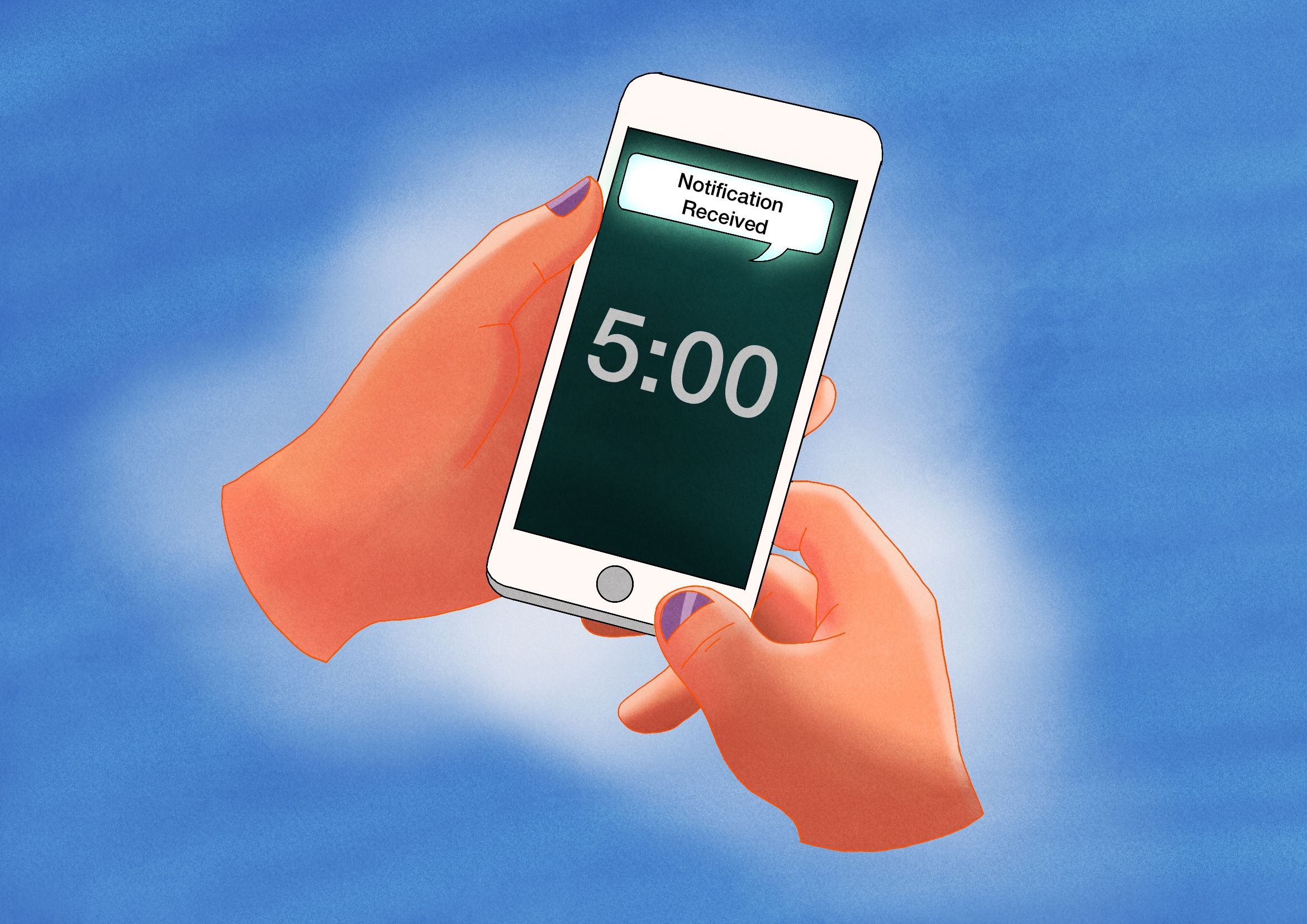
I looked out the window. There was only a small patch of lawn between the house and the scrub. A wisteria hung down from a wooden trellis outside the window, green, bulbous seed pods swaying in the breeze.
This was sad, it used to be her parents home. I knew the feeling, being uprooted, like a limb severed without your consent. At least she could leave on her terms, could say goodbye. My parents weren’t given that luxury.
“So, my message,” she said.
I nodded slowly, trying not to show my anticipation. I thought I knew what she was about to tell me.
“Well.” She paused again, clattering her cup down on the wooden coffee table. “You know how Sal and I got approved for IVF last year.” She stood up, holding her hands, fingers stretched out, against her stomach, and tapped.
At first I didn’t know what she was doing, then I realised what she was hinting at. Jessie was pregnant.
“Jess!” I said, too loudly.
She quickly held a finger to her lips and turned, pointing to a doorway behind her. She looked back at me, beaming now. I realised I was wrong by nine months. It appeared, like a conjured trick, in my mind; there was a little person in the next room. My cousin, my ten year old little cousin, who did drawings with me in my parents house while my brother was out working with my dad, was a mother.
“We decided to stay offline for the whole period. Too much advice that people try to throw at you, you know? It was hard, but living here helps.”
Before I could ask her anything she said, “Do you want to see John?”
“Absolutely!” I said.
The bedroom was shadowy, with a faint lightness pushing through the blinds. Jessie led me to a large white cot in the corner to the left of the door. I leaned over, not wanting to make a single sound, and my heart pushed against my chest. The baby was wrapped tightly in white and pastel lime green pyjamas, with little T-Rexes dotting the material, like a patterned cocoon. A little face poked out, all pudgy, pink and smooth. The skin looked so thin and fragile, the slightest touch might break it. I’d never been a fan of babies or even young children, but I was feeling a familiar deep warmth. Like it was when I met my brother’s kids.
“John sleeps well, never cries,” Jessie whispered. I couldn’t hear John’s tiny breaths, but could see the little nostrils shrink and expand.
We sat back in the living room. The cushions felt extra buoyant beneath me.
“So well-behaved too,” Jessie said. “No crying at all. The doctor said it’s normal for newborns not to cry for the first few days.”
Her eyes glanced down at the carpet, then out the window. I noticed now that her expression and demeanour seemed more urgent, than joyous.
“Sandy, remember when you came out to me, over the phone? We spoke for two hours then I told my mum that evening.” She smiled, gently.
I nodded, my head starting to pulse, like it was filling with something. She was speaking faster since we’d left the bedroom.
“Well, I need to tell you about something.”
I nodded again slowly. “Of course.”
“Well, after a few weeks when we went back for tests, he–John–still hadn’t cried once. No smiling, or even frowning; just makes small expressions with his face. Sal hasn’t worried at all; she keeps reminding me he’s healthy in every measurable way.”
Jessie hesitated, looking at me as if she was about to slap me.
“Our doctor insisted that we name him a more gender-neutral name, and mark genderless on his birth certificate. When we spoke to another obstetrician at the hospital, she said the same thing. Even the nurse unit manager said that was the right thing to do. They said it was ‘best practice’, in cases where the baby is inexpressive. They were nice about it, but insistent. Someone from the hospital rang us again yesterday, wanting an answer on the birth certificate. Sal thinks maybe we should just do what they say for now.”
I gave her silence again, in case she wasn’t finished.
“Even during my pregnancy period, when I had baby brain, I can now remember things more clearly. How the doctor discouraged us from looking at the sex of the baby, and a nurse kept reiterating how bad gender reveal parties were, how the new ban is such a great thing. At some point I think I even signed a form declaring we wouldn’t have one. Not that I ever would have.”
Jessie’s eyes were glistening, but no tears fell. “I don’t know what to do,” she said.
I found myself unable to speak, or to know what to say. I eventually told her I could barely articulate my own experience, let alone project onto her child.
I hugged her instead.
#
That night in their spareroom, the absolute silence of the scrub was loud. I couldn’t sleep. Instead, memories came and went like strange phantasmagoria on my eyelids. Mum telling me I was unreadable. Dogs being born without reproductive organs. John, in the cot. John’s taut, pink skin like a fleshy bag, growing, discolouring, expanding, contracting, wrinkling, from the beginning of life to the end. Weathering storms, fires, floods, until it looked like an elephant’s skin.
I thought about the assumptions made about me when I was born. The man I had to be like a mirage on the horizon, how my parents never questioned what the doctors told them.
#
The next day it was warm early and Jessie suggested we drive to Saddleback Mountain Lookout for lunch. Jessie’s partner Sal strapped John to the car seat. She’d worked late, and must have gotten home after we’d gone to bed. She was asking me questions about my job and relationships, to which I gave snippets; I didn’t feel like talking about myself.
From the lookout Jessie showed me the massive nuclear submarine dockyard at Kiama; giant grey blocks and sheds, a long L-shaped sea wall. Once a pristine yellow beach with crashing waves and surfers gliding in; now it was all industry and defence. Through the metal binoculars I could see three long slug-shaped subs half-submerged in the dock. She said these ones were the first that would carry nuclear missiles. I asked her how she knew and she said in her job she’d provided environmental advice to The Government on the coastal impacts of the dock.
Sal had John strapped to her back as we wandered around the platform. Every so often when Sal was talking to Jessie, I’d look at John, and John would look back at me. I’d make a face, open my mouth into a wide circle or blow air into my cheeks. There was no smile, but rather an inquisitive stare, little eyes scrunched, as though assessing me. It was an expression of a human much older and wiser.
At one point a dog was straining at a man’s leash near us, fur patterned with dollops of chocolate, ears thick and woolly like little mops. It sniffed near my feet, so I leant down and scratched the side of its neck, silky. I asked the man what breed.
“Frankie’s a springer spaniel,” he replied. “Pure.”
The man smiled, a look of pride that people often had when talking about their dogs. I noticed his jeans were stained with brown and what looked like black charcoal.
Sal and Jessie appeared next to me, making a little circle, Frankie looking up at each of our faces, anxiously delighted. Sal crouched to let John face the spaniel, and Jessie knelt beside, pointing out the dog. John reached out tiny pink hands.
Watching, I wondered whether Frankie was like one of the dogs from the news, but I stopped myself. I looked over at the car park and saw one other vehicle, a white ute with dirt and black on the duco, probably ash. Maybe Frankie was one of those dogs trained to find injured koalas after bushfires. John was examining Frankie, eyes round, arms moving outwards in different directions. Jessie held Frankie to keep the excited tongue away.
Later, when Sal was strapping John back into the car seat, Jessie approached my side.
“I got my maternity leave,” she said.
I looked at her.
“It’s less than what it used to be,” she said, quietly. I got the impression she hadn’t told Sal. “Every Government employee gets it now. Everyone on an equal footing, The Department keeps saying.”
I’d heard that slogan in my own Department. I remembered it from The Rainbow Coalition’s election campaign, real gender equality.
“It wasn’t enough to justify staying there,” she said, “so I decided not to return.”
“I’m so sorry,” I said.
“It’s okay, I didn’t like my job anyway,” she said, gazing off towards the greying sky, the dockyard. “I want to use my skills for something more optimistic.”
I told her that sounded like a good thing. The car door shut, Sal looking up at us. John’s little face, calm, in the window.
#
When I got back to Sydney, I fell back into my usual hyper awareness of other people, fear of being judged. It was hard to tell if it was coming from me or the city, or both.
My therapist said I still cared too much about what other people thought of me, about what role I had to play. I said it was hard when I didn’t know what I thought of myself. I thought about how in another life I was completely masc. I’d shed it like a skin, a skink dropping its tail. I liked the ability to change, to be different. But I felt the phantom limb like muscle memory.
I sat in the seclusion of my apartment, checking my phone, rereading messages from a guy I was dating but I’d called it off. I got bored and flicked open an app and messaged someone for a rendezvous. The anonymity of a fleeting encounter. When the hook-up was sorted, I tied my hair up and left the apartment.
On the way to the meetup, sitting in the leather seats and flashing lights of the rideshare, my phone vibrated, it was Jessie.
Sandy, I just wanted to say thanks for visiting this weekend. Just having you there made all the difference. We’re gonna stick with John as a name. We’re also gonna stick with male on the birth certificate. If they try to force it otherwise we’ll make a complaint
I steadied myself as the rideshare lurched around a back street of the Inner West.
Of course Jess. And that’s great. It’s your call, no-one else’s.
Except that it would be John’s one day. Or at least, we thought it would be.
The rideshare stopped outside a block of apartments. Ground lights made circular glowing pools along the pavement to the entrance. I realised I’d been to this apartment before. I walked to the door and pressed the number in the keypad, wondering who I was going to be tonight.
END