
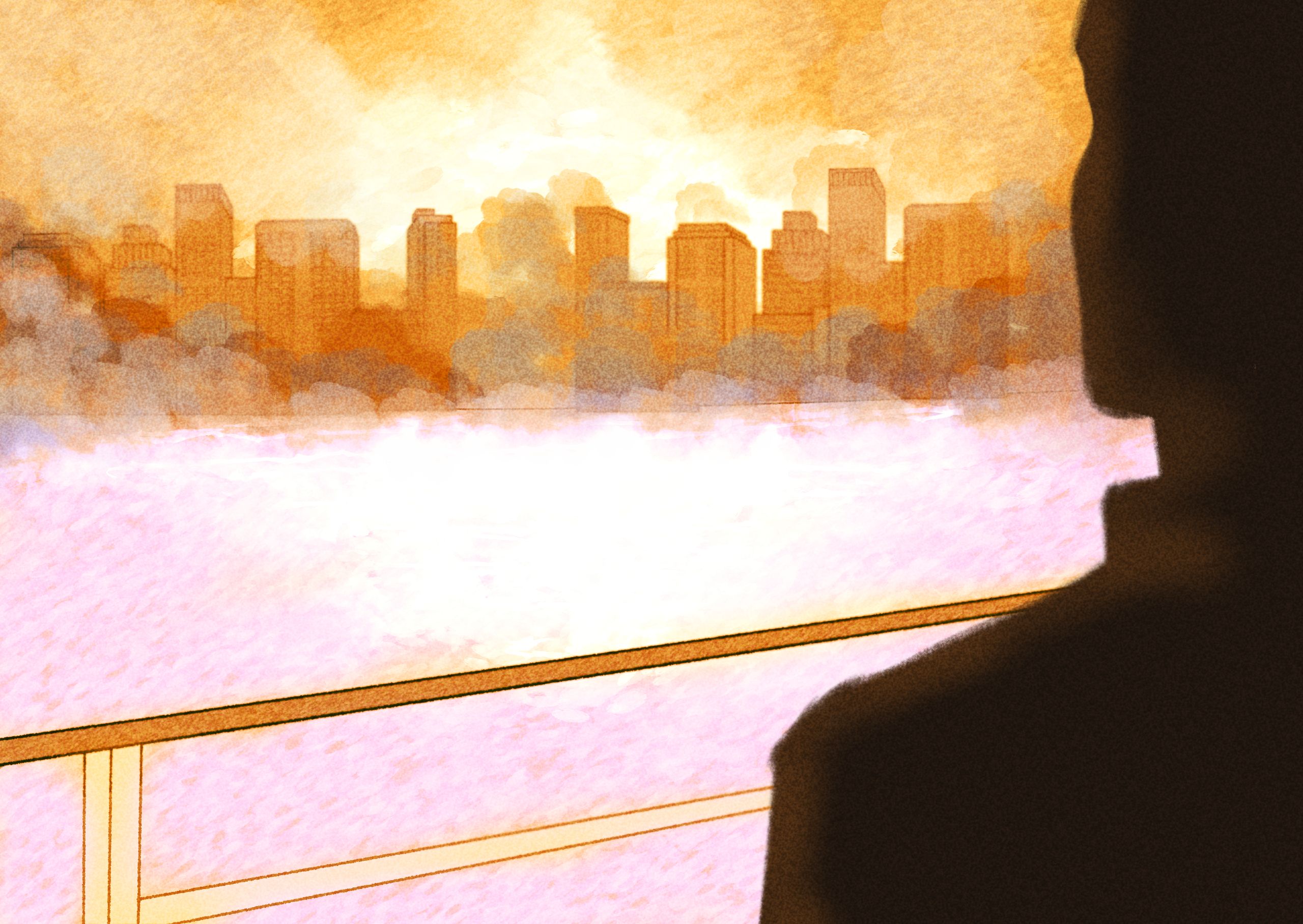
He wiped sweat from his brow, the cacao beans sat heavy on his shoulders as he stacked them onto the trucks. The loading docks steamed in the morning heat, the air thick with salt and promise. Money. That’s all he could think about—a return on investment, the influx that would change everything. Every sack, every crate, along with the physical ache, was a step closer to the life he’d always schemed for.
In the heart of the Great Depression, 1933 was a rare stroke of luck for Pietro Giovanni. Simply put, he had a job—many could only dream of in those desperate times. Pete never grumbled, never showed up late, and never dared ask for a raise. To the bosses, he was invisible, just another cog in the machine, easily replaced in a heartbeat. But Pete also had his own way of surviving the grind. He was a master of the art of doing a little less while looking like he did his share. A few sacks left unstacked here, a couple of crates skipped there—he knew how to ease the ache in the bones without losing a dime. This type of person is well known—across all professions. But Pete changed his entire outlook, when the outlook showed him an investment to return.
At the bustling waterfront, cargo arrived in a state of disrepair—sacks torn asunder, wooden crates splintered beyond recognition, and provisions rendered worthless by the relentless assault of salt spray. Others saw trash. Pete saw inventory.
2
Armed with his uncle’s truck and the cover of darkness, salvaging salvageable goods became profit. Ambition beyond solitary midnight runs extended quickly. Cultivated relationships with crew bosses—those who really controlled the docks, were proffered a cut in exchange for steady streams of damaged inventory. Networks expanded like ripples across water—one connection leading to another, each partnership strengthening the operation. To those just wanting the damaged liability gone—the dock space freed up, the big shipping tycoons and Harbor Authority finally greenlighted Pete to go legit. A huge business was born from the ashes of maritime mishaps. In the toughest economic climate of the 1930s, during the Great Depression, Pete became the era’s equivalent of a self-made millionaire.
However this is only half of the story. The other half concerns his brother—his twin brother, Paolo.
Paolo Giovanni was a consummate con man, the kind of operator who could charm a mark into handing over their last dollar while making them feel grateful for the opportunity. He had perfected the art of building confidence, weaving elaborate deceptions so seamlessly that the chumps didn’t realize the fleece until weeks later. But on the flip side, the revolving door of New York’s jails had become familiar to him—petty fraud charges, rigged gambling schemes, confidence games that went sideways. Each stint inside only sharpened his skills, teaching him new angles, introducing him to old hats that schooled. But a year ago, the NYPD had finally had enough. They ran him out of town with a warning: don’t let us catch you in the five boroughs again.
3
Now Paolo was a ghost in his own city. He’d slip back to see Pete—his legitimate brother, the one who’d made it honest on the docks—for brief, furtive visits. A quick handshake through a car window, a few hurried words, then he’d vanish back into whatever scheme was brewing in whatever distant city had become his temporary hunting ground. Pete never asked questions. Some brothers, you didn’t. The sad part is, Paolo’s new ultimate scheme unbeknownst to Pete, included Pete.
Paolo forged promissory notes tied to his brother’s big business, stringing up counterfeit promises in the dark. Back in the 1930s, during the harsh grip of the Great Depression, promissory notes were the lifeblood of many enterprises—akin to today’s stocks but grounded in debt. These notes weren’t just paper; they were solemn vows, IOUs that promised repayment with interest, fragile lifelines sold to anyone still hoping for tomorrow. Before the rise of modern banks and credit systems, businesses leaned on these notes to raise cash for expansion or to keep the lights on. Paolo’s deceit twisted this fragile trust, turning a tool of survival into a weapon of betrayal, not only onto his fellow man, but his brother as well.
His counterfeit writ was more than sharp. Clean, off-white, heavy bond paper, professionally printed, a border and watermark—all conveying seriousness and authenticity. It read:
“For value received, I, P. Giovanni, Owner of Giovanni Maritime Salvage NY, promise to pay to the order of [Lender’s Name] the sum of $[Amount], with interest at [X]% per annum, payable on or before [Date]. This note is governed by the laws of New York. Signed this [Day] of [Month], [Year].”
4
The survival of the grift required a continuous form of batch processing—a delicate dance of timing and trust. Paolo sold the first ten promissory notes, each stamped with a specific payable date. When that date arrived, the payments came through—paid exactly on time, but not from the business’s coffers. No, those funds came from the second batch of fifteen notes freshly sold, a fresh wave of borrowed trust flooding in to cover the old debts. You see the pattern: the new money paid off the old, and Paolo pocketed the difference like a magician’s sleight of hand.
The scheme caught fire, spreading fast and furious. Each batch was a lifeline for the last, a chain of promises stacked high, balanced precariously on the faith of investors who never saw the cracks beneath. It was a high-stakes game of musical chairs, where the music only stopped if the next batch failed to sell. Until then, the grift thrived—an endless cycle of borrowing from tomorrow to pay for today—Paolo the conductor of his risky orchestra.
Paolo lived the high life from it all—but not like the proverbial drunken sailor on shore leave. No, indeed he spent like a drunken Senator cashing in on his insider stock buys—the kind who knows the game before the bell rings. His nights were filled with smoky clubs, shady ladies, and whispered deals. Sporting Savile Row Italian tailored suits, suits lined with the spend, he lavished on dine, drink, dames and dance. While others scrambled for scraps, Paolo moved in a world where pleasure and treasure was King, and the eyes were always watching.
But the art of the grift always meets its reckoning—either it gets exposed or it inevitably backfires. Paolo couldn’t cover the last batch—a total of ninety-three notes, thirty-three
5
of which were tied up with two ruthless mafia networks. At this level, only the sharpest operators slip away without sleeping with the fishes. Paolo fancied himself one of those shrewd few—shrewd enough to beat the odds, but never the organized underworld.
There was no slipping town, or anywhere else in the world for that matter—wherever he went, the syndicate’s reach was swift and deadly. But all he had to do was get the thirty-three paid off—then catch a steamer bound for Brazil. He had just enough cash to cover the thirty-three and buy his ticket.
The problem? Payback was due in two days.
Paolo twisted and turned, knowing that paying off mafia (the thirty-three) early would raise alarms like a five alarm fire. Selective early payoffs were a dead giveaway—bookies, numbers rackets, and all manner of vice knew it well. It meant insolvency—they couldn’t cover all debts—they were honoring a select few—and that was suicide. The rest would track you down instantly with long knives.
Then it clicked: telegrams. Telegrams sent out to all, arriving the next morning. Two to the mafia lieutenants collecting on the thirty-three notes, and sixty to the rest. The smooth move was in the details—the information, specifically the placement of a single comma.
To the two Lieutenants, the telegram read:
“Greetings: This is to inform you, today your payable returns will be issued in full and on time. P. Giovanni, Owner of Giovanni Maritime Salvage”
6
To the other Sixty, the telegram read:
“Greetings: This is to inform you today, your payable returns will be issued in full and on time. P. Giovanni, Owner of Giovanni Maritime Salvage”
The steamer was actually a freighter. Old, rusty, stinky. But the food indeed was good—they’re known for that.