
You block the exit.
She protests. “I need to go someplace else,” she tells you.
“Why can’t it be someplace close by? Why not the playground or the petrol station?”
“Can a person live at the playground, or at the petrol station?”
“She can if she tries her darndest.”
“Well alright.”
“Alright?”
“But if a woman trying her darndest equates to sleeping on the cement floor of a plastic shack sniffing petrol all day beside the cigarette vendor, then I do not want to try at all. It’s beneath me to try. It’s even beneath you—you wouldn’t do it for me.”
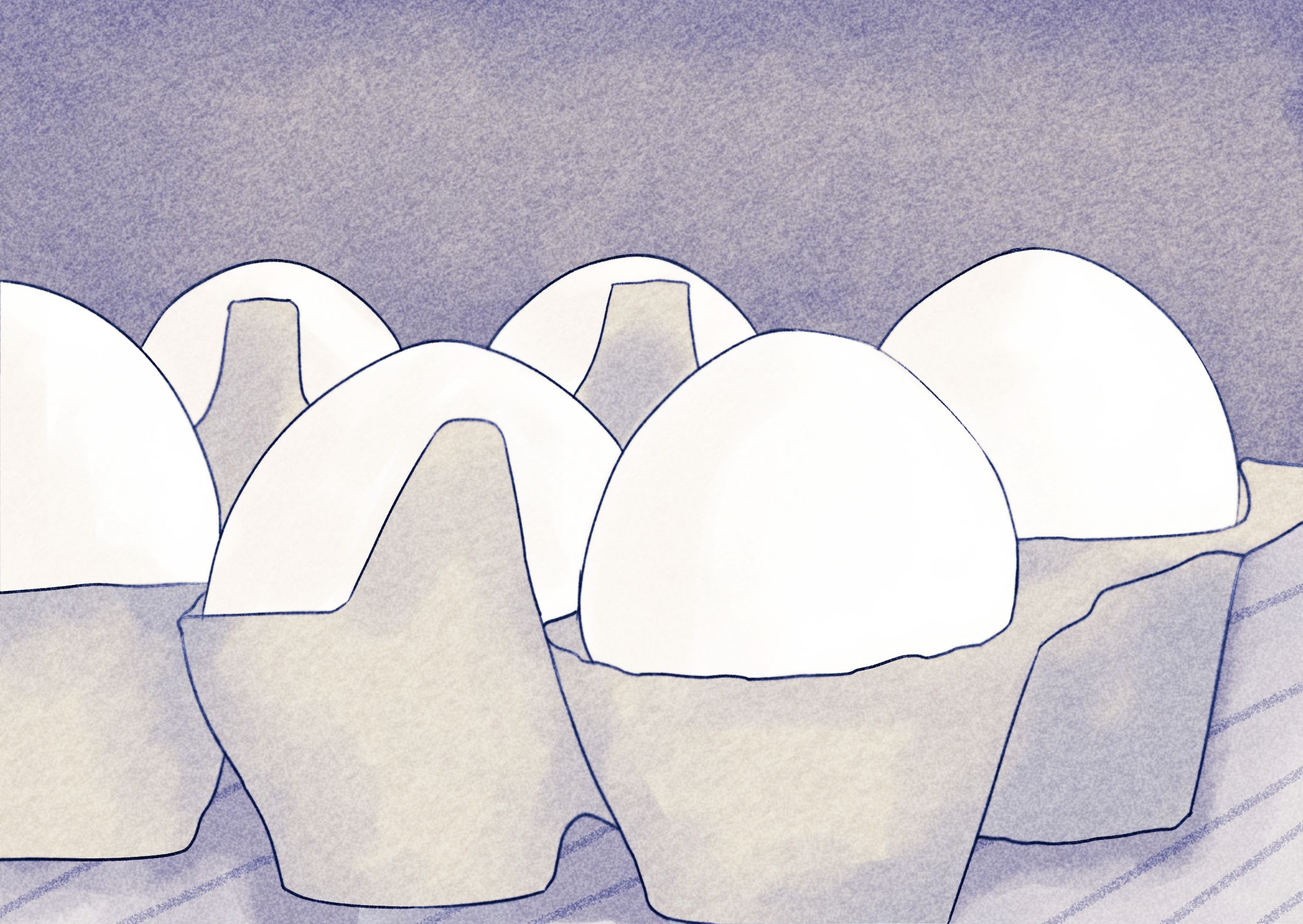
You step to the side. She isn’t wrong. In the home office to your right, the pendulum inside your antique grandfather clock calls out to itself. Behind her, the stairs soar. You cannot fathom what awaits up there, in the shifty nimbus. She has her suitcase, but you do not know what she’s packed. The whole business was handled while you slept, roughly four o’clock. You do not know if she awoke then—a coincidence—or if she hadn’t slept all night. You do not know if she forgot anything important. You do not want to check, but you are fairly confident she did not bring any perishables. She’s left a carton of eggs in the fridge.
At work, your friends are sympathetic, which is more than you bargained for. You do not tell your customers, because you do not think that your doing so would help sell any cars.
“The base impulse,” says Ben Concord, a visiting sales associate whom you hardly know, “is to assume that you will never love anybody the same as you loved her, not ever again. You have to ignore, ignore, ignore, you got that?”
You reply, “I got that,” and turn around so that he cannot see you. He is wearing a necktie with tiny, embroidered mallards on it, swimming upstream on thinly-sketched waves that belong to no visible greater body.
Ben Concord keeps talking. “Sometimes you’ll surprise yourself with who you love next. When I got divorced—”
“—You’ve been divorced?” you ask, interrupting, hoping he gets sad and leaves you alone.
“No,” he answers. He seems quite content explaining, actually. You fill a paper cup at the water fountain and swallow. “No, I guess not. We were engaged, and she split it off. I guess not quite divorce, then, is it?”
“No,” you say, “it isn’t, is it?”
“No.”
He moves beside you and fills his own cup. You crinkle yours inside your fist. He rummages through his pockets and produces a purple powder-pouch, emptying its contents into his drink, stirring with his index finger.
When you were young, your father found a girlfriend on holiday in San Francisco. She was hiking the trail through Muir Woods at daybreak and the four of you (you have a sister, don’t you know) went to a drive-through diner and ate burgers on the hood of the rental Volvo. It had an antenna. Given that you didn’t want to watch your father flirting—although your sister, younger, did not know better—you laid your eyes upon the exterior of the diner and counted every step on the ramshackle spiral staircase set along its northern wall. It was all copper, winding and skinny enough that you felt a larger person might have had some trouble getting up without toppling it.
“Come home with me,” your father whispered. “I live in Leeds.”
“Where’s that?”
“From here? Very far east. And north a bit.”
You might’ve just said up and left it there, but you were far too small to be noticed.
Ben Concord places his hand on your shoulder. “You gave me hyacinths first a year ago. They called me the hyacinth girl.”
“Is that Eliot?”
“It’s a good line, I think. But I once gave hyacinths to an angel I met at a parent-teacher conference in autumn of 2017 and soon enough she was Wife One-and-a-half.”
“I hope I don’t miss her.”
“You will, and you have to. If you don’t miss her, you’re an ignoramus. Do not make your memories unpleasant if they don’t have to be.”
Your father brought the Muir Woods girlfriend about as far as Cincinnati, where she snuck away at a Reds game. As the three of you (you have a sister, don’t you know) got on, you turned around just in time to see the strange woman flash the crowd on the jumbotron. Good morning! you think, and it was.
The following week, you are contacted by a divorce attorney. Discussions proceed poorly.
“I don’t know if anybody’s ever told you this before,” says the attorney, “but you are incredibly immature.”
“Being insulted over the phone is a new low,” you say. “Come over here and fight me.”
You hear him typing furiously on the other end of the line. He is noting all of this down. “That won’t be necessary. I’m only calling to discuss the matter of the house.”
“It’s my house.”
“Maybe in concept. How much of it do you pay for?”
You are loafing in a café on Saint-Aldates and do not have the patience. There is an old man, sporting a belly and a bowler hat, crammed into a chair behind you. He is sketching uni girls in colored pencil.
“I have nowhere else to go!”
“Let’s not get sidetracked by particulars.”
The artist gets up and shows the girls his drawing. They are unimpressed but smile all the same, laughing with each other and pointing out the most lifelike features. The old man’s face changes, suddenly embarrassed. He shifts his weight from foot to foot and knocks somebody’s coffee over on the next table. He is covered in coffee and burning. Nobody helps. The girls are exposed.
“You cannot take my house,” you say, in a kind of whisper-shout. You want eyes to remain on the old man. “You’ll have to drag me out by my ear.”
“Trust me, I won’t be doing any dragging. Not myself. They have people for that.”
The next month, Mr. Concord offers to buy your car off of you, in a show of charity that you wouldn’t have expected from a near-stranger. Still, the car is the last fairly-decent thing that you own completely. It will never belong to your ex-wife. You are fond of it, as a dog is fond of its chain. That is, at least it comes with a nice backyard and a bit of dry food every day. And the bus adds about a half-an-hour to your commute most mornings.
You ask him why he wants it.
Innocence, a wry laugh. “The missus and I are having another,” he says, “and I’m under the impression I’ll be getting a promotion in the near weeks. I’ve done good work here. So they say.”
You remember that he’s not a permanent stay at the Leeds location. Some bit of your brain twitches. “And for your parting gift…you want my 2008 Citroën?”
“Wouldn’t hurt.”
Whether or not you think he’s being a scumbag—and he might be—you anyways refuse to participate in this battle of vagueness. It isn’t helpful to anybody. A customer walks in, and an electronic bell jingles out over the floor.
You sell a mother of two a two-year-old SUV and head home feeling good about yourself.
Throughout your relationship in full, there was a girl you knew from university whom your ex-wife despised in some grandiose fashion. Apparently, this former classmate, a dark-haired girl called Madeleine Wrenforth, was head-over-heels for you and you were always just too stupid to notice. And she hadn’t gone away after graduation. She lived nearby and would often come calling, asking you to come out for coffee sometime. Now maybe your ex-wife’s ire had a bit of truth to it, or maybe it was all nonsense. You only wish that some objective third-party could come up and clue you in and allow you to quit making a fool of yourself. Either way, you hated having the conversation and you always tried to minimise your contact with Madeleine. Otherwise: Where were you? Who were you with? Good Lord.
Now that you are single and patently bitter, you phone Madeleine and she picks up on the very first ring. You offer to go get coffee, finally, and she agrees—before long, coffee turns into dinner turns into cocktails, two of which you down only to forget about the fact that you’ve proven your old woman right. You and Madeleine make a good pair, at least on paper. She spills her third drink on her blouse and you hand her your jacket reflexively. Wow. Good on you. This is a woman you can talk to for hours. And you don’t let the shame linger—everything is happening in good time. You lose your home in the divorce thanks to that scumbag attorney, and Madeleine lets you sleep at her flat. You wonder if you ever had a backup plan, or if blind luck has saved you from homelessness. Your ex-wife would have told you that Madeleine had always been your backup plan. She would have yelled in your face and probably cried. She would have been completely correct.
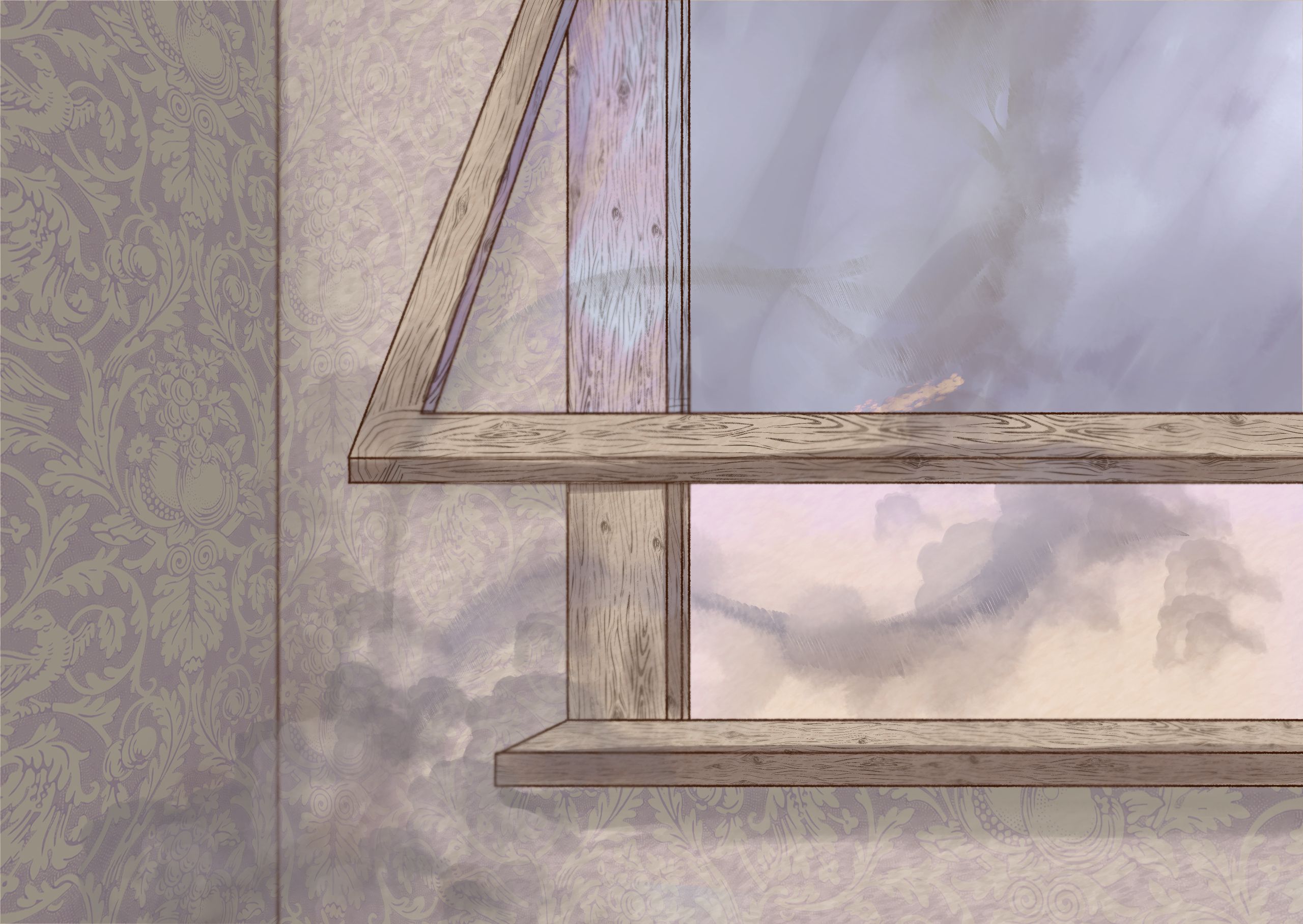
These days, you like to sit by Madeleine’s window and watch traffic. She has a good view. Your childhood friend’s novel is advertised on every bus that crosses Broad Street. It’s been a long time. You know only that he writes science-fiction, and from circumstantial evidence, that he must be talented. Somebody is going to make a movie, is going to make him a millionaire, and is going to fly him out to Los Angeles and let him oversee creative control of the project. You have not spoken to him since the eleventh grade, and neither have you read his novel. It seems long-winded. When you browse forums for a synopsis, spoiler-free, you are told it is a daring cross between Lewis’s Space Trilogy and A Canticle for Leibowitz. That is, subversive with regards to religion and the way that faith interacts with postmodern academia, but regressive in how it deals with women “as a species,” writes one user; four out of five stars.
“Very manly,” writes another. “A protagonist with iron will. I must become him.”
“Self-insert,” writes yet another still, leaving it there to breathe.
As one such bus passes along in the window you take a long whiff of the tea in front of you, boiled water over lemon and ginger root, one half-clove and a cinnamon stick, star anise, a lavender sprout. You are on cup number three in the bay window, looking down over the city from floor three, room three-oh-nine. Madeleine is boiling more water for pastina to treat a cold she’s been nursing, one which you told her you wouldn’t mind exposing yourself to. She has only enjoyed one cup of tea herself. You crack the window and puff a cigarette into the wind. This is one of those afternoons where the whole city smells inexplicably like a fire has started in a basement somewhere and escaped as an orangutan might from a zoo. Who might catch it?
You stand up for a moment. Madeleine picks up a rough cube of parmesan cheese and dangles it above your mouth, placing it on your tongue. She smiles. You look back out the window and the phone rings behind the both of you. Madeleine picks up the landline and speaks sweet nothings into the receiver for a couple of minutes between coughing bouts, and when she hangs up, informs you with a grin that a girlfriend of hers is asking her to come and house-sit for a week. The girlfriend, called Maisy, is minted and lives about two hours south. You know the home: stately frame, large property, a shed in the back with a thatched roof and decorative shutters but all-modern furnishings inside.
“You’re welcome to come,” she says, scraping butter into the bowl. “They won’t mind the two of us.” As in, Maisy and her husband, Andrew.
Yes, you think, they will. “Did you ask specifically?”
“I didn’t think I needed to.”
“I probably have things to do that week. I’m not sure if I could take the time.”
“You work alright from home. Don’t you?”
“Do I?”
“You have been.”
“I’m not sure—it’s a period of great transition. I thought I told you, Thomas Frank got fired last weekend. There’s a hole in the management.” Thomas Frank is not a real coworker of yours. He is a football manager whom you suspect might soon be sacked. You do not know him personally, only about as much as you know the science-fiction writer. That is: his name, and what he does, vaguely.
“I didn’t know he got sacked,” she says.
“It wasn’t great. Upset the balance.”
“I’m sorry.”
“Don’t be. And besides, maybe they’ll promote me if I show some face.”
“You’re right,” she says. Then she’s quiet for a while.
You wonder if you might enjoy some more time to work on your own novel while she is out, away, and far from the picture. Or maybe that is not enough. You realize in the shower one morning that yours was a conversational love. Dead over phone calls, it has vanished as quickly as it emerged. The both of you have better things to accomplish. You leave her apartment before she has the chance to come home. Anywhere, you imagine, would be better than here. Within five months you are living in a rented room above a Viet buffet, praying every night, and for a number of things: peace, generally, and immunity to tetanus. There is a photo of a holiday rental home taped to your wall that makes you smile, cut from the innards of a gentlemen’s magazine.
You are having trouble focusing on sales and until this very day could not afford to jet anywhere on any kind of notice. Until this very day, that is, because today is the day when you finally sell your car to Ben Concord. Tuesday, third of June. It is finished. You feel much better now, loosed, at least in your imagination. It’s a win-win. He’s smiling. He bids you adieu and by this point knows you’ll piss off as soon as you’re able. You vindicate his belief in you, a first real token of friendship, because these days you are so totally alone. Waves roll and carry you. When they come up blue, you are happy. When they are gray, you are despondent. You buy a one-way ticket to San Francisco, and before you know it your prayers are all about keeping your plane afloat in the sky. You crawl to the bathroom midway and vomit three times. The American flight attendant knocks on the door after the second spell and you snarl.
When you were small, your father took your sister and yourself to the Science Museum on Pier 15 by the bay. You drank out of a fountain that looked like a toilet. In the largest room, sunlit and flanked by churning summer water, was an installation by a psychotic Swede whose dream it was to create living beings out of wood. On film, he proclaimed his hope for his creations to move someday unfettered by borders, copulating with each other on the beaches, powered by the wind and by those invisible esoteric spirits who ride it. You considered this, and still do, a highly un-American concept, only you’re less frightened of it these days than you were back then. You are concerned that grains of sand will erode the creatures’ joints over time and leave them ruined in the surf, dissolving before the birth of their young.
You go for a run outside of the Science Museum. The weather is perfect and you feel quite naked.
Beside a petrol station, on that big concrete hill, a motel waits for you. Inside, you shower and change into khakis and a white shirt. There are roughly two hundred sixty coffee shops in this city, and you intend to visit each one, one-by-one, and while inside do two things: ask for a job, and ask out a woman. You tell yourself you can be finished only after you succeed at both, and with any luck you’ll find them on the same side of town. The motel only has one bed and that night you make excellent use. A man needs something to sleep for and something to wake for. Your father kept two wooden mallards on the mantlepiece above the fireplace and named them Work and Play. Your sister once dunked Work into a bathtub and all his paint came off.
“I never liked that one as much,” your father said.
You tell the skint, wire-haired girl in your bed to take a shower and put some clothes on. It’s already noon. When she’s finished, you take her out on the copper fire escape and spin stories of the wooden nomad-creatures and their wind-demons. She is from Kansas and she doesn’t believe you, not a word, and is not whatsoever shy about letting you know. She invites you to come to a baseball game, but you’ve already seen everything she’s got to offer. You know that you will never love her as much as you loved your former spouse. Damn Ben Concord. Damn ol’ What’s-his-name. You write him a letter and pretend to be interesting, more interesting than you really are.
Dear Ben,
I hope you are well, and that they’ve promoted you. I live in San Francisco now. I work as a diver. Every morning, before the sun’s up, I trek to the harbor in my scuba gear and wetsuit, sometimes diving twenty-odd meters below the waves with my special tool. It’s a steel scraper (looks something like a mortar trowel) for removing barnacles from the undersides of ships. Some nights I go through three to five smaller skiffs, owned by posh folks, startup CEOs. They depend on me. Other nights the ships are massive and alien, and I can only get through about a quarter of the hull on my own.
My whole life I’ve been told that ocean water would be deep blue. Haven’t you heard this? I’d been to Brighton once when I was twenty and it wasn’t blue at all. When I was really young I went to San Francisco (!) and I saw the water for myself—not blue, even back then! So I guess I just don’t know what I expected. All of them, just like my childhood backyard brook. It’s black, brown, green, a concoction. I don’t feel safe swimming. It’s a contractual position and I don’t expect it to take up too much more of my time. But I live well.
I hope that everybody in your life is staying put. I hope that your child comes out healthy and plump and crying. I hope that your wife continues to sleep with you. I hope that your new job is easy, and pays more than it should. I hope that you write back, because I myself am exceptionally lonesome here. This is an odd country. I hope that you do not find my reaching-out to be anything disagreeable. I kept your business card in my coat pocket, so I had your email on-hand.
I wish you better days, excursions, and holiday travels. Come and visit. But please, only if you can find the time. Thank you.
Best,
The ignoramus
You frown, show the skint girl, click send. It’s late evening back in Leeds, not that she knows or even cares. She’s stoned. People are allowed to get stoned here. Ignore, ignore, ignore. She surfs the web, looking for the Best Poached Eggs in San Francisco. Motel parking lot, your motel, a food truck—for seven dollars, two poached eggs and roasted peppers, dripping monterey jack.
“So,” she asks, outdoors, in the wind, “Are they gonna publish your novel?”
Your mouth is full of cheese. If only people who wore clothes were so interested.