
Forty-five minutes we waited, sitting on the curb under the streetlights, sharing a steel-can beer, smoking cigarettes, not wanting to talk to anyone but each other yet unable to shirk the small-talking with others in line. When we told them it was our first time, that we were sushi virgins, new to the area, they beamed with cultish smiles and spat words like rookies and newbies and then lifechanging and converts, lucky we found our way there and proffered hat-off pledges and cross-your-heart swears that it was the best of the five boroughs, maybe anywhere in the continental U.S. of A. but not to tell anyone because, as the guy with one leg said, loose lips sink ships and snitches get stitches.
As a petite woman with ashen skin and two menus lead us to our table, Emma said what the holy fuck was that weirdness. What did we just walk into? We had just moved in together, a third floor flat, a railroad floorthrough outside the city, and while our neighborhood was brownstone beautiful with stoops and iron gates and stained glass, it was an outer borough. Our workdays meant sleep-eyed, hour-long subterranean journeys on screeching sardine trains full of international scents and coffee breath and spatially inconsiderate over-the-shoulder bags. In those days, even for an extra twenty, you couldn’t convince a gypsy to make the trip.
We were a romance born in the publicity department of a midtown publishing house, our mutual dream to be daily surrounded by books full of stories not our own. Our building was iconic, full of smoker-friendly offices with dinosaur desks and plug-in typewriters, populated by androgynous look-a-likes wearing tortoiseshell specs and vintage tweeds with all-day morning hair. The ginger with a pony tail whose office I took over was fired for snorting heroin at his desk. Though none the wiser of his beatish, and in my opinion trite, pursuits, his was the office where she smoked because she did not have an office of her own. She walked in and told me it was her smoking safe space and I was immediately mesmerized. Nineteen grand a year we made. Over that first cigarette morning, she taught me how to supplement my income by selling stolen review copies of forthcoming releases to the eighteen-mile bookstore down the avenue (four bucks a pop) and which bars had the cheapest see-throughs and free sterno apps.
We were both from far away states, an exodus from broken families and southern, landlocked ideals. Me, I was twenty-five, and she, she was four years younger. I wondered if we were the beginning of a life or just another stop along the way.
Once we sat, Emma went on about apocalyptic weirdos. Maybe this place is some kind of coven and we’re not going to make it out alive. A perfect post-modern story, I countered, where we’re the actual sushi being served. Rapid-fire exaggeration was our love language. A game of sharp, silver-tongued overboard. Of stream-of-conscious one-upsmanship.
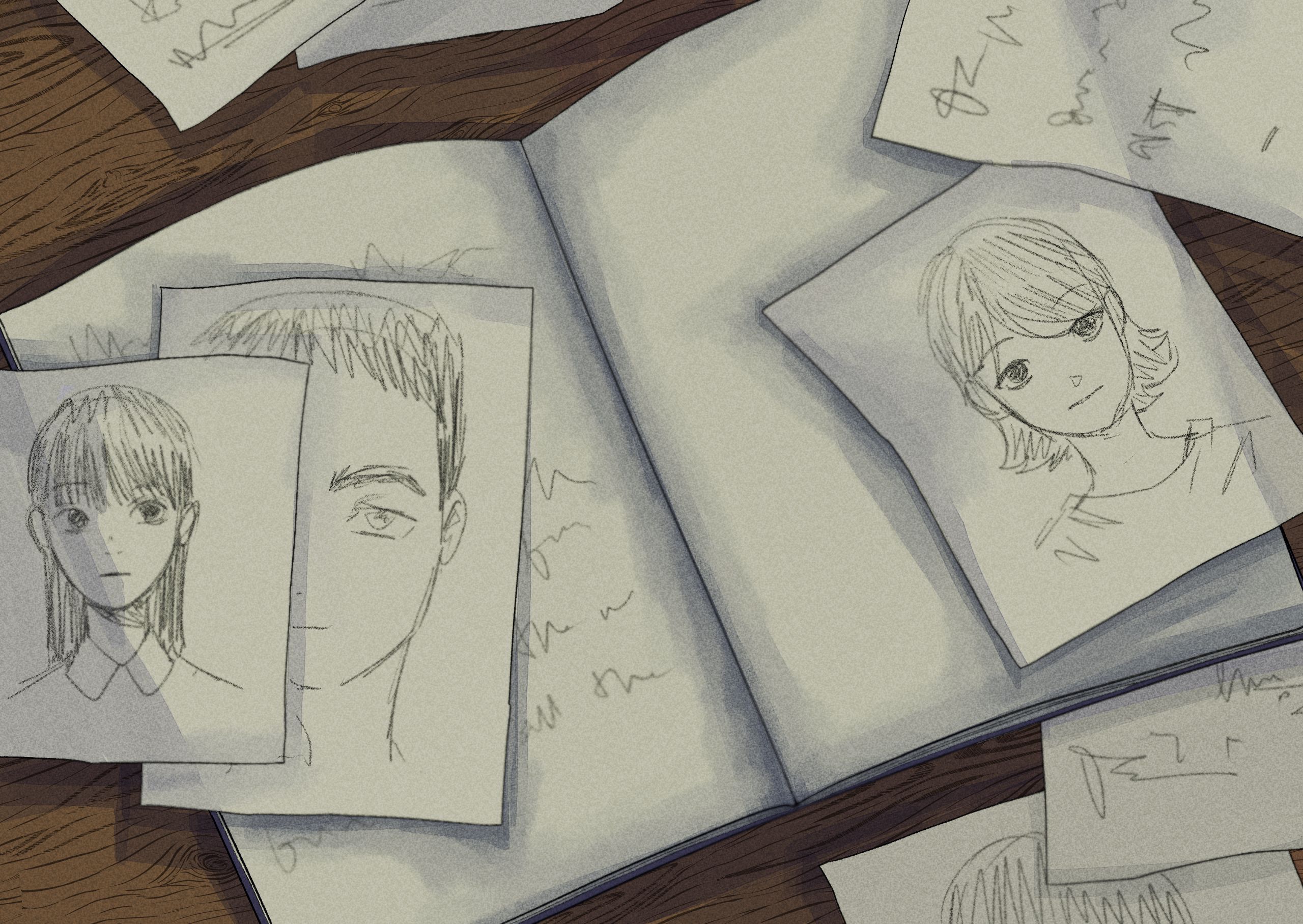
The restaurant was small, one room, ten or so tables and an eight-seat chef’s bar along the eastern wall. Décor, nothing special, chairs and tables mismatched, my chair wobbly. On the walls cheap-framed rolling blue waves, cherry blossomed pagodas, grinning cheshire carp, and robed androgynous warriors. Where we sat that first night was against a wall covered with colored words mostly singing the restaurant’s praises and cartoonish kid drawings and wispy patron signatures with twenty-year timestamps, all scrolled and doodled with thick tip markers arranged like bouquets on every table. Neither of us had even tried sushi before moving to the city.
Walking home down the avenue, we agreed that that was us, our world, our place, that we would be regulars, and from then on would shoebox our stolen book money for what, we later calculated, could be a semi-monthly affair. We mused over the possibility of ethereal orders, hierarchies of desire, of higher plains and ultimate levels and survival of the fittest only patience could deliver. Stopped at a glowing walk sign, we pinky-swore to be, from that moment on, true believers.
Two weeks later, we were seated again next to the wall of remembrance. Two things occurred that night that would change us forever. The first was that we noticed the table next to us were served a platter of sushi that did not seem to be on the menu. We scoured the laminated tri-fold. Turned it over, in the off chance of a hidden message. Maybe it’s one of those deals that you have to be a regular to know, she offered. A used to be on the menu from a decade ago thing. One of those if you know you know deals. Maybe there’s an anagram in it somewhere, I countered. Sushi code. When I inquired with our server, all she said was omakase, though in a whisper, looking side to side as if worried someone might overhear. That word meant nothing to us at the time.
The next important occurrence was more complex, birthed something much more difficult to nail down. At first just an observance: an elevated din coming from the farthest corner of the sushi bar, the short leg of its L-shape. We looked up. Shrugged. La ti da, she said. Then continued with our meal. The spirit, although, grew, grew between the older, rather hippy looking couple and the sushi chef, whose name we came to know was Osamu. He had a Don Ho cool about him, slicked onyx hair, and long sideburns. He wore a flowered island shirt under his white chef’s coat. They were all overtly expressive hand gestures and sake glass clinking, peppered with surges of bluster. Each plate Osamu delivered to them elicited orgasmic facial expressions and bedroom sounds. I’ll have what they’re having, I said.
We spent a Saturday afternoon at our local library, checked out as many books as we could about sushi. Omakase, we learned, meant chef’s choice, a show of trust and respect, restricted only by budget. We laboriously calculated we were at seventy-five bucks. What was delivered was an underwater diorama of saba, chu toro, and hamachi with electric orange eyes of mentaiko and tiny scales of bonito flake on toothpicks swimming above a bed of sunomuno coral, through seafans of hijiki. We rock-paper-scissored to determine who would take the first bite, and rather than wanting to win, the winner would be the loser because neither of us wanted to be the one to destroy the fantasy.
But before we could finish the tie-breaking throw, our attention was again usurped. Two men this time. Though one was a good bit younger than the other, they seemed to be coupled. Again, they were the beneficiaries of Osamu’s attention, his private bottle of sake, plate after plate, glass after glass. The notion that what we were witnessing was not an isolated event, not a one-off, landed us on a hamster wheel of possibility. The icing on top of our initial omakase experience was an overload of subtle, yet sonic, sushi sounds: the fire-starting rub of chopsticks, the tap-dance of dishware, the static-cling stretch of saran wrap, the ding of the unagi toaster. It’s like we’re blind, Emma said. And our sense of sound is bionic. Like The Million Dollar Man, I added.
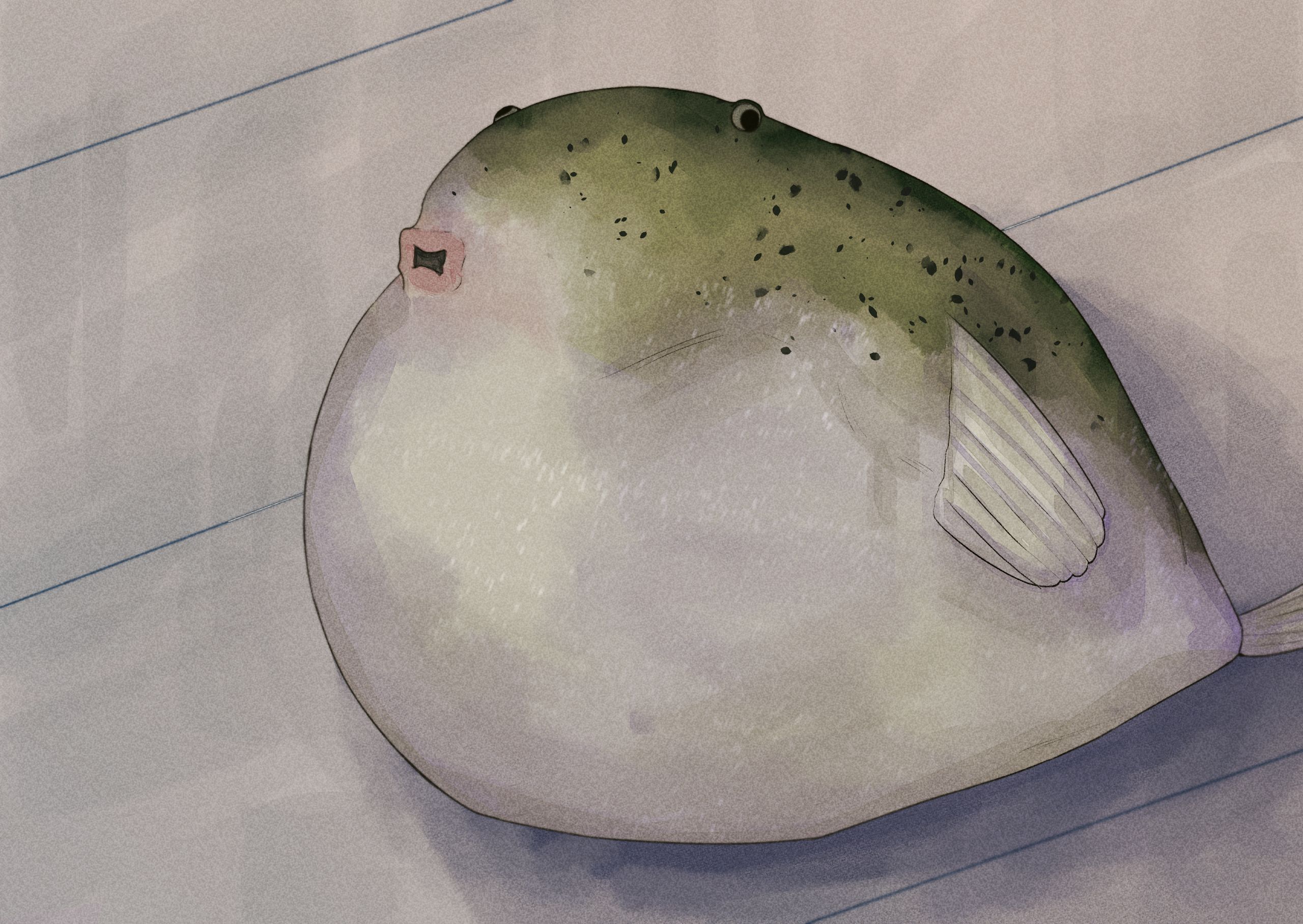
My first sushi dream: a sensory pileup on a rickshaw autobahn, finally to be swept away by a miso soup tsunami that buoyed me adrift in a briny atmosphere of skeletoned fish only to look up and see Osamu in a flowing white robe and pointy beard controlling me with two hundred pound test. I woke up coughing, unable to breath, sure I had a mackerel lodged in my gullet.
Over the next six months, to our growing chagrin, it was much of the same, each night more and more jealous of the chosen receiving communion by the hands of Osamu. We made light of it best we could, talked like Brit detectives with monocles and pipes and deerstalker caps, attempting to uncover commonalities, threads, clues. Emma tracked our research in a journal. But there was nothing so on-the-surface obvious—each couple different ages, races, sexes. We considered hairstyles, facial features. Emma made note of their choices of footwear. I clocked time, used the stopwatch on my Timex, trying to find some sort of meaningful equation. The only thing we knew was that the chosen, or at least those who left before we did, never seemed to pay. Or at least not in any sort of regular kind of way. Maybe they pay in sex, she said. The basement dungeon, I conceded.
We chased the dragon the only way we knew how, by increasing our omakase spend each new night. We sold stolen books at a greater frequency; we cut daily costs like coffee and egg sandwiches from the cart outside our office; we saved change, even pennies, in a beer growler. Anything we could do to up our bi-monthly budget. We tapped the veins in our arms each time we circled a new omakase number, readying our system for the next fix. And each spread was more extravagant and nuanced than the last—gill-finned kama creatures, drip-castle natto mountains, cobbled edamame roads, multiple uni suns, still pulsing bivalve moons, and iridescent spinal jelly ponds. We gorged as if each meal was our last. If belief was being tested, not once did we flinch.
Uncovering the rhyme and reason around what we had coined getting the big O was all we talked about. It was as if our lives depended on it. We were full blown junkies on a bridge of no return. Over no-protein ramen dinners, during brown bag PB sandwich lunch breaks, while waiting at the laundromat for laundry to dry, and both before and after sex, more and more often stopping every time a lightbulb popped in our minds. Dreams became frequent, for both of us, so much so that it got to the point that Emma set her alarm every two hours during the night in order to log them in her journal: being chased through a plum leaf forest, in a ring belly to belly with a Siamese sumo wrestler, in a sword battle with a 20-foot tall female kubuki, floating on a pillowy sea foam cloud with Fumanchu, water skiing on chopsticks on a tranquil sake mountain lake.
We spun yarn after yarn, every possible who and why and how, each more fantastic than the last. Maybe a punchcard kind of deal. A spend of $1000 of omakase thank you kind of deal. Or a secret reservation code for a special price-fixe meal. Maybe it’s just as simple as a lottery, I said. Maybe they’re all angel investors in a new venture. Gotta be more like a secret society of the sushi rich. How about performance art or gourmand flash mob? I came up with the possibility that the chosen were operatives, a ring of spies passing government secrets through sushi and sake. Out in the open is the best disguise, I said. We’ve seen that movie a thousand times. Or a government mission of mind control. I would not put it past them after what we did in the war. That’s something you never forgive. Emma put all her chips on the notion that the whole experience was some sort of ancient parable. Osamu born from the belly of a placoderm. Me, I landed on Osamu being number one son sennin, excommunicated and living in a fuseya by the canal, catching flies with chopsticks. Stitching wara ningyo from silk, yeah, that’s it, Emma added. You may have something there, I said, adding that obviously Osamu had stepped out of an Edo with such power over the sea that fish lept into his boat. Emma nodded. Would explain how he could afford to just give it all away.
That was about the time my fugu deep-dive commenced. The controversial blowfish that was both revered and feared in Japanese cuisine. Its history. Dating back millennia. Its preparation. Regulated by rigorous licensure. Its lore. Known to be the pinnacle of the sushi experience. The ultimate test of gastronomic bravery. Lauded by warlords, emperors, and samurais. I have found the answers to all our questions, I told Emma. The final piece to the puzzle. Requires ultimate precision by the hands of a master. One transparent, paper thin slice of its succulence can mean paralysis, even death. The art is not to remove all of the neurotoxins, but rather to leave just enough to tingle the lips, numb the tongue, and swell the throat: cause the fear that is like no other. Each bite survived is said to bring unaccountable fortune. Blowfish metamorphize when scared, fend off predators by inflating into a silhouette of spines. Interesting, was all she said.
My fugu discovery seemed to coincide with a break between Emma and I. The intensity around it all waned. Our well of stories dried. What had it all amounted to? This passion? Emma stopped bringing her journal to dinner. Tightening our omakase budget became the responsible choice. Semi-monthly meals morphed into a few a month. Some months we missed entirely. When we did go, we ate and paid and left. Work became something more than means to a mutual end. Spent more time with office friends. Separately. Happy hours apart. The surplus from backpacks full of stolen books individual endeavors. First and second and third arguments. The last landed me an inaugural night on the couch. Orbits crossing less and less.
We almost did not go that night, the night that it happened. Emma was already in her pajamas, reading a book about the benefits of a plant-based diet. I had taken to bourbon to quell the headache I’d had since swearing off coffee. There’s nothing in the fridge, I said. We have to eat. I suppose, she said. Geido, I offered. A pescatarian I guess that would make me, she said.
We did not speak as we waited in line, did not engage with those in front or behind. Emma, at one point, broke the silence, asked me if we were even at the right restaurant, stepped off the curb to look up for the sign, and a car honked and swerved to miss her. There wasn’t, and never had been, a sign. The whole thing was like a slow motion dream, where I could see us from above. Stepping back onto the curb she muttered, I am not even hungry. I wanted throw up my hands and say enough. Let’s just go, go home. But the door opened and we were next in line. And what I heard, I will swear on anything, even to this day, was the hostess, who said in the faintest whisper, I am sure, no doubt: May Osamu shoot that poison arrow through your heart.
Yes, that was our night. We were finally the chosen ones. Ginger pork dumplings and monkfish temaki. Sake. Kanpai. Flash fried shishitos, flounder nizakana. Sake. Kanpai. Unagi karaage, aburi mutsu. Sake. Kanpai. Gizzard shad, trumpet fish. Sake. Kanpai. Papio, boiled icefish. Sake. Kanpai. Intestine stew, herring skeins. Sake. Kanpai.
The hours passed like minutes until suddenly the restaurant was empty and smelled like bleach and Osamu locked the door behind the last of his staff. Now the party getting’ started, he said, waving his hands in the air. Supertramp, I so love these guys. Give little bit of your love to me. He grabbed Emma’s hand and twirled her just as the song was ending. When Running Down A Dream started, he screamed, Petty is idol, and he beat on his chest. So goddamn cool. Greatest song all time. Emma danced with him like I had never seen her dance, like she had never yet danced with me. She put her foot on a chair, kicked it over then caught it with her foot before it hit the floor like a Fosse stage star, pulled it back upright then spun and faux-fainted into his arms. And when she rose, at the top of their lungs, they sang together: Workin’ on a mystery, going wherever it leads and took the song to its finale with a back and forth duet of oo-oos.
We all danced well into the wee hours, a good bit on the sushi bar itself. The night ended with Osamu cradling into our arms a salmon-colored infant onesie with Geido on the front and the skeleton of a fish on the back. For born first, he said. Ever will be blessed by hands of Osamu.
None of those last few hours do I remember. Still don’t to this day. Nor throwing up, twice, on the walk home. Emma filled in the gaps, best she could. Said I was insatiable. I asked her if we ate fugo, if we had survived. She said she did not know. It took me three days of calling in sick from work to recover. But that very next night we were back in line.
I am not sure exactly what we expected. We never voiced it out loud. Maybe it was the fugu. The knowing. Survival. But whatever it was that we were after, or that we thought we were after, did not happen. It was as if none of it ever happened at all. What we remembered, what we did not. And while Osamu not even acknowledging our mere existence whatsoever should have sent us down a myriad of new rabbit holes and hyperbolic why’s, that was our final night at Geido and things went back to like they were before and we never spoke of Osamu again.
But the experience was always there, deep within us, an acceptance of sorts, a moving on. It’s why I wrote this. For her. For us. On the brink. All these year later. Just when we needed it most.