
The A Block
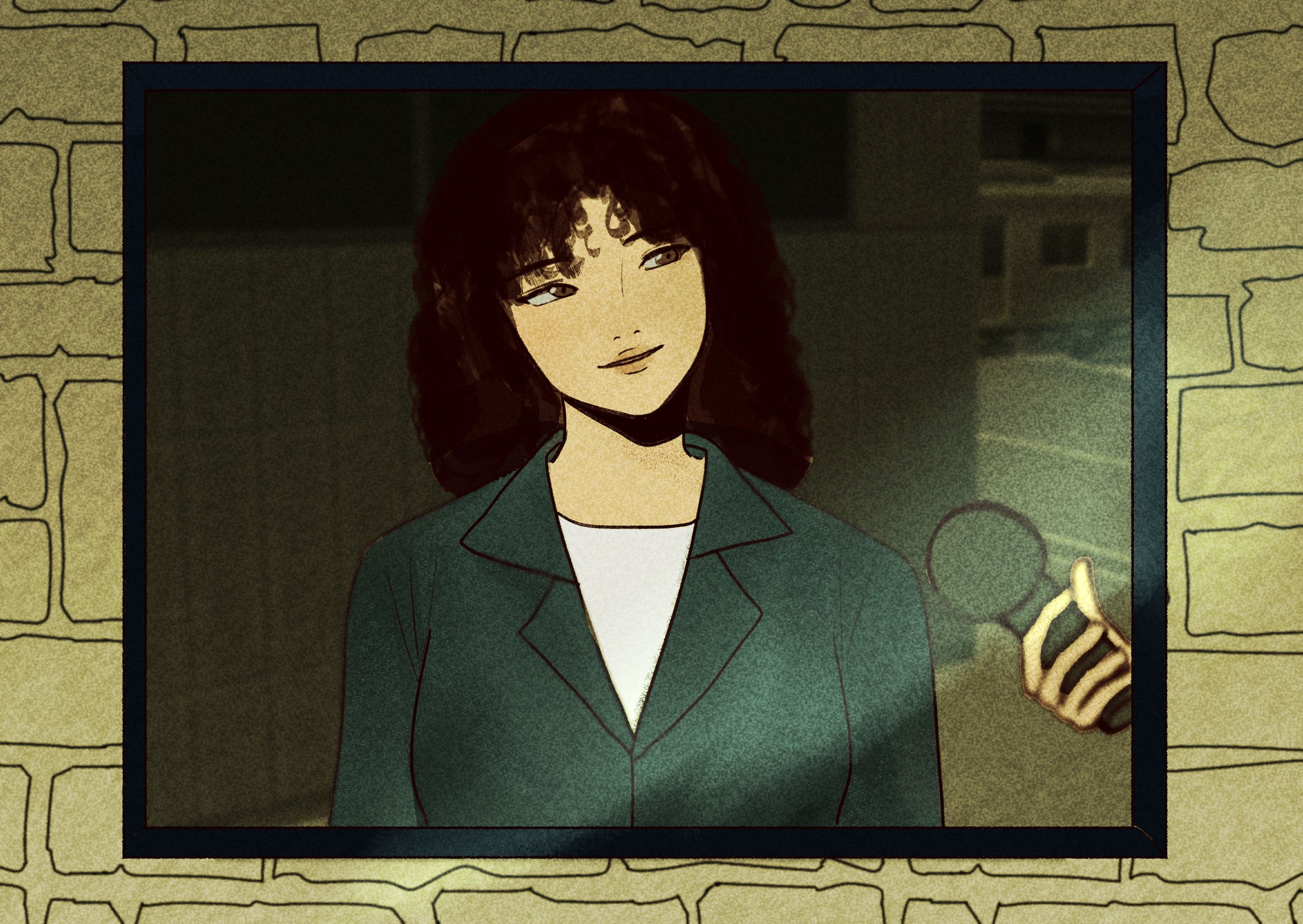
“Hello, welcome to The Real Story. I’m your host, The Secretary of War. I’m here in Flip, Montana, for an exclusive interview with the town founder and heiress to the Douglas food fortune, Miss Olivia Douglas. We are broadcasting live from Flip High’s auditorium in front of a studio audience. Miss Douglas, thank you for the invitation.”
“Thank you for accepting, Mr. Secretary. Just so you know, it’s Dr. Douglas. This is the first time I’ve intentionally been on TV. This is so exclusive that this is my first, and will be my last interview. Still, I wanted to do it for the people of Flip, to tell their story. As you know, you are in Flip, Montana, but the residents of Flip North and South Dakota welcome you as well. We’re united as one.”
“Let’s get to it. What do you make of the claim by Governor Hostetler that you staged a coup?”
“Well, the former governor is certainly entitled to his opinion, but I don’t give it any weight. Everything was done quite legally on the local level and, of course, on the federal level.”
“He says, quote, ‘Olivia Douglas and her ilk are part of a cabal of leftists determined to ruin this country.’”
“Ha! My ilk? That is funny. Well, of course, he would say that; he’s running for President. Did you know that it used to be considered uncouth to campaign for yourself? It wasn’t until 1896 that the candidates actually went out and stumped for themselves.”
“Um…I…uh…That sounds familiar.”
“Yes, well, I wish we could bring that practice back. People running for office should let their actions speak for them. The campaigns were shorter then too. I’d like to see that. Former Governor Hostetler started running for President as soon as he won his first election. He still hasn’t officially announced his candidacy, but I think he spent more time in Iowa than he did in North Dakota. It is exhausting, isn’t it?”
“Wouldn’t that just lead to more money in politics and outside interference? In private hands, without the candidates approving messages, people could just say anything and spend billions to influence the election.”
“That ship sailed with Citizens United. If a candidate ran on trying to get a law passed to overturn that, that person would get my vote.”
“You’re against Citizens United? I find that shocking. Isn’t that what you’ve done out here? The Supreme Court ruled that money is speech, corporations are people, and thus their money can’t be stifled because it is a First Amendment issue. You’ve clearly benefited from Citizens United yourself. You’ve used money as speech to influence elections.”
“That’s a funny turn of phrase. Where is ‘out here’ exactly? Out from where? Isn’t your network always claiming that the coasts are full of the elites? I’m from Alabama, and I live in Montana. Where do you live?”
“I..uh…I live where I work, which is more than I can say for most of your employees.”
“That is inaccurate. The majority of my employees live and work in Alabama, just as they did when my grandparents started the company. My brother oversees the day-to-day operations of the farm and the plant. Of course, we have plenty of remote workers all around the world, and some of them live in this area, but the headquarters is still in Alabama, and it always will be. Believe me, we’ve had a lot of offers to move or sell, but we really want to keep the business in the family. So I wonder why, since you and your co-hosts, and the other talking heads on your network, love to talk about America’s Heartland, why haven’t you advocated for your headquarters to move?”
“I’m not the owner, Ms. Douglass. I don’t make those decisions. I’m not a billionaire. I don’t have that kind of influence; unlike you, who can afford to buy whole towns and influence elections how you see fit.”
“This is why I demanded that this interview be live and in front of an audience. I’ll make it very clear for your TV audience and for the record, so when people watch this conversation minutes, hours, days, or years in the future, the facts are clear. I’ve never spent a dime on politics. I’ve never endorsed a candidate, no matter how much people like you and ‘your ilk’ ask me. I don’t have a Political Action Committee. I think they are despicable.”
“Fine. If you want to set the record straight for my audience, why don’t you tell them, if this wasn’t a coup, how all of this came to be.”
“I was with my nephews. They gave me permission to talk about this, just so you know. Jonah is here now if you need to check the veracity of the story. They were on summer vacation. They lost their mom earlier that year. This was ten years ago, during the first year of your time working for the administration. It was really hard on the whole family. I really loved my sister-in-law. The boys were 13 and 15, and they were struggling. You know it’s a hard time to be a kid on a good day, but that was a real blow. I thought it would be good for them to get out of the house. We couldn’t decide where we wanted to go. So, I rented an RV so we could go anywhere. We planned on trying to hit all the contiguous states in six weeks.”
“That is quite an undertaking.”
“It was. It is. It can be done in less than six weeks, of course, but we had time. I have a great group of leaders in my philanthropic wing of the company. I knew I could trust them to run things for six weeks. I called in once a week just to check, but they didn’t need me.”
“So, your job is essentially ceremonial?”
“Didn’t you have a guest host last week?”
“Yes, well… You were saying.”
“We made rules. We had to get out and touch the ground in every state, and we had to pick up something. It could be something we bought, like something kitschy from a tourist trap, or it could be a unique rock, or a pine cone, or a sand dollar. We would have to write down why we picked what we picked, and at the end of the trip, we would share with each other.”
“This is really touching, Miss Douglas, but I don’t see how a road trip with a single, childless woman and her teenage nephews has anything to do with the fact that you essentially upended democracy as we know it.”
“I know that the former Vice President would call me a cat lady, and I know you agree. Although, I guess I’d rather never have been married than to be married and divorced multiple times. I’m not going to take your bait and become a meme. If you want to use ad hominem attacks, you can, but I’m thick-skinned. Look at me. I grew up in Alabama looking like this. It doesn’t matter that I sound like this, with an obvious Alabama accent. If you called me, without video, you’d think I was just another sorority girl at Bama. Then you see me or my brother, and we look like this.”
“You’re a Douglas. Everyone knows your family. Plus, your father is American.”
“I’m American! I was born in Alabama.”
“I meant…”
“You meant, my father is white. You mean I’m part white and I’m wealthy, and that always worked for you. Straight, white men have a different path. My father’s path was much like yours, I suspect, although he did marry an immigrant, and that wasn’t a popular choice with his peers. Yes, of course, half of my family is white, but that doesn’t mean anything when you don’t see me with him. When you see me. When most people see me, they see what they want to see.”
“We have to take a commercial break.”
The B Block
“Welcome back. I’m here with Olivia Douglas, here in Flip, Montana. Miss Douglas, you were saying before the break that you and your nephews took a road trip that you claim was the impetus for what some call a hostile takeover of America.”
“It’s Dr. Douglas. I wouldn’t characterize it as such, but I understand why you feel that way. If anything was untoward, wouldn’t there have been some lawsuits to stop it? There hasn’t been one. Just bomb throwing verbal attacks. I’m used to those. I’m a woman of color who works in philanthropy.”
“Is that what you think this is? You’re on some philanthropic mission?”
“That’s it exactly. Thank you, Mr. Secretary, for articulating it so well. I am a philanthropist. I always felt like I was one, and I wanted to use my family’s money for good, not that we ever did anything nefarious; I just wanted to do something good. The best people I knew besides my parents were my teachers, so I got my undergraduate degree in Education. I thought I would be a history teacher, but then I earned my graduate degree in Ed Leadership, both from Alabama; Roll Tide! Then, I went to the Lilly Family School of Philanthropy at Indiana.”
“That right there is what is wrong with higher ed. A degree in philanthropy? If you want to give away your money, just give it away. I ran a charity, and I didn’t need any fancy degree.”
“The charity almost went bankrupt when you were there.”
“There was a recession. Charities always do worse in a recession.”
“Yes. Well. There is a decline, and there is bankruptcy.”
“Look, we’re not here to talk about me. We’re here to discuss and hopefully dismantle the myth you’ve created around this clear constitutional crisis you’ve created.”
“Well, it is funny that you mention the constitution, because the crisis wasn’t what we’ve done here in Flip, but was done when the decision was made, in an effort to keep slavery. Article I, Section 3. It sets up the parameters for the Senate. I’m sure you’re familiar with this section, right, Mr. Secretary?”
“I was part of the Executive Branch.”
“Still, I would like to think, though, that regardless of what branch of government you were part of, you would have versed yourself with the document you swore to defend, both as a vet, thank you for your service by the way, and as a member of a presidential administration.”
“Of course, I’ve read the Constitution. I just don’t have it memorized like you. I wasn’t a history teacher.”
“You studied politics in college. Since that is the literal foundation of politics in this country, I would have thought you must have read it a few times.”
“That was a long time ago. I’ve done so much since then. I have a nightly show; I have seven children. I’m much more concerned about the here and now, not the distant past.”
“Well, I just think, since you’ve been saying I caused a Constitutional crisis, you would know what part of the document I put in danger. I’m pointing out that in the not-so-distant past, in the great scheme of things, the founders, all white, mostly slave owning men, decided that they would give each state two Senators regardless of population. They gave the members of the Senate, who at the time were directly elected not by the people, but by the state legislatures, also full of rich, white men, exponentially more power than they gave what they called the ‘People’s House.’ I understand why the northerners capitulated. They were trying to do the greater good for the greater number, even though they agreed that slaves were only 3/5th of a person, so they already took power away from the House of Representatives by dehumanizing people. They just made it worse with the two votes per state idea.”
“If you wanted to give a history lecture, I’m sure there would be a job for you here, at the high school.”
“No, this isn’t a history lecture; this is part of it. You asked how all of this came to be, and I’m telling you. I was out on the drive with my nephews. We’d been at it for a few weeks. We hit all of the East Coast states and had cleaned up on the upper Midwest. We were stopped overnight in Minnesota, deciding how to hit North and South Dakota, which isn’t as easy as it sounds. Remy, the 13-year-old, who is 23 and lives in Wyoming now, was sitting at the table in the back of the camper, with the big paper map spread out on it, and he noticed that Montana, South Dakota, and North Dakota all touched in one spot. He thought that if we went there. We could touch ground, get a memento, and knock three states off at once without having to zig and zag too much.”
“Pretty smart kid.”
“He is. Did you know that the population of those three states was just over 3 million people? If you throw in Wyoming, it is still fewer than 4 million people.”
“I did not.”
“Most people don’t. I didn’t know then. At that time, 35 states had populations of more than 4 million people. New York and Los Angeles each have more than those four states combined. 15 cities have more than 1 million people in them, meaning that 15 cities had more people than Wyoming or either Dakota, and ten cities had more people than Montana.”
“I hate to take a break while we are learning all about this riveting census data, but we must. Maybe when we return, Miss Douglas will finally enlighten us.”

The C Block
“Welcome back to The Real Story. We’re still here with Olivia Douglas, the self-proclaimed philanthropist, who has assured me that she will finally tell us the real story about how this town came to be.”
“I have a doctorate in Philanthropy. Indiana University proclaimed it, not me. So, it turns out that at the three corners of Montana and the Dakotas, there is a little stone monument. They call it a tripoint. It was on private land. We had to get permission and hike, and work really hard to get there. It was totally worth it, and I am so glad we did it. We took silly pictures and agreed that those would count as our mementos. We didn’t want to take anything from the owners. When we were done, back in the trailer, and heading south to Wyoming, before we zigged back to catch Idaho. The boys were in the back resting, so I was listening to satellite radio. The former Senate Majority Leader, who is from South Dakota, was giving an interview.”
“He is a great man.”
“He is certainly a man.”
“Do you hate men?”
“No. I don’t dislike anyone for being born who they are. I subscribe to what Dr. King said, and I judge each person on the content of their character. I judged the former speaker, and I found him lacking character.”
“He is a fine family man. He gives to charity. He was never once embroiled in a scandal. His record is impeccable.”
“If your bar is ‘not being scandalized,’ then that is a low bar indeed. I respectfully disagree with his unassailable record. It occurred to me that he had a lot of power. So much power. He and his colleagues from the Dakotas and Montana, and Wyoming had a lot of power. I mean, the Senators out here could easily meet all of their constituents and know them all by name, whereas the Senators from even a mid-sized state like Michigan couldn’t ever possibly do that. So I was thinking about his oversized bag of power. Not because he was the leader, he actually earned that job, but because he happened to live in South Dakota. Even if he were not the leader, he would be overpowered. So I was listening to him talk about how he was willing to change some rules to push through a bunch of judicial nominees all at once instead of having each of them get their hearing, as it has always been done. He knew he could do it because he had the votes. So many votes in the Senate that represent just a fraction of the country that are making decisions for the whole country. It just didn’t seem right.”
“I remember this. The liberals were blocking those nominations. That’s what’s wrong. You don’t block judges for no reason. I recall that later that year, he did manage to do it.”
“Amazing that you can remember something like that. It must have truly been monumental.”
“It was a great day when the Leader overthrew the obstructionists.”
“You say blocking nominations, others say doing their constitutional duty.”
“What difference does it make? All of those people were going to be confirmed. The other side didn’t have the votes. You just admitted it. The votes were counted before the process was even in. It was just about saving time.”
“It may be that they would have all been confirmed. Still, those judges were all adamantly against bodily autonomy for women, and they needed to put all of that on the record. They needed to own it so that if there was an appeal in the future, or if there was a cause for the judge to recuse, there would be evidence. Evidence matters.”
“So, while the Majority Leader was being efficient with your tax dollars, you hatched this scheme?”
“Scheme didn’t always have a negative connotation. It used to just mean putting a long-term plan or strategy into effect. So, using the original meaning of the word, then yes.”
“Which was to unseat the Senator.”
“No, my plan was to solve the constitutional crisis about unequal representation. I knew that the populations of those three states were low, but I didn’t know how low. I knew that Montana used to be a swing state, but that the Dakotas never were. I called my personal assistant and had her start looking up numbers. By the time we got to Casper, I had a plan. His losing his job was a perk.”
“Well, with that shocking revelation. We’ll take our final break. We’ll be right back.”
The D Block
“And we’re back. If you’re just joining us, Miss Olivia Douglas just admitted that ten years ago, she used her resources and employees at the Douglas company to oust the Senate Majority Leader.”
“It’s Dr. Douglas, Mr. Secretary. You know that this is being recorded, right? I said no such thing. I said very clearly that I called my personal assistant. She worked for me, not the company. I do personal philanthropy, not just philanthropic work for the family. Micky, who is here today, still works for me. Of course, she has her own assistants now, but she is my right arm, and she had just as much to do with the growth of Flip as I did. It was my idea, but she helped work out all the details.”
“So we have her to blame as well?”
“Or to thank, depending on your perspective. She was the one who negotiated the sale of the land.”
“You bribed the original owners?”
“The original settlers were pushed off that land over a century ago. I didn’t consult the Native American Tribes, but I did make sure that the names of the roads and buildings reflected and honored those original settlers. The people who owned the land ten years ago, interestingly enough, were all more than happy to sell. There was no bribe. Bribes are what happen to keep something quiet. I just made an offer for their land.”
“And you think that was ethical?”
“As I said before, my brother and I get offers to sell parts of our company weekly. Anyone can make an offer; no one has to take it. We certainly don’t.”
“So…You vacuum up all this land and then what?”
“I filed paperwork to incorporate the town of Flip in all three states. Starting up a new town is actually easier than it sounds. Of course, the first time I read about starting a breakaway town was Galt’s Gulch.”
“Galt’s Gulch?”
“Atlas Shrugged.”
“I’ve heard of it.”
“You’ve heard about it. Right. I’m sorry. I just thought you’d read it because it was such an inspiration to Project 2025. I thought it would be a topic about which we could agree on. I’m a big fan of her writing. Not all of her ideas, but she is a good writer. Anyway, in Atlas Shrugged, Rand creates a town out in the mountains where people who are sick of the way the country is going can live and thrive. I think making a utopia is a good idea, to be sure. Of course, when the richest man alive built that town in Texas, I knew it could be done. I don’t remember you doing a show from there, concerned about that.”
“I wasn’t working here then. I was in the administration.”
“Actually, he started that town when you were co-hosting a show on this very network.”
“I’m not here to litigate the past, Miss Douglas.”
“Really? This whole thing is about litigating the past. You are here now because in the past two elections, your worst fears have been realized. You ignored me for years because it seemed like a crazy idea to build a new city, one that spanned multiple states, like Texarkana. Now that we’ve grown and your men are out of office, you have to pay attention. What was it you called us, ‘those crazy hippies on their prairie commune?’”
“We are running out of time, Miss Douglas. Where is this going?”
“I wanted there to be a place where other people like me could go. I thought there must be other disaffected people who lived in America’s Heartland who were living in ruby red states who felt that their voices didn’t matter. I didn’t know how many people didn’t bother voting, but I suspected the numbers were high. I thought if I could build a place for them, those folks who were tired of the same people, mostly men, who didn’t have their best interest at heart, making huge decisions for the rest of the country, that maybe they would come.”
“The Field of Dreams theory?”
“Yes, exactly. You have been making some excellent points for me tonight. Thank you. I thought if I built it, and I explained it, they would come.”
“So this was about the electoral map? Why not try to change that? There is a movement for states to agree to give their electoral votes to the popular winner.”
“No, it seems like that, but I didn’t care about the electoral college. Of course, I do, I think it needs to go as well, but the real trick was the Senate and the state legislatures. It is where the power really lies. The states gerrymander, and the Senate confirms judges and pushes the agenda of the President. We figured that if we could get a total of three hundred thousand people to move to the area, with one hundred thousand settling in each state, we could put the state legislatures in play, flip the four seats in the house, and most importantly, flip those six senate seats, because, as you know, Article I section 3 says that every state will have two members of the Senate, each of them with one vote. If we could get those six seats to be firmly in line with the will of the American people, we would be in better shape.”
“Who are you to make that decision?”
“It isn’t just me. America is a centrist country after all. Americans want compromise and landing six new Senators who have to meet the needs of all their constituents, not just those on the extreme right, the country would be better off. The majority of Americans want bodily autonomy for women and equal rights for the LGBTQ+ community, but six or ten Senators from small states with safe red voting blocks don’t have to care about that. They only need to appease one party, which has actually turned into appeasing one family.”
“So you admit this was your plan, but you still hold to the story that this isn’t a coup?”
“In 1984, President Reagan won 49 states. Demographics change. I simply created an opportunity for demographics to change with more precision.”
“The infrastructure alone must have been daunting and expensive.”
“It was, but it was worth it. We contracted with some energy companies and built some wind farms, but of course, there is a lot of natural gas here too. The water and sewers were a heavy lift, but we made some environmentally friendly septic systems while we worked on connecting to sewers, and we used old-fashioned water towers. They are quite effective. Satellite internet is easy to get now, so connectivity wasn’t an issue. We built quickly using unused shipping containers. They are durable enough for transoceanic travel, so we felt they would hold up to the weather out here. Many of the homes and businesses are still in those containers. I live in one, and my entire office complex is built from them. Of course, there has been some new construction using brick and steel. American steel, built by union workers. I knew that the towns would continue to expand for years and years. I actually had quite a few companies bidding for construction contracts. We ended up needing them all. The construction crews were some of the founding residents. We needed roads, parks, schools, everything.”
“And those people still live here?”
“Here is relative. Some live in the other states, but essentially here. I knew it would be more cost-effective than trying to build three cities. With one big city, the initial services could be spread out. When we first started, there was one movie theater in North Dakota and one hospital in South Dakota. We have grown so much that we have more than one of everything. People are constantly launching new start-ups. Most of them are mom and pop shops, but we do have a few chains too. We made a town square that serves as the intersection of all three towns. The original Tripoint marker is still there.”
“It really is quite the story, but do you really expect my audience to believe that people willingly moved here? Be honest, this town is full of your employees. You say that you didn’t spend any money on politics, but by paying people to move to this backwater, you are using money to influence politics. What you are doing is worse than any attack ad or political action committee. You are coercing people. This is just a company town. You’re just a robber baron.”
“I own exactly one local non-profit. I sold off the plots of land and the parts of town as people moved in. I actually sold them at cost. Rand wouldn’t love that, but I have a non-profit heart.”
“But the power you have is immense. You could swing an election with a word. You are the face of this.”
“Maybe, but I don’t do any of that. I haven’t stood for office. I do serve as a board member on the art council. I knew it was important to bring art to a town. Part of getting people to come here was to give them something to do. We get the national tours of musicals. We get huge bands and comics to come and perform here. We have a vibrant club scene where smaller artists play. We have a college, a non-profit liberal arts college. All of these things are run by other people. I laid the foundation, but I own almost none of it.”
“That can’t be true. Why do this if there is nothing to gain for you personally?”
“Oh, Mr. Secretary, you’ve not been listening. I hope your audience has been paying attention. This…this whole experiment…this whole utopia, was never about me.”