
Sara opens the curtains in her room, peers out the window and sees Ben standing down by the lake. The sun glints off its surface, causing the refracting light to travel skyward, filter through the tops of sycamore trees, then return to earth, where it settles on Ben’s stoic face.
Now’s a good time to tell him, Sara thinks.
After obtaining the required permission from Nurse Julie—it is a psychiatric hospital, after all, although Sara is scheduled to be released soon—she pulls on her socks and shoes and heads outside.
“Are you reflecting, again?” Sara asks.
“Real men don’t reflect, they act,” Ben replies.
Ben had this annoying habit of answering almost any question with a twist of pop culture trivia. As much as she tried to avoid it, Sara frequently fell victim to contemporary cliché in this little dance.
“Sure, and women are from Venus, men are from Mars,” Sara says.
Sara met Ben a year earlier, right after they both moved into the Indian Head Lake Healing Center. They were broken in different ways, but an adequate number of the uniquely shaped jigsaw pieces of their personalities interlocked and they connected, becoming confidants; the remaining jagged pieces lay jumbled in their respective psyches, preventing a complete picture from ever being assembled.
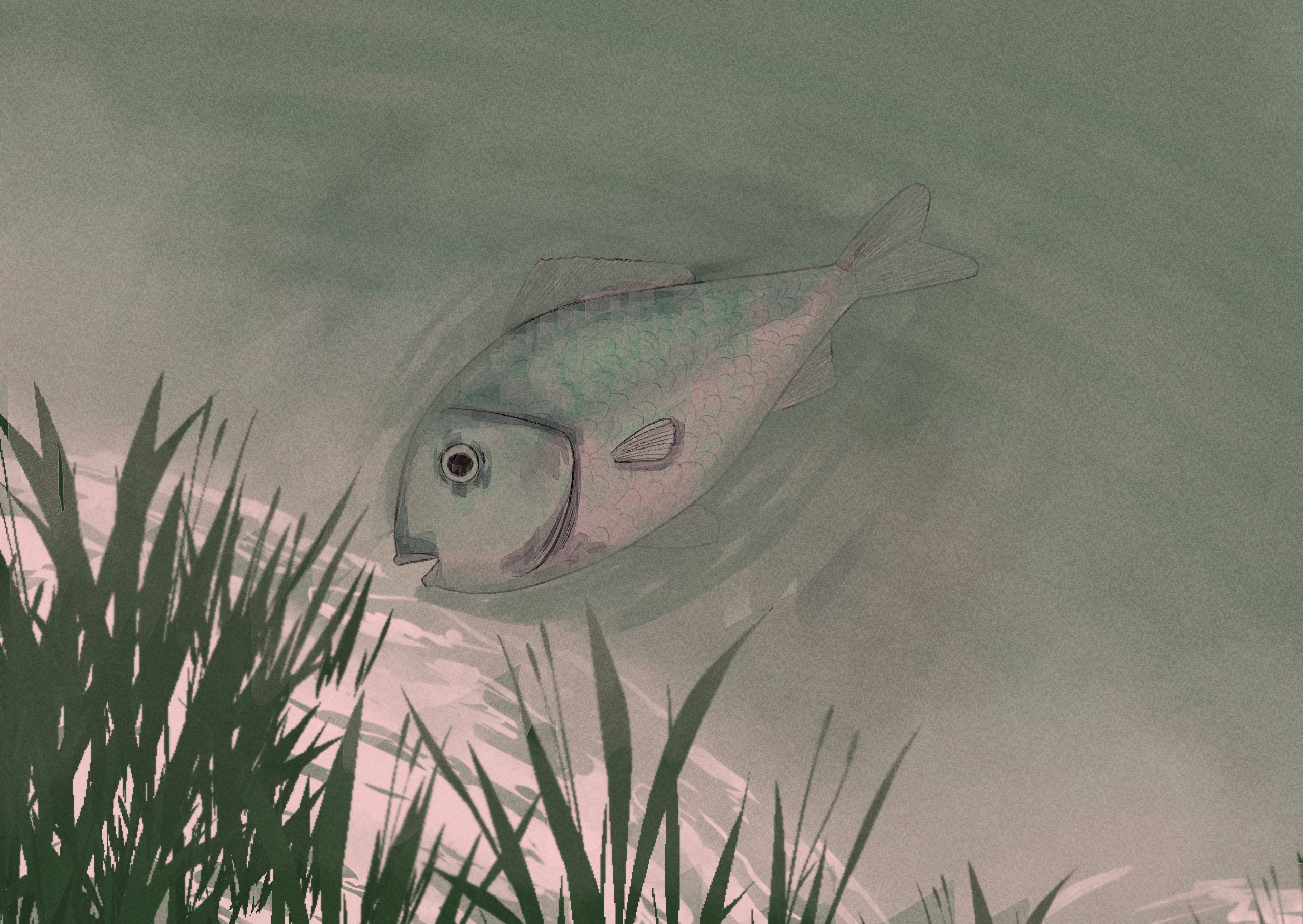
“You see that shiny, silver object floating on the lake?” Ben asks.
He points far out across the flat sheen of Indian Head Lake.
Sara squints against the glare reflecting off the water. “I see something,” she says. “What is it?”
“Could be a dead fish,” Ben says. “Or maybe it’s a roll of duct tape, or a gun.”
Sara thinks it’s more likely a dead fish. A dead fish would float, for a while anyway, before larger fish devoured it or vultures swooped down for an easy take-out appetizer. A gun would probably sink because it’s heavier. It wasn’t unusual to see official types dredging the bottom of Indian Head Lake, searching for missing people who had run off from the healing center or maybe a gun that somebody wanted to get rid of, probably from the condos on the other side of the lake.
Duct tape might float or not, and could be perfectly harmless, an ordinary staple of everyday life found in kitchen junk drawers all over America; or, it could be used in more sinister ways.
Sara tries to make out the shape of the object, but it’s too far away.
“A gun?” she asks.
“I’d ask an expert like Hunter Thompson, but it’s a little late for that,” Ben says, smirking.
More pop culture trivia, Sara thinks. This is getting old.
“Selfish bastard,” Sara says, frowning.
“Who?” Ben asks. “Me or Hunter?”
“Suicide is the ultimate act of selfishness,” Sara replies.
“What about an attempt gone bad?” Ben picks up a stone and throws it Frisbee-style across the lake. Sara watches it skip-hop-skid and come to a rest near the shiny, silver object.
“Close,” he says.
“But no cigar,” Sara says. “Let me try.”
Sara spots a stone nestled in a groove left by Ben’s hiking boot. She scoops it up and cradles its cool dampness in the palm of her hand. The stone is smooth and symmetrical, perfect for the task.
“What are you waiting for?” Ben asks.
“What if it’s an Indian head?” she says. “It could be thousands of years old.”
Ben laughs. “Would you deny it its fifteen minutes of fame?”
“Sometimes it’s better not to know the answer,” she replies.
“Hey, why’d you come down here anyway?”
Sara fidgets with her healing center electronic bracelet. “It was just such a beautiful day,” she says.
That wasn’t a total lie. It was a beautiful day by most standards. But that really wasn’t why she’d gone down to the lake. She’d gone there to tell Ben the truth; the beautiful day had gotten in the way. Had it been raining, it might have been a different story. All things being equal, Sara was perfectly capable of hanging her future on the whims of a cold front.
“Did you tell him?” Sara’s sister asks when she stops by later that day.
“No, I didn’t have a chance,” Sara says.
“You’ve got to tell him.”
The medication didn’t allow for much edge or urgency in Sara’s voice. It was flat, like her, like the lake.
“I will,” Sara says.
Sara remembers the exact time she stopped loving Ben; it was 6:08 p.m. on a Sunday. She’d just eaten dinner and was sitting on the couch in her room. Sara wasn’t sure why it settled in her brain then, instead of, say, Monday at 6:08 a.m. Still, she wasn’t that surprised; she was going home soon and Ben wasn’t. It always comes down to timing.
That evening, Sara sat and stared at the clock with the Dali-inspired face that hung on the wall. It was a present to her son, Jason, from his father’s girlfriend many years before. Jason gave it to Sara before she came to the healing center, telling her she wouldn’t be there very long. Sara had always liked it because it was a work of art more than a clock. Telling time seemed to be its secondary purpose, an afterthought. It was battery operated; she liked to listen to the seconds, minutes, hours tick-tock along. Yes, she counted them sometimes out loud; OCD was one of her issues.
Sara’s favorite Dali painting was Persistence of Memory. She referred to it as “melting clocks, the stretching of reality.” Ben called it “the spilling over of time.” By the time the second hand clicked to nine that Sunday evening, it was already too late.
***
Indian Head Lake was surrounded by brand-new condos on one side and by the psychiatric hospital on the other. Both provided upscale living arrangements, but only one offered meal service. The condo owners appeared to be managing their lives successfully. They went to work, took vacations and watched the evening news. Not infrequently, if you looked across the lake, you could see one of these owners peeking out their French Doors and staring back. They could see the residents of Indian Head Lake Healing Center on the other side, standing down by the lake taking in their prescribed hour of fresh air. It was far enough away so as not to overly concern them, and it probably helped them feel somewhat superior that they’d been able to keep it all together, and what a shame, they thought, that some could not.
One day early on after Sara was admitted, she opened the curtains in her room, looked across the lake and saw a family barbecuing. She suspected it was the dad neatly lining up the hamburger patties on the grill. He was wearing one of those silly aprons that had something written on it. She couldn’t make out what it said, it was too far away, probably something like Dad, World’s Greatest Cook. A woman came up next to him and said something, which of course Sara couldn’t hear. Maybe “Honey, don’t overcook the burgers,” and then she patted him on the back and walked away.
It could happen to you, too, Sara thought, so don’t be so smug.
Ben is probably eating dinner now; he has no idea it’s over, no idea that I’ll be leaving soon.
“I’ll have the cheese omelet,” he says, not knowing that his life is about to take another dramatic turn. He thought I’d always be here, the spilling over of time.
Sara packs her suitcase and carefully places her Dali-faced clock on top.
I’ll walk down to the lake again tomorrow and tell him then, she thinks, weather permitting.
***
Sara opens the curtains in her condo’s living room, looks across the lake and sees Ben standing in a light rain. A woman comes up next to him and says something, which of course she can’t hear, maybe something like “I don’t love you, anymore,” then pats him on the back and walks away.
Ben pulls a shiny, silver object out of his pocket. Sara can’t make out what it is; the rain and distance obscure her vision. He holds it in his hands for a few seconds, then flings it into Indian Head Lake. It appears to float briefly, then disappears under the surface.