
In one of the oldest photos of my brother and me, I am sitting on a rug in our living room, no more than two years old, legs outstretched, reaching in front of me. Nick is sitting on his knees, leaning forward, handing me a red soccer ball. My eyes are on the ball and I wear a little smile while Nick’s mouth is open in conversation. He looks earnestly excited to be sharing this with me.
Growing up I remember often walking to meet Nick’s friends at the bumpy grass field called ‘the dogleg’ a five-minute walk from our house — he always let me tag along for soccer. I was in grade school when one afternoon he was putting his cleats on at the step by our front door and asked if I was coming. I said I had to do my homework. He took my math workbook, looked at the page, and then looked at me.
“Do you understand how to do this?”
“Yes.”
At that he nodded, took my pencil, and for the only time in my memory, he did my homework for me. Then he closed the book and continued tying his shoes.
“Okay, let’s go,” he said.
Spring, summer, and fall we would walk to the dogleg or another nearby field to play World Cup for hours until someone’s parents called and said it was time for dinner. I was the only girl and I was four years younger than everyone else, but it almost felt like this gave me an advantage. After doing a move or stripping someone of the ball, his friends would yell and belittle whoever I had beaten: “How does it feel to get beat by a girl?” It should have been insulting, but it just fueled me. I relished being the underdog and having something to prove, if not to anyone else on the field, to myself.
We returned to our respective homes covered in dirt and bruises and sometimes a little blood. I treasured my scuffs and scars like battle wounds.
On a surprisingly temperate August evening in D.C., I walked to a turf field a little over a mile from my apartment to play soccer. Fall was close to the point I could feel the faintest drop in humidity and see a few early leaves starting to fall. Perfect weather for a game.
In the final minutes of the match, playing defense I lunged with my left leg forward to block a shot. My trailing right knee bent sideways and I felt a painful, familiar crunch before dropping to the ground. I held my knee with one hand and covered my face with the other. Players surrounded me, nearly all strangers, not knowing what to do.
“It hurts,” was all I said. I desperately wanted to communicate something to them: This isn’t my first ACL tear. I did the rehab. I’ve been doing all the exercises I’m supposed to do. The first one didn’t hurt. Maybe this one isn’t ACL? I’m only on the ground because it hurts.
I don’t know what I was trying to communicate, but I only know I felt they didn’t understand. I was trying to make them understand, but those were the only words I could find.
“Breathe,” someone said.
The Anterior Cruciate Ligament (ACL) forms an X with the Posterior Cruciate Ligament (PCL) at the center of your knee helping connect the tibia and femur bones. There’s a handful of other ligaments at work along the sides of our knees and our meniscus which is more cork or sponge-like, providing shock absorption for all the impact we put on our knees day to day. Together they all keep our knees functioning so we can bend, pivot, squat, run, jump, dance, and generally move in all sorts of directions. When one ligament is torn, the whole structure becomes a bit or a lot less stable, depending which one. According to research, women are anywhere from 2-10x more likely to tear their ACLs than men.
ACL tears are generally non-contact, meaning the tear isn’t caused by a bad collision or fall, but rather from an awkward landing or change of direction. When the ACL is torn, it’s like a snapped rubber band. If you are young and want to maintain an “active” lifestyle of playing sports, doctors recommend ACL reconstructive surgery, where they take a tendon graft from somewhere else in your body, and fashion a new rubber band for you: A new ACL.
After surgery, with routine physical therapy patients are out of their brace around 4-6 weeks, can start running around three months, and are cleared to play contact sports somewhere between 9-12 months or more after surgery. Over 25 of the world’s top women’s soccer players were unable to compete in the 2023 World Cup due to ACL tears.
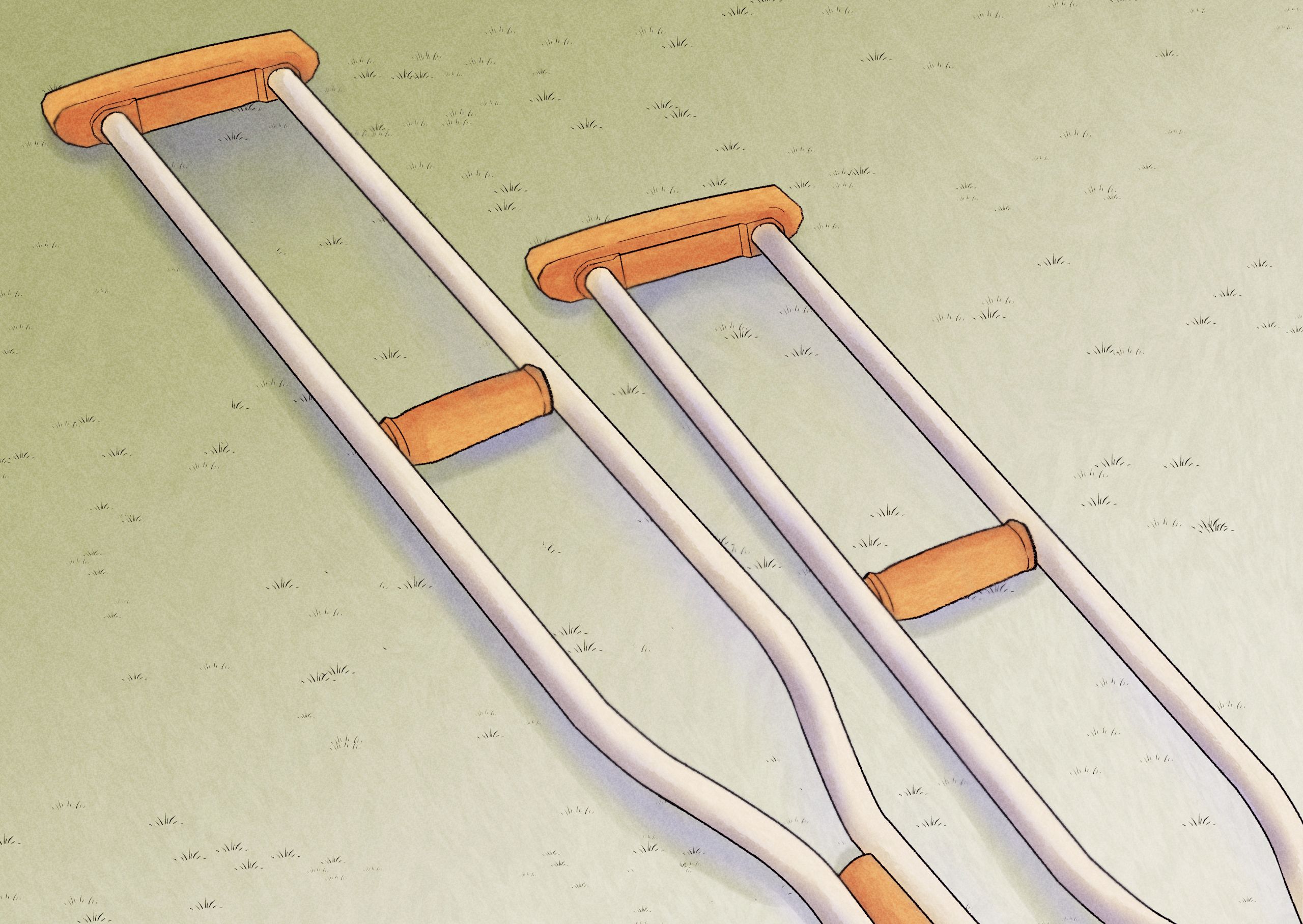
I slept about an hour the night of that second injury. By 6am I had to pee. I leaned forward and slowly lifted my legs up and around the side of the bed. Steadying myself with crutches, I tried putting a little weight on my right foot. The pain was so bad I winced with every step. By the time I reached the bathroom — only steps away from my bedroom — I was sobbing.
When I saw the doctor for my second tear he said that our body’s responses to trauma aren’t consistent or predictable.
The first injury I was almost waiting for the pain to set in, left in a strange limbo of knowing my knee was not okay, but not being able to feel or see it. In The Empathy Exams, Leslie Jamison writes about the relationship between pain and grieving:
“Part of me has always craved a pain so visible—so irrefutable and physically inescapable—that everyone would have to notice. But my sadness about the abortion was never a convulsion. There was never a scene. No frothing at the mouth. I was almost relieved, three days after the procedure, when I started to hurt. It was worst at night, the cramping. But at least I knew what I felt. I wouldn’t have to figure out how to explain.”
Fifteen months earlier, after my first injury, when anyone I knew heard the news, they always started by asking if I was in pain. I told them honestly, no. This time, however, I could feel and see the evidence of my injury. It hurt and it swelled. It felt like my body was giving me permission to grieve.
On my first-ever college visit, I went with my parents to meet the women’s head soccer coach and she asked me point blank, “So, why soccer? What do you love about it?” I sat and felt her words echo in my head as I searched for an answer. It was like she was asking, why do you like the feeling of sun on your skin? Or, why do you like to laugh?
It could have been a few seconds or a full minute that went by before I said, “I don’t know.” It was a good question, but one I had never considered.
When people hear that you’ve torn two ACLs in two years, they start to ask the same question, in a different way. After inquiring about my brace during an appointment, my dentist responded to news of my injury,“So, do you think it’s time to hang up your cleats?” My sister asked if I was considering picking a different sport. My dad, a retired physical therapist, gently shared that he was worried about me playing again.
After one ACL tear, odds of another tear are as high as 20%. As a woman, my odds are likely higher.
One study in the Orthopaedic Journal of Sports Medicine notes an increase in the chance of ligament injuries for women during ovulation and the luteal phase. Because of certain hormonal changes at that time, laxity increases in the ligaments, making women more prone to injury. Both my ACL tears happened during the luteal phase of my cycle.
This same article also notes a study concluding that oral contraceptives might offer up to a 20% reduction in risk of injury. I was on oral contraceptives from the age of 18-26 and have been consistently playing soccer since I was four years old. I went off of the pill and five months later, I tore my ACL.
I don’t know if my hormonal fluctuations played a role in my injuries. If you can find a study that tries to provide an explanation for the higher risk of ACL injuries in female athletes, more often than not the conclusion says something like “The lack of scientific evidence on this topic is remarkable, and further research is necessary…”
Of all the sports science research in the world, only 6% is focused on female athletes exclusively.
In my first appointment a week or so after my last surgery, the doctor asked if I’d like to see photos. He pointed to a series of photos on the monitor that looked like they’d been taken underwater.
“This is the torn ACL you can see here,” he said before pointing to a different photo, “And then over here is your new, shiny hamstring graft with those purple stripes.” I laughed. The knee looked like someone zoomed in on the body of an oyster. I can’t distinguish the torn ACL, or any other parts he tries to point out, but I can see the purple striped graft. My new purple striped rubber band.
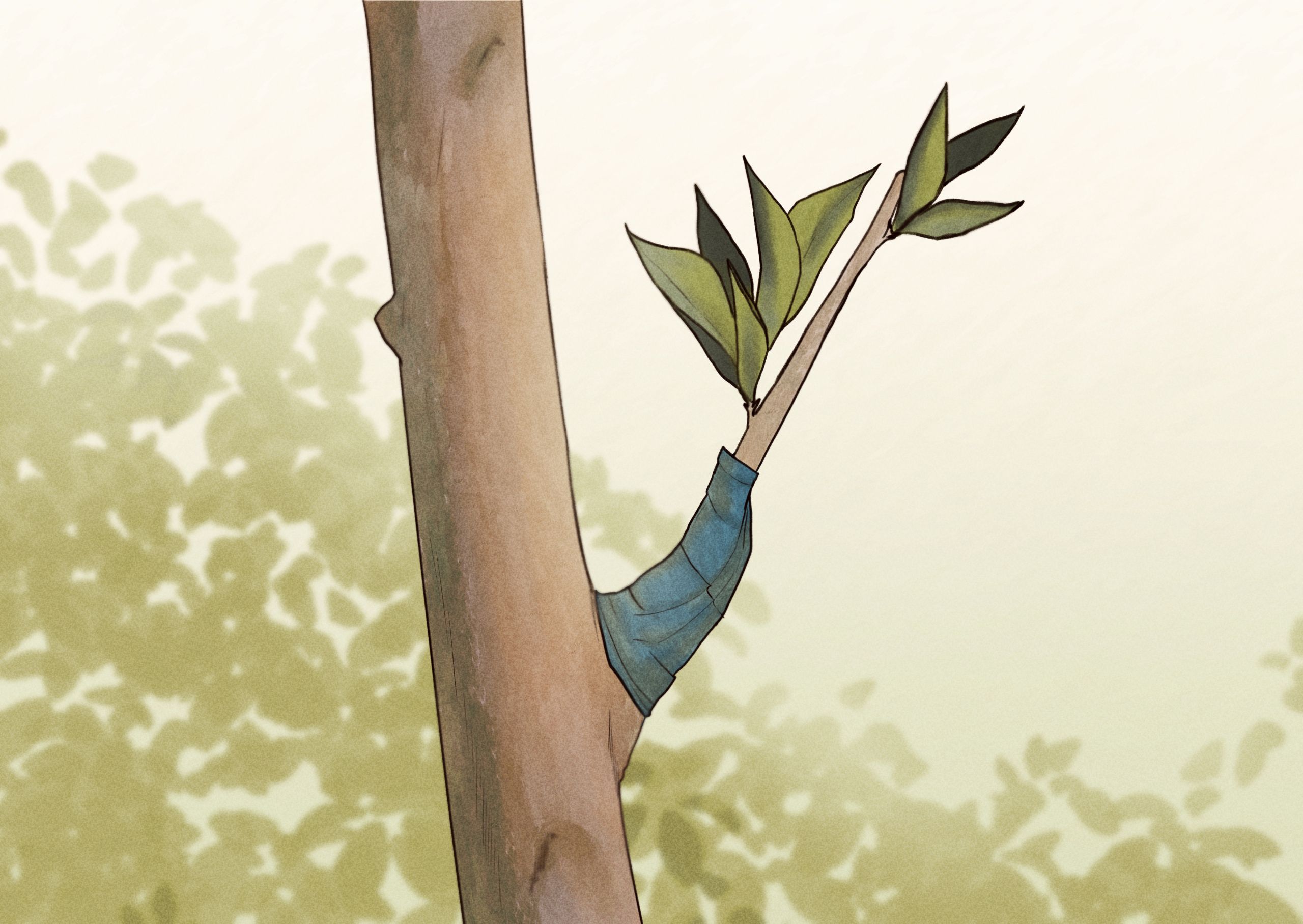
In a surgical context, a graft is a piece of tissue borrowed from another body part used to replace damaged (or in my case, missing) tissue. This application of the word came much later than the original definition, though which refers to the propagation technique of joining two or more plants to grow as one.
The etymology of “graft” comes from the Greek grapheion meaning pencil or stylus. When grafting, the cut end of the plant shoot resembles the tip of a pencil.
When I think about that college coach’s question now, what keeps coming to mind is a youth coach I played for just for one year. He was actually the assistant coach, and as the team warmed up for a game when kickoff was just a few minutes away, he’d have this contagious smile and say: “Remember, express yourself.”
I still revere my body’s bruises, bumps, scrapes, and scars. I think of the TV show Bones and how the forensic anthropologists could tell a story of a victim by analyzing their bones. Not just of how they died, but of their childhood, their occupations, their hobbies. A broken wrist from falling off a bike, stress fractures in the feet of a runner, the degeneration of cartilage in a construction worker.
My knees and thighs are constantly shredded in scabs from falling and sliding on unforgiving artificial turf fields.
My ankles have been wrecked time and time again by cleats of opponents while I go into tackles, leaving one pink scar alongside the bottom of my left and right tibias.
Even my left hand has marks along the knuckles from a warm-up game of tag in college soccer when a teammate accidentally stepped on my hand in her cleats, leaving my fingers purple and swollen for a week.
My nose has a small crescent-shaped scar on the side from a ball bouncing unpredictably.
The biggest soccer scar to date, though, is right below my left knee, a straight pink line, a bit darker purple at the top. They say to always wear sunscreen on the incision site once it’s fully healed to prevent bad scarring, but I think I chose on some level to ignore that.
Now I have a matching scar on my right knee.
Angel City FC and former USWNT player Christen Press returned to the pitch at the age of 35 after undergoing four separate knee surgeries in two years due to complication after complication following an initial ACL tear in 2022. I live on the east coast but I stayed up past midnight just to watch her step onto the field for the final five minutes of a match for the first time in over two years.
During her post-game interview she said, “When you get to play a soccer game, it’s a miracle.”
From childhood World Cup games with my brother and his friends, to college championships, to pick-up in a local park, to adult rec leagues — game days are always my favorite days.
After one ACL tear I was scared to play again, but I got through it with help from my husband, family, friends, a good surgeon, a good physical therapist. After two tears in two years, I’ve found myself reconciling with two selves and two possible futures. I felt stuck for months.
Toward the end of my most recent rehab, in one drill my physical therapist would throw me the ball and I had to jump up or to the side to head it back to him. I had been jumping for months already, but this was the first drill incorporating a ball. I had forgotten what it felt like — the joy of remembering yourself, the clarity of stepping back into your own skin.
I am aching to play again. I also can’t imagine ever being confident enough to step on the field without thinking, it’s going to happen again. I have little reason to think otherwise.
I know there will be a reason eventually, when the research catches up. It may not be in time for me to play without hearing a doubtful voice in my head, but I hope it is in time for the next generation of female athletes to get more minutes, hours, weeks, months, years, to experience the joy of their sport.
Until then, I will try again as I listen to that other, familiar voice that gets louder every day, begging for another game.