
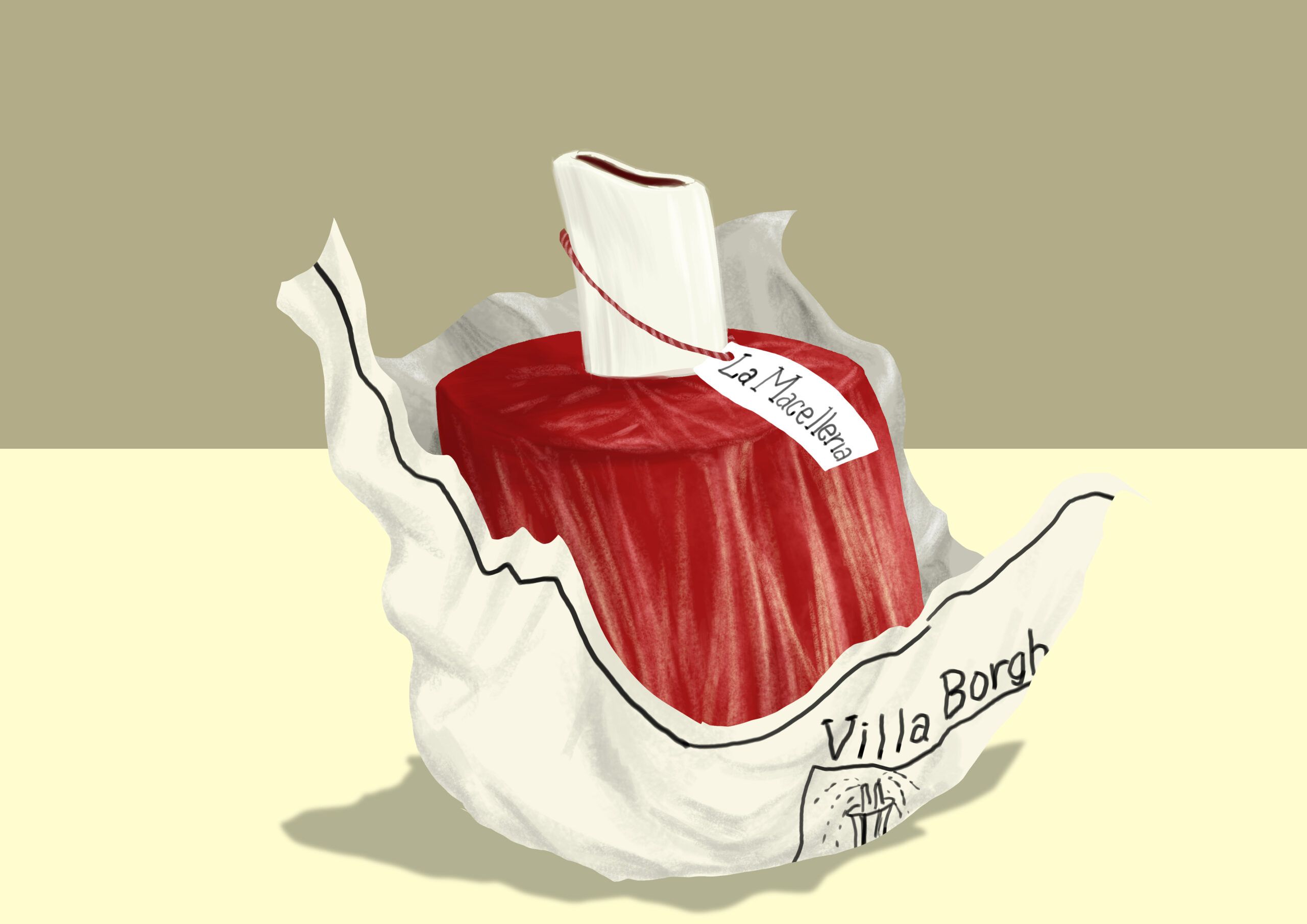
Part I
The first time Salvatore DiLuca slipped a boning knife between the joint of a chicken, he felt something holy crack open. He was twelve. Working under Carmine Rossi at La Macelleria off 104th. His mother sent him there after school because boys didn’t belong in kitchens with women, she said. They belonged where things were cut, not cooked. The knife had been too big for his hand, the steel worn smooth by decades of blood and soap, but he took to it like instinct. You had to feel the seam—not just look. Carmine said that. “There’s a language to the body, and a butcher learns to speak it without ever opening his mouth.”
Sal liked the cold back room best, where the carcasses hung like sleeping giants, ribs open like yawning mouths. He liked the fluorescent light buzzing above him. He liked the metal taste in the air. It smelled like work. Like legacy. By fifteen, he could quarter a bird in under a minute, skin a lamb without nicking the flesh. Carmine said he had butcher’s blood. Said it was passed down from men who fed villages. Men who sharpened their knives not for violence—but for ritual. By twenty-three, Sal owned the place. By thirty-five, he was the name people whispered when they needed something special cut just right.
Salvatore usually kept to the back. That’s where the real work happened—the boning, trimming, hanging, slicing. Out front was for charm and small talk, and he had neither. But that morning, he’d come out for a smoke and to check the register. Carmine was out sick. The kid sweeping was useless. And the display was crooked.
He was cursing under his breath, nudging sausages into neat coils, when the bell above the door rang. She stepped in like a song. All summer dress and flushed cheeks. Face like it had been carved from Carrara marble—those pure-cut cheekbones, those dark brows, those lips like crushed tomatoes. Her shoes were scuffed at the toes. Her hands folded polite. She smelled like lilac and sweat and soap. “Scusi,” she said, nervous. “My mama sent me. She needs veal shank. For Sunday.” Seventeen, maybe. Eyes too soft for this world.
Sal forgot to breathe. He forgot he was wearing an apron soaked in pig’s blood. He wiped his hands on it anyway. Cleared his throat like a man who hadn’t spoken in days. “We got it,” he said. “You want osso buco cut?” She smiled, like she knew what that meant. She didn’t. He led her to the counter like it was a chapel. Every motion deliberate. Reverent. He chose the shank himself. Cut it slow. Clean. Held it up to her like an offering. “You cook it?” he asked. “No, my mama.” “Shame,” he said. “You got the hands for it.” She blushed all the way up to her ears. Looked down at her fingernails, bitten to the quick. He wrapped the veal in butcher paper. Wrote the price in pencil. She paid in coins, exact. Didn’t meet his eyes when she took the parcel. But just before she turned to leave, she looked up. Held his gaze. And smiled. Salvatore DiLuca had been around raw meat his whole life. But that was the first time his heart had been cut clean open.
Her name was Luciana Maria—named for the saint who’d refused to renounce her faith, even when blinded for it. Her grandmother whispered it like a prayer when she spoke of her. Her father said it like a command. Salvatore, the butcher with rough hands and tender eyes, said it like she was already his wife.
He’d asked her out with the formality of a man raised under the Vatican’s gaze. He stood just outside the church steps after Mass, hat in hand, white shirt pressed so stiff it creased his posture. She’d come out of the nave in her Sunday best: a sky-blue dress with a lace collar and white gloves she didn’t quite know how to wear. He said her name, just once, and she turned “Would you allow me to walk you next Sunday, Luciana Maria?” Not out. Not on a date. But walk you. As if each step might be examined by Saint Peter himself.
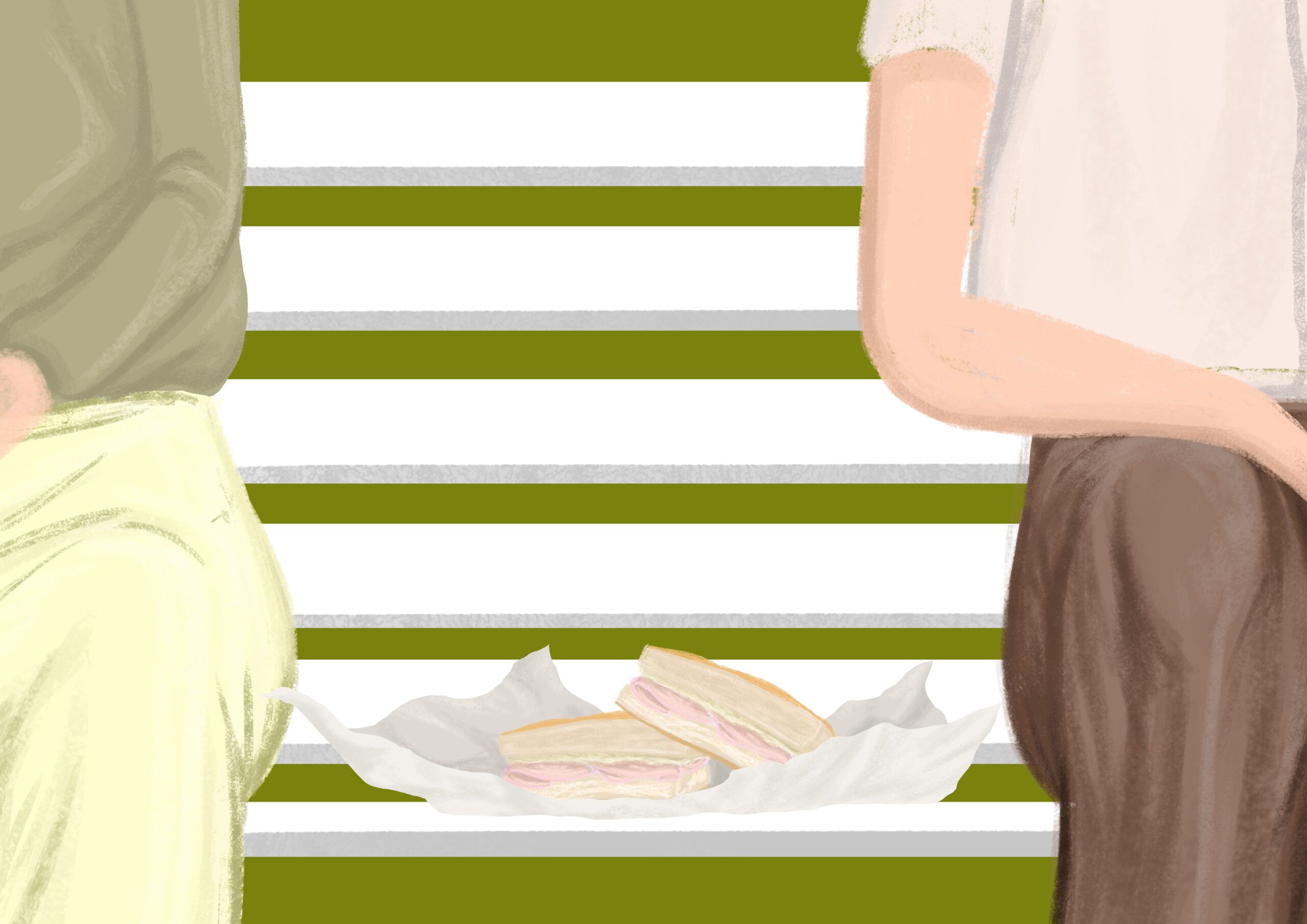
Their first proper outing was to Villa Borghese, a little local park with a fountain and white benches, near the bakery that made amaretti like his mother’s. She wore a cream skirt that brushed her ankles and a cardigan the color of sage. Her shoes were polished. Her rosary tucked into her purse. He brought a folded cloth napkin. Two sandwiches. Mortadella on focaccia, thick with olive oil and sliced tomatoes. He’d made it himself that morning before the shop opened. He placed it between them on the bench like a peace offering, then sat a respectful foot away.
They talked about their families first. Then about the bakery. The weather. Her father’s pigeons. He told her about his Nonna’s garden in Naples. How rosemary grew wild up the hill and how his mother used to boil laundry with lavender. She told him how she’d always wanted to go to Florence but had never left the city limits. He offered her a second amaretti. She took it, blushed. He noticed the mole beneath her left eye. The way her lips pressed together when she was thinking. She noticed the way he sat—spine straight, knees tight, as though respect was something you could physically perform.
When he walked her home, he didn’t take her arm. But when they reached her door, she turned, and said, “You are a very good man, Mr. DiLuca.” He didn’t sleep that night. Not really. He thought of her gloves. The gentle tilt of her head. And the way she said his name—Mr. DiLuca—like it might someday be hers.
part II
Salvatore DiLuca brought a porchetta, whole skin crisped to lacquered bronze, stuffed with garlic, wild fennel, rosemary, and crushed red pepper. He carried it like an offering to the gods. It was wrapped in brown butcher paper, string-tied, juices just starting to seep through. It was, perhaps, a bit much. But Salvatore understood instinctively that a man’s intention should arrive before he does.
He had been invited—invited! To the sacred stronghold of Luciana Maria’s family home for Sunday dinner. A home where her father kept rosaries by the front door and her three older brothers carried their chairs to the table like foot soldiers before battle. He wore his best jacket, pressed his slacks with a bottle of Pellegrino in place of an iron, and combed his thick black hair until it shone like the hood of a Cadillac.
The house smelled like simmering tomatoes, like basil torn by hand, like anchovies melting into garlic oil in a pan that had known no other use. He knocked once. The door opened. A cousin, or possibly a brother—they multiplied like grapes—looked him up and down with the expression of a man checking a cantaloupe for ripeness. Luciana Maria was already in the kitchen. She had tied her apron twice around her waist, cheeks flushed with the heat of the stove or anticipation, or both. She did not look up. She did not smile. But her foot—beneath the lace edge of the tablecloth—began to twitch with nervous electricity.
The table was a cathedral in its own right. Long. Heavy. Worn smooth by elbows and inheritance. Covered in white linen and embroidered runners brought from the old country. In the center: antipasti platters of roasted peppers, marinated artichokes, olives in oil, wedges of hard cheese that cracked when cut. Pasta came in steaming bowls—cavatelli with ragu, thick as cement. Someone passed around a basket of bread so fresh it still whispered when torn. There were bottles of red wine uncorked like warnings, a pitcher of lemon water no one touched, and laughter that always stopped just a beat too short when Salvatore spoke.
Luciana Maria’s father sat at the head, carving a roasted chicken with a precision that made Salvatore feel redundant. The man’s eyes were coal. His brows formed a permanent arch of suspicion. He had not smiled once. Not when Salvatore kissed his ringed hand. Not when he complimented the house. Not even when he handed over the porchetta, explaining humbly that it was from his own shop, prepared that very morning with reverence.
Across the table, Luciana Maria sat straight-backed, hands folded in her lap like a nun awaiting confession. She did not look at Salvatore, but under the table—oh, under the table—her foot tapped his with a rhythm so quick and tentative it felt like the wings of a hummingbird. It was the only contact, the only signal. He didn’t dare respond. But he memorized the beat like a psalm. There was a moment, just one—when the eldest brother said something crass about Naples women and Salvatore, forgetting himself, laughed. Her father set his fork down with the kind of finality that silences a room. Luciana Maria lifted her eyes then. Briefly. Just to meet Salvatore’s. There was fire in hers, but also a softness—like someone handing you a candle in the dark.
After dessert, ricotta pie with lemon zest and a crust so tender it wept when sliced—the father finally spoke directly to Salvatore. “You work with knives?” Salvatore nodded. “Then you know it’s not the sharp ones you need to worry about.” The big boys—that’s what Salvatore would call them later, when recounting this story with a glass of red in hand and a rueful grin—had already slunk off to the den like a pack of wolves let loose from church pews. Cugini, Fratelli, Zii—all shoulders, voices, and side-eyes, tossing back amaro and playing cards like they were dealing judgment. One of them gave Salvatore a single look that said, “You touch our Luciana wrong, we’ll cut you like soppressata.”
In the kitchen, the mood was sweeter—but no less perilous. The women had begun clearing the plates, speaking in fast Neapolitan over the clatter of porcelain and the slow drain of oil from the serving dishes. Luciana Maria’s mother had rolled her sleeves above the elbow, revealing forearms lined with flour ghosts and rosary dents. When Salvatore tried to take a stack of plates from her, she narrowed her eyes like he’d offered to iron her underthings. “No, no, no, sit. You’re the guest. The man.” But he did not sit. He did not leave. Instead, he sidled toward the sink, where Luciana Maria was already wrist-deep in suds. Her profile gleamed—olive oil skin and a cheek like a ripening peach. The dishpan steamed between them. Her hands moved gracefully, circling a plate with a sponge the yellow of a sunbeam. He reached for a tea towel. “I’ll dry,” he said, his voice pitched just above humble. She didn’t answer, but a dimple twitched in her cheek.
The kitchen was hot. Not just from the oven still humming behind them, but from proximity. Salvatore stood close enough to feel the brush of her elbow, the heat off her cheek. Her hair, pinned in a chaste twist, had a strand loose at the nape. He leaned forward, eyes flicking to the doorway where her mother scrubbed and hummed, and he inhaled—slow, reverent—the scent of her. She smelled like basil and flour. He passed her a plate. She took it without turning. Their fingers brushed under the waterline, softly, and her breath hitched. Neither of them looked up. The clinking of silverware and distant male laughter rose in the next room, but this space—this dishpan monastery of steam and stolen glances—was theirs alone. A bead of water clung to her temple. He wanted to kiss it.
Instead, she handed him a dripping colander, and he let his fingers linger around the rim just long enough for their knuckles to kiss beneath the bubbles. Her foot touched his under the counter. This time, it did not flit away. The Virgin Mary stared down from her niche on the wall, candle still burning from noon Mass. Salvatore whispered under his breath, “Perdonami, Madonna, ma io l’amo già.” Forgive me, Mother, but I already love her.
Part III
Salvatore wore his finest slacks, his only white shirt, starched stiff at the collar. He had polished his shoes with olive oil and buffed them with the hem of his apron. In one hand, he carried a bottle of Chianti, the red wax seal still intact. In the other, a tin of almond biscotti he’d baked that morning, carefully arranged in layers of wax paper. They were perfetti—golden, crisp, dusted in sugar like snow over rooftops. The Ricci family’s house stood proud on the corner, brick and ivy and hydrangeas the color of sky. The door was painted a green that had faded into history. Sal knocked twice and stood back. When Luciana Maria’s mother opened it, she wore a flour-streaked apron and suspicion in her eyes. She took the tin without a smile but with a nod that said we’ll see. He was led into the dining room, where her father waited in a chair that may as well have been a throne.
The man was stone, dark-browed and still, his expression unreadable beneath the weight of a hundred Sundays. Sal stood before him, not knowing whether to shake his hand or bow. He did neither. Just held his breath. “What do you want from my daughter?” the man asked, his voice thick as gravy. Sal swallowed. “I want to marry her,” he said, voice steady. “To love her. To build a life that honors the one you’ve given her.” The old man did not blink. “And what do you offer her? Besides words.” Sal lifted his chin. “A home that smells of garlic and safety. A kitchen full of laughter. A garden she can plant whatever she likes in. I’ll hang laundry beside her and roll pasta by hand. I’ll wake before her, so she never has to drink coffee alone. I’ll give her bambini with her smile, and a bed she always wants to come home to.”
The father raised an eyebrow. “Can you make her happy?” Sal’s answer came with no hesitation. “Ogni giorno della sua vita. Because she makes me happy—every moment of mine.” The silence that followed was thick. Then the man rose. Slowly. He reached for Sal’s hand and shook it once. Firmly. The kitchen door swung open. Luciana Maria stood there, pretending not to listen, but her eyes were damp. “She is testa dura,” her father warned. “Stubborn. Passionate. Loud.” Sal smiled. “Come la mia mamma.” The father gave him a look that might, in a decade, soften into love.
They married in the Basilica di Santa Maria Assunta, its bell tower casting a long shadow across the cobblestone piazza where children chased pigeons and grandmothers clutched their rosaries with papery hands. The nave soared like a ribcage of saints, frescoes peering down with oil-painted solemnity. Candles burned at every altar, their wicks nodding as if in witness. The air smelled of incense and expectation. He smelled of aftershave and nerves. Salvatore stood at the altar in a suit that fit him like borrowed courage. The collar was too tight. The shoes pinched. His hands trembled. His stomach lurched with fasting and awe. Around him were the sounds of old men whispering and babies fussing, but all he could hear was the pounding of his own pulse. A priest passed behind him, murmuring Latin, and Sal felt the full weight of the Church—the saints, the sacraments, the sheer immensity of forever. Per sempre. That was what this was.
And then she came. Luciana Maria appeared at the threshold of the church, sunlight behind her like a benediction. Her veil was antique lace, hand-tatted by the great-aunt of a saint, or so it was said. Her train swept the stone like a tide. Ivory satin clung to her modestly, revealing nothing but suggesting everything. Her hair was coiled like scripture; her hands held a bouquet of white lilies and olive branches—purity and peace. La Sposa Bella. She was breathtaking. He nearly forgot to breathe.
She walked with her father, whose arm was stiff with pride. As they neared the altar, Salvatore felt smaller and smaller, not because he doubted his love, but because love, this love was huge. Bigger than any butcher’s blade, any cut of veal, any table of men laughing over wine. Bigger even than God, perhaps. When she reached him, her fingers slid into his like they’d always belonged there. She looked up at him with eyes not shy but solemn. Yes, they said. Yes, to your home, your pasta, your laugh lines and your temper. Yes, to your garlic hands. Yes, to your everything. The priest began. They spoke their vows in Italian. Nella gioia e nel dolore… nella salute e nella malattia… finché morte non ci separi. And the words, though ancient, felt new. Felt like bread still warm from the oven. Afterward, there was wine and roasted lamb, accordion music, tiny almond confetti wrapped in tulle and satin ribbon. The cousins danced, the aunties wept. Luciana Maria’s mother wiped away a tear and whispered, Finalmente, una vera famiglia.
That night, in a room above his uncle’s bakery, they lay beside each other fully clothed, shoes kicked off, still breathless from the day. He touched the edge of her veil where it had unraveled just slightly at the hem. She placed her head on his chest and listened to the gallop of his heart. “Ti amo, Luciana Maria,” he whispered into her hair. “Ti credo.” I believe you. And that, Salvatore would always say, was when the marriage truly began.
Part IV
She moved into his small apartment above the macelleria with a tin box of sewing notions and a heart full of vows. It wasn’t much, two rooms, a narrow kitchen with a gas stove that wheezed when it lit, windows that sweated in the summer—but Luciana Maria made it beautiful. She starched the curtains and embroidered tiny blue flowers onto the pillowcases. She polished the crucifix until Christ gleamed. She kept lemons in a bowl on the table, because she said a house should always smell like brightness. Sometimes she helped downstairs, tying her apron over the swell of her growing belly, brushing stray bone dust from the butcher block. The regulars would nod and call her la regina, the queen, and Salvatore would flush with pride as she wrapped a parcel of prosciutto like it was silk. He always touched her on the small of her back as she passed, anchoring himself there. And at night, he’d kiss the taut skin of her stomach, whispering secrets in dialect, hoping the child inside would learn love by osmosis.
He wanted a daughter—una figlia—with her mother’s exact mouth. The same halo of hair. But he never said it aloud. He knew God gave what He gave. When the time came, it came like a freight train. Pain and prayer. A frantic ride to the midwife’s. The holy water sloshed in its dish on the bedside table. Luciana’s cries were raw, her fingers white-knuckled around his, her rosary pressed to her palm. He had never felt so helpless.
Angelo was born in the quiet hours of a Sunday morning, when the church bells of San Giovanni rang out across the rooftops like a benediction. He was small, ruddy, with a kitten like cry. They named him for an angel—not for the feathered kind, but for the kind that descends into the meat of a life and lifts it. Luciana Maria held him against her chest, sobbing with joy and exhaustion, while Salvatore knelt beside her, pressing kisses into her damp temple and whispering grazie, grazie, grazie. The doctors said there would be no more children. Luciana had bled too long, too hard. But they did not mourn. They wrapped all their hope, all their lineage, all their Sunday feasts into this one boy.
Part V
From the age of four, Angelo padded behind Salvatore in the butcher shop, his small fists wrapped around broom handles and dull knives of permission. He stood on overturned wine crates to reach the counter, where he learned to fold the waxed paper just so, to weigh the prosciutto, to clean the bones of a carcass with quiet reverence. Sal called meat sacred—la carne, è una benedizione. To waste it was a sin. Angelo listened. He watched the way his father tested the blade of a knife against his thumb, the way he could slide between the joint of a rabbit with a flick of precision that looked like magic. When Sal hung the pancetta in the cooler, Angelo whispered to them like prayers, as if curing was a form of transubstantiation.
Every Sunday, without fail, they cooked. If it was Lent, it was ceci and bitter greens. If it was the heart of winter, Luciana rolled the pasta by hand for ravioli with browned butter and sage. On feast days, Sal brought home veal and made saltimbocca, slicing the prosciutto thin as parchment, pressing the leaves of sage against it like love letters. Luciana sang at the stove; her apron stained with tomato and flour. Angelo stirred the sugo and learned to taste with his whole face, closing his eyes, swearing he could feel the basil behind his teeth. No phones, no distractions, no interruptions. Only the table, the bread, the wine, and the people who broke it together.
As he grew, he never questioned their closeness. It was a rhythm, a pulse, something inherited like the shape of his father’s hands or the arc of his mother’s nose. Sal took quiet pride in how Angelo carried the knives. He taught him to sharpen them with care, to understand the grain of muscle, the line between tenderness and waste. Luciana taught him to fold napkins like lilies and to salt tomatoes from a height so it would fall like snow. He was not just their son. He was their continuation. Their love plated and passed down. And God help the woman who’d ever try to unseat his mother at the head of the table.
Part VI
By the time Angelo turned forty, the butcher shop had long since closed, its windows shuttered against the dust and disrepair that comes for all family businesses in time. He had two children of his own now—Matteo and Rosa—named, of course, for saints, because he couldn’t quite shake the superstitions of his youth, no matter how modern the world became. They lived only a few blocks from his father’s apartment above the old bakery, and every Sunday, they still came for lunch. It was quieter now. The table was smaller. His daughter liked to braid her Nonno’s thinning hair and feed him olives from her chubby fingers. And sometimes, when the sunlight hit just right, it almost felt like the old Sundays, the ones with sauce bubbling on the stove and music from the radio and his mother humming in the kitchen. Almost.
Luciana Maria had passed eight years earlier, slow and soft, her lungs folding in like tired laundry. She’d been sitting in the garden she made from nothing, just cracked pots and stubborn basil—when her breath shortened and her hand drifted to her chest. Sal had been inside making espresso. She never called out. By the time he reached her, the cup was cold in his hand, and she was gone. He’d sat beside her body for hours, refusing to let go. And after that day, he changed in a way that made people speak softer around him. His eyes were always searching. He forgot things constantly—his keys, his wallet, the names of streets he’d known for fifty years but never her. Not for years. Her name was a rosary bead on his tongue. Luciana, Luciana, Luciana, like prayer, like denial.
Those first few years of widowhood were a brutal kind of haunting. Sal walked like a ghost through his routines, still making two cups of coffee, still setting out two napkins, still lighting her candle every evening at six. He visited the cemetery daily, sweeping the headstone, fixing the flowers, whispering stories to the marble. He wept openly. He refused help. Angelo had watched it all with the helplessness of a son who had never learned how to father a man broken in half. His own children learned quickly to be gentle around Nonno, to never say Nonna too loudly, to never ask why there were always two forks laid on the counter when they visited. Angelo carried the grief of both his parents for years, his mother’s in permanence, his father’s in exhale after exhale after exhale.
But then the forgetting came. It started slowly, as it does. One Sunday, Sal asked Angelo what day it was. Another week, he asked if Matteo had always worn glasses. And then, one spring afternoon, sitting in the garden with his granddaughter braiding clover into his hair, he said, Did I ever marry? And Angelo felt something uncoil in his chest. He had feared this moment—dreaded it, wept over it in secret but it did not arrive like a blow. It arrived like mercy. His father had suffered so long in the remembering that maybe the forgetting was a gift. Maybe it was God’s gentlest answer. So he smiled and said, Yes, Papa. You married the most beautiful woman in the world. And Sal had smiled back, wide and unburdened, as if he’d just heard the best story for the first time.
Part VII
It was Rosa who found him. Her voice on the phone was trembling. Nonno’s outside. I think he’s lost. Angelo had run—barefoot, his feet slapping against the pavement—until he saw him, two streets over, walking in slow circles in front of the old butcher shop. Sal wore his good shoes, the black ones Luciana had bought him for church, and a clean white undershirt tucked into slacks. His hair was combed. He was looking at the locked doors as though waiting for someone to come and open them.
“Papa,” Angelo said, gently, like you’d call a deer. “Papa, it’s closed. It’s been closed for a long time.” Sal turned. There was a strange calmness to his face, but also something hollow, a cavern where certainty had once lived. “I was supposed to get the porchetta ready,” he said. “Sunday dinner. Luciana said—” Angelo’s mouth opened, then shut again. He put his arm around his father’s shoulder and began to walk him home. The sun was low, orange. They walked slowly, Sal muttering about fennel and rosemary. At the door, he paused. “Do we have the recipe?” he asked, as if it was a lifeline. “It has to be just right, or it won’t taste like hers. It won’t bring her back.”
Angelo stood still. He knew the box. A wooden thing with a brass latch, stuffed with yellowing cards and smudges of oil and Luciana’s looping cursive. It had disappeared years ago—after her funeral, somewhere in the chaos. He’d searched more than once. Top shelves, bottom drawers, the attic. Nothing. And somehow, this felt worse than death. Because he couldn’t fix this. He couldn’t cook memory back into his father’s hands.
That night, he sat at the table long after Sal had gone to sleep, scribbling on recipe cards, trying to remember. Did she use lemon zest? Was the garlic roasted or raw? Was it covered with foil for the first half of the bake or not at all? His hands shook. He burned the first attempt. The second was too dry. The third smelled almost right but when he brought it to Sal, the old man simply smiled and said, You’re a good boy, and asked him who he was.
And still, every Sunday, Angelo tried again. Not because he thought it would bring his father back, not anymore. But because somewhere, deep in the deepest of love, he believed that trying mattered. That maybe the act of remembering through the body—through the cut, the spice, the simmer, was enough. That maybe a good death wasn’t always about endings.
Sometimes, it was about keeping something warm on the stove. Just in case.