
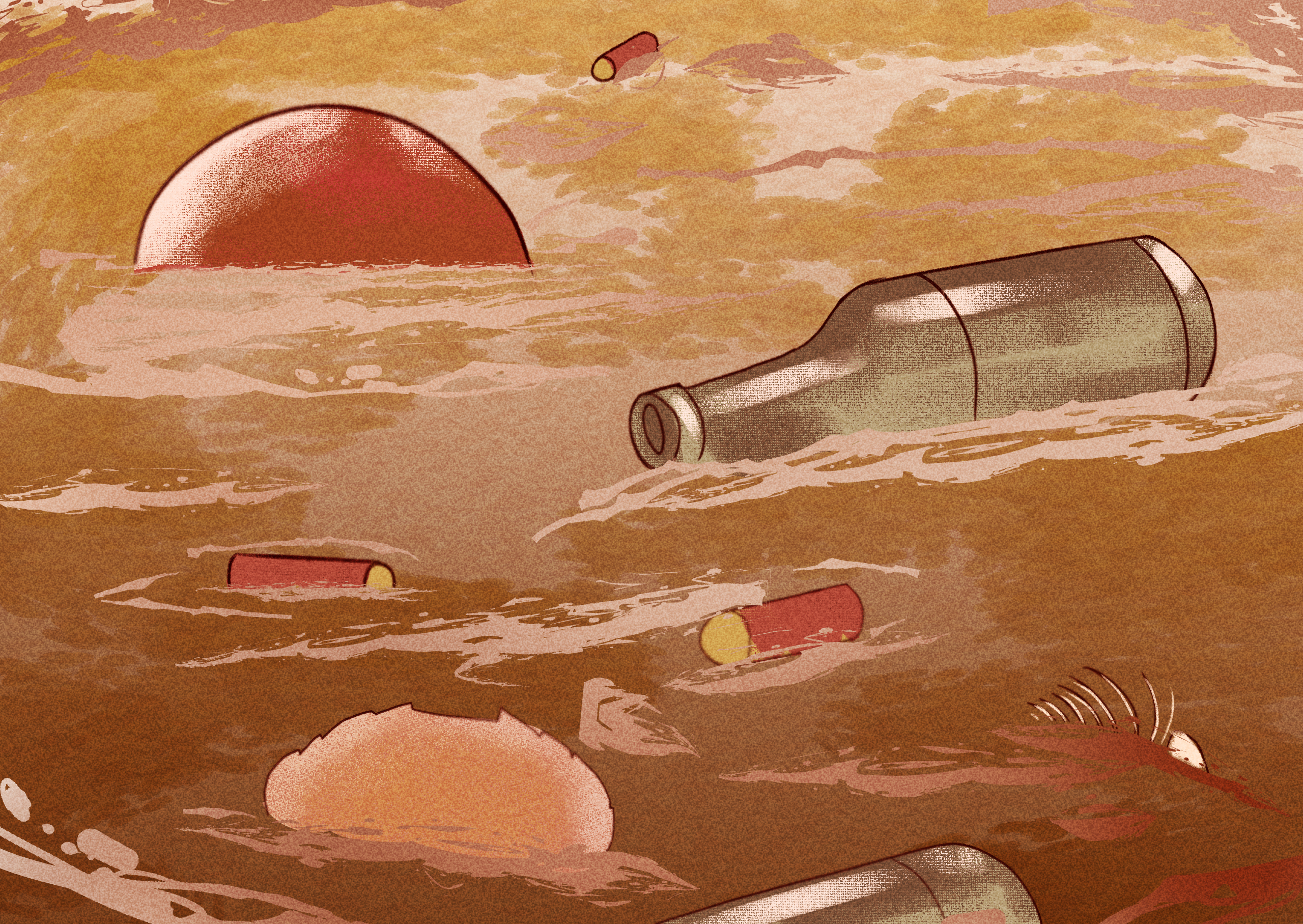
Detritus, natural and manufactured, congests the marsh near my farm in Tidewater Virginia: beer bottles, birthday balloons, shotgun shells, pine needles, croaker bones, crab shells. Cooking for days, months, or years in the funky quagmire. Between thick stands of invasive phragmites, small fry skim the water’s surface. Dragonflies flash their warpaint. But nothing with fins will break the water for hours. Only a tropical storm could clear the air and stir the cauldron.
Did Virginia colonists christen this marsh? Four centuries ago, English arrivals, mostly gentlemen of leisure, not agriculture, planted tobacco. First, Jamestown, then everywhere, to supply London’s nicotine habit. “Pleasant, sweet, and strong,” colonists called Nicotiana tabacum, so they leeched the life out of the soil, and larded every road and river with tobacco by the hogshead. The currency of a gentleman, tobacco paid taxes, paid for slaves, paid for wives. Until the soil became as fertile as gunpowder, and creeks, once flowing and navigable, silted into marshes. Marshes with water rich in tannins the shade of cured tobacco.