
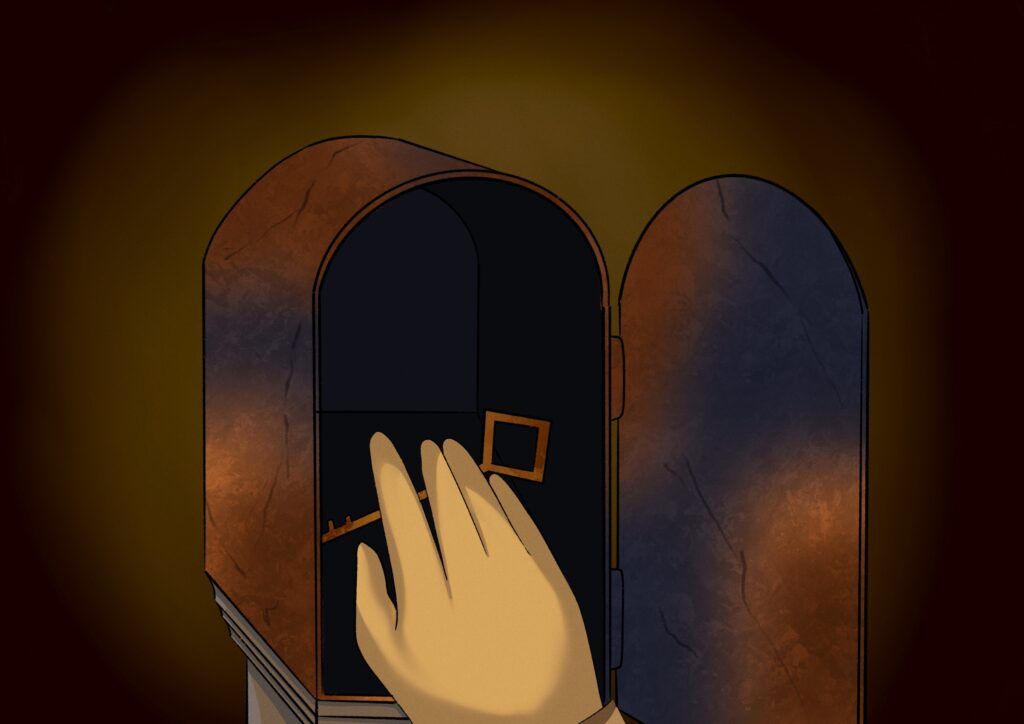
I’m driving up the narrow lane to Driftmoor Manor, and for once, the usual excitement in my belly is missing. Instead, there’s a knot there—tight and twitchy, like a nervous cat in a thunderstorm. Not that I’ve ever owned a cat, I’m more of a dog person, but I imagine that’s what they’d feel like.
The hedgerows loom high on either side of the road, thick with brambles and the kind of damp that gets into your socks. Dartmoor always feels a bit like a dream someone had and then forgot—wet, winding, bleak—but today it’s different. Heavier. Like the moor knows something I don’t.
I grip the steering wheel tighter. My fingers are a bit clammy, which is ridiculous because I’ve done visits like this dozens of times. I’m good at it—being calm, being kind, being useful. It’s what I do. Volunteering for Victim Support might not sound glamorous, but it matters. Even if I do have a bit of a reputation for accidentally knocking over cups of tea during home visits.
Still, I can’t shake the feeling. There’s something about Driftmoor Manor that makes my stomach do a slow, uncomfortable somersault.
I pull over at a lay-by just before the long drive to the manor and jab at the call button on my mobile. It rings three times before Maureen picks up.
“Grace?” she says, all brisk and sensible as ever. I can hear typing in the background—probably juggling five things at once, as usual.
“Hi, yeah. Sorry to bother you. I’m on the way to Driftmoor, just… thought I’d check in.”
There’s a pause. “Everything all right?”
I glance out at the mist creeping along the hedges like it’s up to something. “I don’t know. I’ve got a weird feeling. Probably just the weather or the fact the moors look like they fell out of a ghost story, but… I thought I should say something.”
Maureen’s voice softens. “You’re nervous.”
“I don’t usually get like this, do I?”
“No, you don’t,” she says, and I can tell she’s frowning, picturing me in that daft fluorescent waistcoat I insist on wearing even though it’s not part of the uniform. “But listen—Victim Contact Unit’s already spoken with the client. Full risk assessment, nothing flagged. No history of violence, no known issues. It’s a standard visit, Grace.”
I nod, even though she can’t see me. “Right. Yeah. Standard.”
“You don’t have to go in if you’re uncomfortable.”
“No, I’m fine,” I say too quickly. “Just being silly, I think.”
“Not silly,” Maureen says. “Cautious. There’s a difference.”
She always says things like that—reassuring without making a fuss. I like that about her.
“Call me the moment you’re done,” she adds. “Even if it’s just to say the tea was rubbish.”
I smile. “Will do.”
As I end the call, I glance at the signal bars—two flickering little lines, clinging on like damp washing. I frown.
“Actually,” I say, thumbing the call button again. Maureen picks up on the first ring.
“You all right?”
“Sort of. Just thought—I might lose signal out here. You know what Dartmoor’s like. One minute you’ve got full bars, next minute you’re shouting into the void.”
“That’s a fair point,” she says. I hear her click her pen. “Right. Let’s set a time.”
I shift in my seat. My hip’s starting to ache a bit—nothing awful, just the usual dull throb when I’ve been sitting too long. “Okay.”
“If I don’t hear from you within the hour,” Maureen says, “I’ll try ringing you. If that doesn’t work, I’ll call the client directly.”
“And if that doesn’t work?”
There’s a short silence. Then: “Then I’m calling the police.”
I let out a laugh that sounds more nervous than I mean it to. “All right, no pressure.”
“It’s just protocol, Grace. I’d rather overreact than underreact. You’re my responsibility.”
“And a delight to manage, I’m sure.”
She chuckles. “Sometimes.”
That makes me feel a bit better. I press the phone to my chest for a moment after we hang up, just holding the warmth of it. Then I tuck it back into my pocket, start the engine, and begin the final stretch.
I park just outside the manor gates—they’re rusted, the kind that look like they’d shriek if you tried to move them—and kill the engine. The silence that follows is the thick, muffled kind you only get on the moors. Even the sheep keep their thoughts to themselves out here.
I flip open my notebook on the passenger seat, thumbing past old scribbles and a rather unflattering doodle someone did of me during training. There he is—Wilfred Bradbury. Thirty-six. Civil servant. Lives alone.
Victim classification: witness to a violent incident on the moor. No physical injury. Not seen by the alleged attacker. Felt distressed enough to request support.
I tap the edge of the page with my pen. “Alleged” always makes me twitchy—it sits on the fence between real and imagined, like it’s waiting to see which way the wind blows.
Apparently, Wilfred reported seeing something—someone—being attacked out on the moor near Crockern Tor. Said it happened fast. Lots of movement. Said there was screaming. But when the police went out to search the area… nothing. No body, no blood, no sign anyone had ever been there at all.
It’s strange. But I like strange.
I mean, I’ve got a Psychology degree for a reason. The mind’s a funny old beast, and trauma does odd things to memory. It blurs, distorts, turns shadows into people and people into shadows. But that’s what makes it fascinating. People need help making sense of what they’ve seen, even if no one else believes them.
I shut the notebook and tuck it under my arm. Whether he saw something real or not, Wilfred Bradbury’s shaken. That’s enough for me.
I press the buzzer on the gatepost and wait. Somewhere, deep in the house, I imagine that a bell rings.
The gates are worse up close—thick steel bars with rust chewing through the paint, chained and padlocked like someone’s trying to keep something in rather than out. There’s no intercom. Just a lonely old postbox nailed to the gatepost and a bit of paper flapping beneath the lid.
I tug it out and smooth it against my thigh. It’s handwritten, all neat and curl
The padlock key is in the letterbox. Please let yourself in. —W.B.
I peer inside. Sure enough, a tarnished key rests among a few crumpled takeaway leaflets and something that might once have been a spider. I fish it out and unlock the gate with a satisfying clunk. It swings open with the kind of groan that wouldn’t be out of place in a horror film.
Naturally, that’s when it starts raining.
Not a drizzle, either. Full-on Dartmoor deluge. Fat drops, cold as sin, thudding against my cardigan and hair as I scramble back into the car. By the time I shut the door, my mascara has run and my fringe looks like it’s tried to drown itself.
I creep forward through the gate and down the winding road. It starts out narrow and cracked, lined with trees that seem just a little too close together—like they’re whispering secrets. Then the tarmac disappears entirely and I’m bumping along a muddy track, tires slipping slightly. I mutter encouragement to my car, as if that helps.
Eventually, gravel crunches under the wheels and the manor comes into view.
It’s… stunning. The sort of house you’d see in a BBC period drama—gothic arches, tall sash windows, ivy trying to strangle the stonework, turrets that serve no practical purpose but look terribly romantic in the rain. It looks like it belongs in another century. The kind of place where secrets live in the walls and nobody ever opens all the curtains at once.
The garden’s gone wild—nettles waist-high, rose bushes left to riot. I spot a garage, hunched beside the house like it’s trying to keep out of the way, its door hanging slightly ajar.
I park up and dash to the front steps, where another note flaps against the big oak door, taped on at the corners. It reads:
Door’s open. Come in. —W.B.
Before I can even lower my hand, the wind grabs the note and tears it free. It spins into the air like a startled bird, then vanishes into the garden.
I stare after it for a moment.
Then I try the door.
The door opens with a stiff groan, and I step into the foyer, dripping all over the old parquet floor. The house smells like damp wood and forgotten fires—something rich and old, like it remembers things I don’t.
“Hello?” I call, trying not to sound too nervous. My voice echoes up into the dark space beyond. “Mr Bradbury? It’s Grace—from Victim Support!”
No answer.
I wipe my feet automatically, even though there’s no mat, and take a few cautious steps inside. The place is vast. Ceiling high enough to swallow sound. A grand staircase sweeps up to the left, its banister carved like twisted vines. Dust lingers on every surface. Light seeps through stained glass like bruises on the wall.
Then I hear it.
A creak. Then a dull thud—upstairs. Heavy. Close.
Every hair on my arms stands to attention. The sensible part of me—the trained, competent part—says it’s an old house, old houses make noise. But something deeper, primal, urgent in my bones is already screaming: Get out.
I stay exactly where I am, heart thudding.
“Mr Bradbury?” I call again, softer now. “Are you all right?”
Nothing.
I tell myself I’m being ridiculous, because I often am. Then I start up the stairs—one hand on the banister, the other hovering near my phone in my pocket. The steps creak underfoot, each one announcing my presence whether I like it or not.
At the top, the corridor is dim and lined with portraits, all of them slightly too faded to make out clearly. Ahead, a door hangs ajar. I edge it open with my knuckles.
It’s a study, or maybe a reading room—long and narrow, lined with shelves. The air’s thick with old books and dust and something else I can’t place. There’s another door at the far end, just visible through the gloom.
Something shuffles behind it.
Then—thud.
I swallow. “Mr Bradbury? It’s Grace. I’m not here to bother you—I just want to check you’re okay.”
A pause.
Then a voice—his voice—but softer than on the phone. Slower. Almost dazed.
“Grace. Yes. I… I remember.”
I take a step closer to the door. “Are you hurt? Do you need help?”
“No, no, not hurt,” he says, though he doesn’t sound sure. “I’m… I’m not well today. One of my bad days.”
“All right,” I say gently. “Do you want me to go?”
A pause. “No. Just… don’t come in.”
“All right. I won’t. I’m just outside.”
The silence stretches. Then he adds, almost wistfully, “Could you… find the portrait? Of my family. It helps. Makes me feel… anchored.”
“Where would it be?”
“I’m not certain. The parlour, I think. Please. It’s the one with the gold frame.”
“Okay. I’ll find it.”
I glance back down the hall, then to the door between us.
“Promise you’ll stay put?” I ask.
“I’ll try,” he murmurs.
It doesn’t feel like reassurance.
“All right,” I say, squinting through the half-lit gloom towards the door. “I’ll find your portrait. But only if you promise something in return.”
A pause. Then, softly, “What?”
“When I bring it back, you open this door and talk to me properly. Face to face. None of this hiding behind heavy oak like you’re in a gothic melodrama.”
There’s the faintest chuckle—dry, papery. “You’re brave.”
“Not especially,” I mutter. “Just stubborn.”
Silence again. Then: “Fine. I’ll try.”
I take that as a win and start to turn away when his voice calls out again, quieter this time, like he’s speaking to the walls as much as me.
“This house… it remembers things. Terrible things. There’ve been deaths, you know. Lots. Sir George Buckley—shot himself in the music room. They said it was grief, but I think it was the house. And Drusilla Trough—she drowned herself in the bath. Cold water and opium. There was another—someone no one talks about.”
I stop, hand resting against the doorframe. “Why are you telling me this?”
“Because I can’t go outside any more. And I think that’s where the photo might be.”
I blink. “Outside?”
“The garage. Or the tool shed. Maybe even the barn. I don’t remember where I last saw it. I was lucid, then… less so. I don’t go past the kitchen now. Not for some time.”
Of course. Of course it can’t be on the mantelpiece like a normal photo.
“All right,” I sigh. “I’ll check the garage first.”
“Be careful,” he murmurs. “It’s worse in bad weather.”
I don’t ask what it is. I just nod, even though he can’t see me, and head back out into the corridor. My footsteps echo in the silence like I’m being followed by someone invisible and slightly out of step.
Down the grand staircase, through a wide hall filled with cobwebbed furniture and unopened doors, and into the kitchen.
It’s enormous. One of those old-world affairs, all stone floors and blackened hearths, with a long wooden table that looks like it once held feasts—or séances. Dust lies thick on everything, and the Aga’s gone cold.
I cross to the back door, flick the bolt, and step outside.
The rain’s slowed to a spit, but the sky’s still sulking. I take a deep breath of wet earth and bramble, and scan the grounds. The garage is off to the left, squat and slanted, its doors hanging crooked. The shed’s half-hidden by ivy. The barn looms farther off, hunched like it’s ashamed of itself.
Brilliant. Classic horror trifecta.
I mutter to myself as I set off across the squelching grass: “Just find the bloody photo, Grace. In, out, quick therapy miracle, everyone’s happy.”
But I don’t feel happy.
I feel watched.
I decide to start with the shed. It’s closer than the garage, and frankly, looks less murdery.
The closer I get, the worse it smells. A thick, sweet stench that makes me wrinkle my nose—like something rotting. Meat left out too long. I half-expect to find a dead pigeon under the eaves, but there’s nothing outside except overgrown weeds and broken terracotta pots.
I tug the warped door open, and it screeches like it’s offended. The smell hits me full force, and I cover my mouth with my sleeve. Inside, the air is thick and stale. There’s barely enough light slipping through the gaps in the timber walls, but I can make out old wooden crates stacked haphazardly, and a workbench crusted with dust and cobwebs. Tools hang on the walls—rusty, neglected. There’s a crowbar and a hammer lying side by side like they’ve been waiting for someone to get desperate.
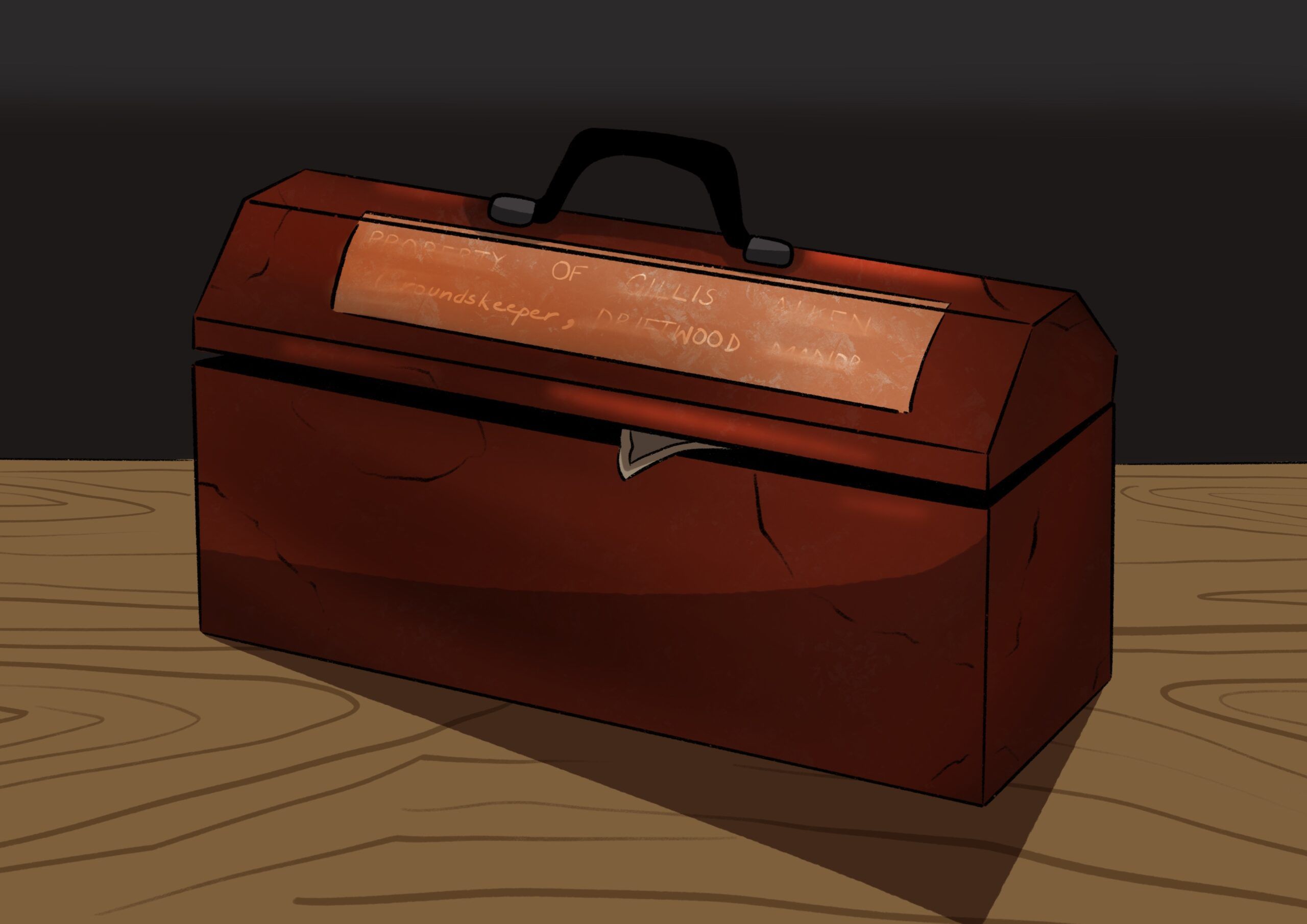
A toolbox sits on the bench. It’s heavy, metal, and badly rusted. Stamped into the lid in fading white letters are the words:
PROPERTY OF GILLIS AIKEN
GROUNDSKEEPER, DRIFTMOOR MANOR
A padlock seals it shut. Through the grimy gap under the lid, I catch a glimpse of something inside—just the corner of it, but it looks like thick paper. A photo?
I glance around for a key. Check the drawers. Peek under a few boxes. Nothing.
I hesitate for about half a second before grabbing the hammer and crowbar.
“Sorry, Gillis,” I mutter. “If you haunt me, make it quick. I’ve got a dodgy hip and no upper body strength.”
I wedge the crowbar in and give it a few good whacks with the hammer. The padlock clings on bravely before giving way with a sharp crack that echoes round the shed.
Inside, under a layer of oily rags, is a folded, creased photograph. I lift it gently, trying not to smudge it any further.
It’s black and white, the kind of posed family portrait you’d find in an attic or a horror film.
Bradbury Family – 1947 is scrawled in fountain pen along the bottom.
There are nearly two dozen people crammed into the frame—men in suits, women in hats, all standing stiff and upright in front of what must be the house. Their smiles look painted on. Strained. Like they’ve just been told to smile at gunpoint.
At the centre stands a tall, severe-looking woman in a high-collared dress, holding a baby in her arms. She isn’t smiling.
Neither is the baby.
I stare at it a moment longer, heart ticking just a bit faster.
Then I fold the photo carefully and tuck it into my coat pocket.
“Right,” I say, backing out of the shed. “One haunted heirloom acquired. Let’s see if he keeps his promise.”
Back up the stairs I go, boots leaving little wet prints on the floorboards. The air feels heavier than before. Like the house is watching me now that I’ve touched something it didn’t want touched.
I reach the study and rap gently on the locked door.
“I’ve got it,” I say.
No response.
I crouch and slide the photo just under the door, just enough that he can see the edge.
He snatches it so quickly I flinch.
Silence follows, except for the sound of the paper crinkling as he unfolds it. I wait, arms folded, fidgeting with my sleeves.
“Well?” I ask.
More silence.
Then, just when I think he’s nodded off or vanished entirely: “Thank you.”
I sigh, half-relieved, half-furious. “Right. Now will you come out and talk like we agreed?”
“No.”
“What do you mean no? That was the deal.”
“I’m not ready.”
“Wilfred, we had an agreement—”
“You can’t help me if you don’t understand,” he says, voice low, almost singsong. “There’s more.”
I step back, frustrated, and that’s when I notice something on the desk behind me that wasn’t there before. A small, battered hardback—Tales of Mystery and Imagination by Edgar Allan Poe. I’d swear it wasn’t here earlier.
Curious, I flip it open.
Inside the front cover is a handwritten note. Similar handwriting to the notes Wilfred left for me, but more feminine. Delicate, looping cursive:
To my darling Son,
All the best,
Celia
My breath catches. I hold the book up towards the door.
“Wilfred? Who’s Celia?”
He doesn’t answer straight away.
So I ask again. “Did she live here? Was she your mother?”
“I don’t know anyone by that name.”
“That’s not very convincing.”
“If you want to know who Celia is,” he says, his tone shifting—more focused now, like he’s giving instructions, “you’ll need to go to the library. Everything is in there.”
A beat.
“If you tell me what you find, I’ll unlock the door.”
I stare at the door a moment longer, weighing up my options.
Then I tuck the book under my arm and say, “Fine. But this better not be some Scooby-Doo nonsense, or I’m charging overtime.”
His laugh is faint. And joyless.
The library is down the hall from the study, its double doors swollen with age and reluctant to move. I give them a shove with my shoulder and step inside.
It’s exactly what I imagined—floor-to-ceiling shelves, the whole place smelling of old paper and older secrets. There’s a big reading table in the middle, chairs tucked in too neatly, as though someone tidied up and never came back.
I wander between the shelves, scanning spines. Lots of classics, dusty encyclopaedias, a few crumbly crime novels. Then, tucked among the history books, I spot a little section that looks more personal. Faded photo albums. A red leather-bound book titled ‘Our Family Tree’ in gold foil, worn to near nothing.
It’s just out of reach.
Of course it is.
I find a step-ladder tucked behind a globe stand, and haul it over with a huff. Climbing’s awkward—it always is. My left hip complains bitterly, but I manage to get up high enough to reach for the book.
My fingers close around the spine—
BANG.
The doors slam shut behind me.
A split second later, every window shutter in the room snaps closed like mousetraps.
The library plunges into pitch black.
Startled, I lose my balance.
I fall.
Pain shoots through my hip like lightning. I land hard on the wooden floor, wind knocked out of me, the book tumbling across the floor beside me.
“Bloody hell,” I wheeze, clutching my side.
The air is different now.
Thick. Still. Close.
And then I hear it.
Not the creak of a house settling. Not the moan of wind.
Breathing.
Very soft. Very shallow.
Not mine.
I freeze, heart thudding so loudly I think it might give me away. I strain my ears. It’s coming from the far corner, I think—though in the dark, it’s hard to tell.
I don’t call out. Don’t move. Just wait.
But the sound fades… as though whoever—or whatever—was there is backing away.
Eventually, with shaking fingers, I crawl to the doors and try the handle.
It turns easily.
The lights in the hallway flicker gently. Nothing’s changed out here.
I turn back to the room.
It’s empty.
Not a soul inside.
I swallow and pick up the fallen book, hands trembling.
“Right,” I whisper, trying to steady myself. “Let’s see what secrets you’re hiding.”
I drag the heavy book back toward the staircase, the wooden steps creaking beneath me. I settle on the bottom step, careful not to aggravate my hip, and open the ledger wide.
It’s not just a family tree in the usual sense—it’s a ledger, listing births, marriages, and deaths. The handwriting is neat, old-fashioned, looping in places, but some of the ink has faded with time.
I start scanning through.
There are entries for babies born still and mothers who didn’t survive childbirth. One catches my eye: twins Jennifer and Celia, born on the same day, but Jennifer died two days later. The name Celia hits me hard—could this be the Celia?
Further on, the ledger grows darker.
There are notes about suicides—Cynbel Bradbury, who hanged herself in the west wing. Alfred Bradbury, who overdosed on laudanum in 1913. The majority of deaths seem to be suicides, or sudden and unexplained.
My skin prickles.
And then I find it: Wilfred Bradbury’s birth, dated 8 October 1946.
His mother is listed as Celia Bradbury. No father named.
I blink. 1946? That makes him seventy-something. But my notes say he’s thirty-six.
Something’s not right.
I close the book slowly, heart thumping. Questions swirl in my head, but no answers come.
The house seems to settle around me, as if listening.
And I’m still not sure if I want to hear what it’s going to say next.
Back at the study door, I knock again. “Wilfred, I’ve been through the ledger. Celia was your mother, and Alfred and Cynbel your grandparents.”
The door creaks slightly as he shifts on the other side. “Yes. That’s right.”
“The baby in the photo…” I hold it up through the gap. “That’s you with Celia, isn’t it?”
A pause, then, “It is.”
“Did you see her death entry?” he asks, voice steady but cold.
I flip the book open to November 23rd, 1978. There it is: Celia Bradbury, Suicide unknown cause.
But then I notice something. The faded script has been overwritten in a jagged, hurried hand—Wilfred’s handwriting:
Found in the bathtub with her wrists slit.
A cold knot twists in my stomach.
Suddenly, a key slides under the door.
Wilfred’s voice is calm but hollow, almost resigned.
“This house is cursed,” he says. “It draws you in, messes with your head, makes you think death is the only way out. Everyone who stays here ends up thinking about it. It’s best… best to do it on your terms.”
My throat tightens.
Then he adds one last thing, quiet but heavy:
“Nineteen-eighty-two.”
I flip to that year, heart pounding.
The last entry reads:
Death: Wilfred Bradbury. November 1st, 1982. Suicide unknown cause.
The book slips from my fingers and thuds to the floor.
I fumble with the key Wilfred slid under the door. It’s cold in my hand. I turn it—and the door swings open on its own, creaking wide.
The room inside is bare. Just a bed pushed into a corner, the sheets rumpled like someone’s been there recently, and an empty closet yawning open like a mouth.
A chill runs down my spine. I should leave. Now.
That’s when I spot the Bradbury family photograph propped against the far wall—the same grim faces, the stern woman holding the baby.
I back out, heart hammering.
Downstairs, I’m barely halfway when the front door flies open with a sudden gust of cold air.
A man stands in the doorway—tall, broad-shouldered, with a weather-beaten face and a thick mop of greying hair. His tartan jacket looks older than I am, and twice as sturdy.
He blinks at me, just once, like I wasn’t what he expected—but not enough to call it shock.
“Well then,” he says, voice gravelled and thick with a Highland burr. “Didnae think I’d find someone comin’ out the house today.”
I hesitate. “I’m Grace. Victim Support.”
“Aye,” he nods slowly. “I figured. I’m Gillis Aiken. Been lookin’ after this place since before the last Bradbury took their last breath. I’m the only soul still daft enough to set foot in it regular.”
He steps inside, glancing over his shoulder like the house might lunge at him.
“I think I’ve been speaking to Wilfred,” I say, voice barely above a whisper. “He… he was upstairs. Behind the study door. We talked. He gave me a key.”
Gillis stops mid-step. His brows draw together, but not in disbelief—more like a man trying to fit a new piece into a puzzle he thought he’d already solved.
“Did he now?” he murmurs. “That’s… unusual.”
I stare at him. “You’re saying Wilfred really is—was—dead?”
“Aye,” he says grimly. “Shot himself. ’82, maybe ’83. Out by the woodshed, wi’ his old hunting rifle. Buried on the moor. Marked stone and all.”
My mouth is dry. “But I heard him. Spoke to him.”
“I don’t doubt it,” Gillis says, eyeing me carefully. “That’s what’s strange. They’re no usually so… focused. The ghosts in this place—most’ve gone soft round the edges. Drifty. Bits o’ memory and misery. But Wilfred—if he’s talkin’ like that—he’s held on to more than most.”
He rubs a hand over his beard, thinking.
“What about the photo?” he asks suddenly. “Did he ask for it?”
I nod. “Said it made him feel anchored.”
“Aye, I keep it hidden for a reason,” Gillis mutters. “Same wi’ the library. If they get too much of what they remember, they get stronger. Sharper. Sometimes… nastier.”
“Who’s they?” I ask.
He looks toward the staircase, jaw tightening. “Celia. His mother. She’s the worst of them. Likes to scratch. She’ll leave marks if you let her in.”
I swallow hard. “She was in the library.”
“Then you’re lucky to be walkin’,” he says plainly.
The silence stretches between us. The house creaks.
“You should go, lass,” he says finally, not unkindly. “Take what you’ve seen, file it under bad weather and worse luck. Tell your boss the place was empty. Nothin’ good comes from diggin’ deeper.”
I nod, swallowing the lump in my throat. There’s nothing left for me here—not now, anyway.
Outside, the rain has eased to a drizzle. I slip into my car, hands still shaking as I grip the wheel.
As I pull away from Driftmoor Manor, the winding road swallowing me whole, Wilfred’s words echo relentlessly in my mind:
“Best to do it on your terms.”