
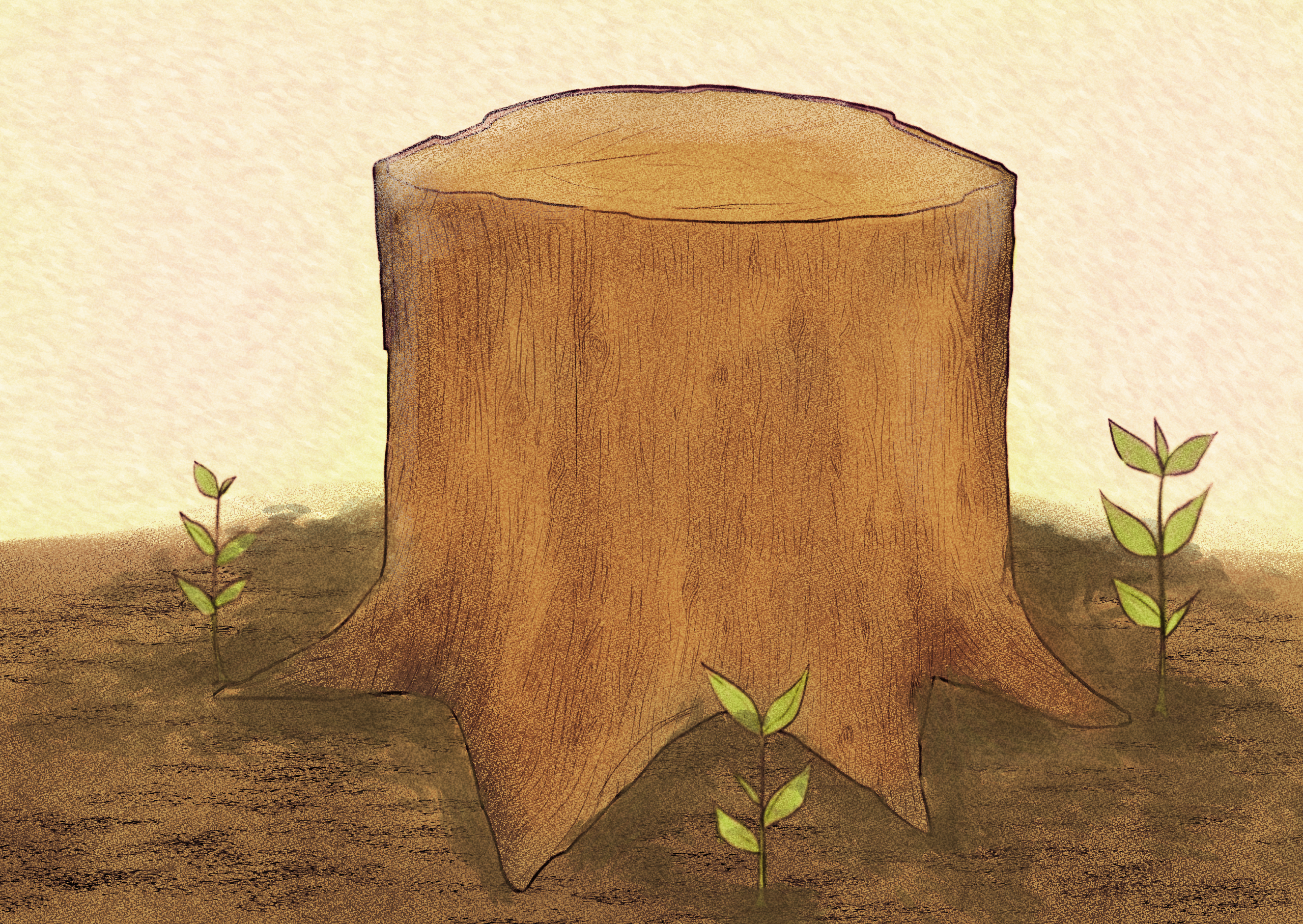
Lamplight pooled in the hollows of his face, turning the skin beneath his eyes the color of a bruised plum. He sat across from Clara at the kitchen table, his hands flat on the oak as if he were holding the house itself in place.
“I’ve carried a thing,” Silas said, his voice a dry rasp. “I ought to have told you before now.”
Clara let her cup settle. The steam rose between them, a thin, gray ghost. “Told me what, Silas?”
“The tree.” Silas cleared his throat. “I know you want it gone.” He paused, his gaze fixed on the grain of the oak. “But I can’t cut it.”
Folding her hands, Clara waited. The house settled around them with small, rhythmic creaks.
“We grew up poor,” Silas said. “You knew that. Me and my Pa.”
“Yeah, I knew. You showed me that little house in Madison.”
Looking down, Silas whispered, “That weren’t our house.”
“It wasn’t?”
“No. That was a lie.”
Crossing her arms, she asked, “Then where was it?”
“It wasn’t far. A shack up past where the road turns to nothing. Tin roof, walls chinked with mud.” His voice was soft. Clara didn’t interrupt. She watched his eyes stay on the table grain, his thumb worrying the same spot in the oak.
“Why didn’t you tell me?”
“I was afraid, I guess. That you’d not take up with a man raised like that. Raised in something his Pa had made.” Silas gestured toward the kitchen walls. “He’d salvaged a barn door. Put an oak beam down the center and posts at the corners. He was proud of those; set them with a string and weight to make sure they stayed plumb. The house sat crooked on the hillside, and everything about our lives was crooked, but those posts were straight.”
Clara pictured the tilt of that shack, the floor pulling everything downhill, his father bent over those four posts with a string and weight, like straight wood could fix the world.
“Mother died when I was small. I remembered her voice. And she smelled of flowers.” Silas turned his hands over, studying the callouses. “I was hungry most of the time. Behind the house was a wild garden of tomatoes gone to seed and squash strangling itself. There was an old orchard with twenty trees, and every one of them was dead.”
He paused. The lamp hissed softly.
“Except one.”
His voice changed then, sharpening. “One left alive. And I found it. I was ten, already bigger than most grown men, but still just a kid. And I couldn’t stop thinking about that tree.”
Clara leaned forward.
“Obsessed on it,” he said. “I tended it when Pa wasn’t looking. Cleared the brush from around the trunk. Pruned the dead wood with a pocketknife. Hauled water from the creek in buckets until my arms felt like they’d pull from the sockets. First year, nothing but leaves. The next year was the same. But I kept at it.”
He smiled, a sad, crooked thing that didn’t reach his eyes. “I turned thirteen the summer it bore fruit. Five apples. Small, bitter things, but I didn’t care. They were delicious to me and I was proud of them, Clara. Proud of what I’d done with my own hands.”
She waited.
“And that was my mistake,” Silas said. “I didn’t hide it well enough. Pa found out. Saw the pride in me, and he didn’t have a use for it.” His hands tightened into fists on the table, the knuckles white. “He took me out to that orchard. Stood there looking at what I’d done. Saw how much time I must have spent, time he figured could be put to better use.”
Unclenching his fists slowly, finger by finger, he added, “It rankled him—enough to say ‘Fetch. The. Axe.’”
Clara’s breath caught.
“And I knew,” Silas whispered. “He didn’t have to say it twice. What he meant to do scared me. More than I’d ever been.”
Standing now, he walked to the window to stare out at the dark shape of the tree in the yard. “I’d worked for years. Hauled water in secret. Pruned and tended and watched it come back to life.”
His voice dropped. “And he would kill all that, just because. Because he could.”
Clara closed her eyes.
“But it was worse than that. He wasn’t the one doing the chopping.”
“Oh Silas,” she said, “he didn’t.”
“That walk to the shed never took longer. The handle of the axe was cold, and when I came back, he was waiting.”
His breath hitched once, a small, broken sound. “So I started chopping. Hard and fast as I could. But it wasn’t wood giving way beneath the blade. It was blood and bone.”
He pressed his palm flat against the window glass.
“His blood. His bone.”
The silence stretched between them. Outside, the wind moved through the branches of their apple tree, a soft, sighing sound.
“I saw it in every blow. I killed him a dozen times that day. And after, I stood there looking at the stump, at the white wood and green leaves in the dirt.”
Clara reached out and took his hand. His fingers were stiff, despite the heat in the kitchen.
“That tree is dying,” he said. “I know it is. But it’s still standing. It still has the heart to put out a leaf or two, Clara. And as long as it wants to live, I’m going to let it.”
“Okay, then, we’ll leave it,” Clara whispered. “But we could plant a new tree.”
“We could.” Silas shook his head slowly. “But there’s another thing.”
Silas had his life. A good job at the power company. His father three years in the grave. Finishing work early one day, he found himself not fifteen miles from the old place. The truck seemed to drive itself.
The shack was still standing, but only by grace of the vines that held it. The tin roof had rusted through in orange scales, and the corner post had rotted away, giving the entire structure a drunken lean. He stepped out of the truck and forced himself toward the door.
Inside was worse than memory. Animals had claimed the rooms. Raccoons or possums, leaving behind the thick, sweet reek of rot. The oak beam his father had prided sagged like a broken spine.
The house seemed impossibly small. Silas stood in what had been the main room and realized he could nearly touch both walls with his arms spread. He wondered how a space no bigger than a chicken coop could have held so much.
Stepping out onto the back porch, he tested each board before trusting it, and looked into the woods. They were dense now, reclaimed by the mountain. He’d watched that treeline a hundred times wondering when his father would find what he’d done.
Silas stepped off the porch. Blackberry thorns caught at his jacket as he pushed forward, arms folded tight.
The orchard sat a hundred yards behind the house, down a gentle slope where the ground stayed damp. He found it by the rows, slight depressions in the earth where the old trees had returned to soil. Most had fallen, but a few stood as gray, skeletal remnants.
The stump was still there, sunk low into the ferns. Silas knelt and put his hand on the remains of the trunk. The wood was soft with rot, giving way under his fingers like wet paper.
Silas stayed there as the light slanted golden through the leaves, and let his hand rest in the mulch, feeling the cold damp of the earth. He cleared a handful of wet mast and dead fern away from the base, expecting only more black dirt.
And then he saw them.
Growing from the base of the stump, pushing up through the moss and ferns, were three young shoots. Green and vital, their leaves shocking and bright in the filtered sun.
Volunteers.
The roots had survived the axe after all. They had waited in the dark soil, holding their breath until it was right to reach for the sky.
Silas went back to the truck and got his axe from the toolbox, a man walking the same path the boy had years before. Working the blade carefully into the earth around the healthiest shoot, he followed the root down until he could lift out a section with the young tree still attached. Silas wrapped it in burlap from behind the truck seat and laid it in the bed. He drove away from Cutter’s Gap with the little sprout cradled in the back, like it was something secret and precious.
Silas planted it that evening at his own place, eight acres of cleared land with a view of the valley. He dug the hole deep, mixed in composted manure, tamped the soil around the roots. He watered it until the ground was dark and heavy.
And he waited.
The tree took. By the next spring it had put on two feet of growth. By the year after, it was taller than he was, branches spreading sideways to embrace the yard.
In the years that followed, the tree and the man grew together the way good things do, quietly, without announcing themselves. The trunk thickened through seasons of heavy rain and hard frost, putting on rings the way Silas put on years: steadily, without complaint. By the time Caleb was born, the canopy had closed over a wide circle of the yard, and the shade it threw on a July afternoon was deep and particular, the kind that invites you to stay.
Silas met Clara at a church social. They married. They had Caleb under the tree’s branches, Clara going into labor on a hot July afternoon while Silas paced the shadows. The boy took his first steps in that same shade.
They hung a rope swing from the lowest branch the summer it grew thick enough to hold weight, and Silas stood beneath it pushing his son until the boy’s laughter rose above the leaves. The apples came in abundance that same autumn, bushels of them, tart and bright, and Clara made pies while Silas stacked the windfalls for the deer. He was broad-shouldered and unhurried in those years, moving through his land the way the tree moved through its seasons: rooted, purposeful, sure of his ground.
“The same tree,” Clara said, softly.
“I should have told you.”
Clara walked to him and wrapped her arms around his waist, head pressed to his chest. She felt the weight of his heart, the hammering beneath his flannel shirt.
“It’s safe, Silas,” she said. “We ain’t never chopping it down.”
They let the tree stand. The wood thickened, and the bark grew deep-ridged until the mountain gradually took back what it lent. Rot found its way into the center, a slow, dark hunger that ate the heartwood until the trunk was little more than a shell. Scarred by ice and lightning, the branches thinned, leaving gray, skeletal fingers reaching toward the ridge.
It yielded fruit the kids wouldn’t eat: small, tart apples that were a disappointment, fit to be raked into the compost or left for the wasps. But Silas would eat them. Standing alone on the back porch in the fading light, he’d bite into the tough skin and taste the same sharp, wild flavor he’d known as a boy of thirteen. He remembered those five little bitter things, the first fruit of his own hands. To him they tasted like the only pride he had ever truly owned.
Then came the winter that didn’t break.
Silas died on a Wednesday morning in January, quiet as the snow piling against the fence line.
Clara found him at the kitchen table, his coffee still steaming, his head tilted back like he’d been looking at something far away, something just beyond the ridge.
The funeral was small.
Their son Caleb came from Knoxville. The neighbors brought casseroles and sat with Clara, speaking in low voices about anything but the man-shaped absence. When the house was empty, Clara sat on the front porch and watched the dead branches move with the breeze.
The house was loudest in the mornings. She’d come down to find his chair empty at the kitchen table and stand in the doorway a moment before she could make herself cross the room. She learned to leave the radio on.
She spent the first weeks doing small, necessary things. Washing. Stacking. Burning the brush he’d left piled at the fence line before the cold came. She worked until her body was tired enough that sleep came without argument.
In the evenings she sat on the back porch with her coat on and watched the tree. It stood the way it always had, patient, occupying its corner of the yard with the quiet authority of something that had been there longer than any of it. She could see Silas in it. Not his face, nothing so simple as that. But the set of it. The way it held its ground without making a point of it.
She thought of the July afternoon Caleb was born, Silas pacing in and out of that shade. The rope swing he’d hung the summer their boy’s shoulders finally filled a doorframe. The mornings she’d watched him from this same porch, coffee in hand, moving through the yard the way a man moves through a place he has made his own.
The tree had been there for all of it. Standing at the edge of every good thing, patient as a witness.
She had not understood until now that it was the first thing he’d ever loved. That he had brought it here the same way he’d brought himself: quietly, without ceremony, with no guarantee it would take.
It had. They both had.
Caleb pulled up on a Saturday morning in late August, unannounced, and found her in the garden pulling weeds.
“Thought I’d come help with a few things,” he said, kissing her cheek.
“You’re a good son.”
They worked through the morning. Caleb fixed the screen door, replaced a rotted board on the front steps, and cleared the gutters. He moved with the easy efficiency of a man who’d learned from his father’s hands.
As the hours passed, the heat wore Clara thin. She went inside and sat on the edge of the bed she’d shared with Silas.
Through the window she heard her boy working: the soft clatter of tools, the creak of the truck bed, and his footsteps circling the yard.
“Just need a few minutes,” she called.
“You rest, Ma. I got it handled.”
Easing into her chair, she closed her eyes. The sounds continued, steady and sure. It could have been any summer afternoon.
It could have been him out there.
In her half-sleep, she saw the tree as it had been, green and full, branches heavy with apples. Silas stood beneath it, looking up into the leaves. He turned toward her and smiled.
She woke to the sound of a chainsaw.
For one heartbeat she thought she was dreaming. Then her eyes snapped open, and she knew. She scrambled to the porch.
The tree leaned and fell with a crash that shook the ground, travelling up through the boards into her bones.
Caleb, their Caleb, her and Silas’s boy, stood over the stump, goggles pushed up on his forehead, wiping sweat from his brow. He looked up and saw her.
“Ma,” he called. “I know you’ve been worried about it. I thought I’d take care of it while I was here.”
Clara couldn’t speak. She walked down the steps, past him, and knelt beside the fallen trunk. The wood was still warm from the saw, its scent crisp and white despite the gray of the bark.
“Surprised it stayed up this long,” Caleb said. “Look at the rot in the center. It’s hollow. Another year and the wind would’ve taken it.”
He grinned, and his face filled with pride.
Kneeling in the sawdust, she ran her fingers along the stump. She traced the growth rings, searching.
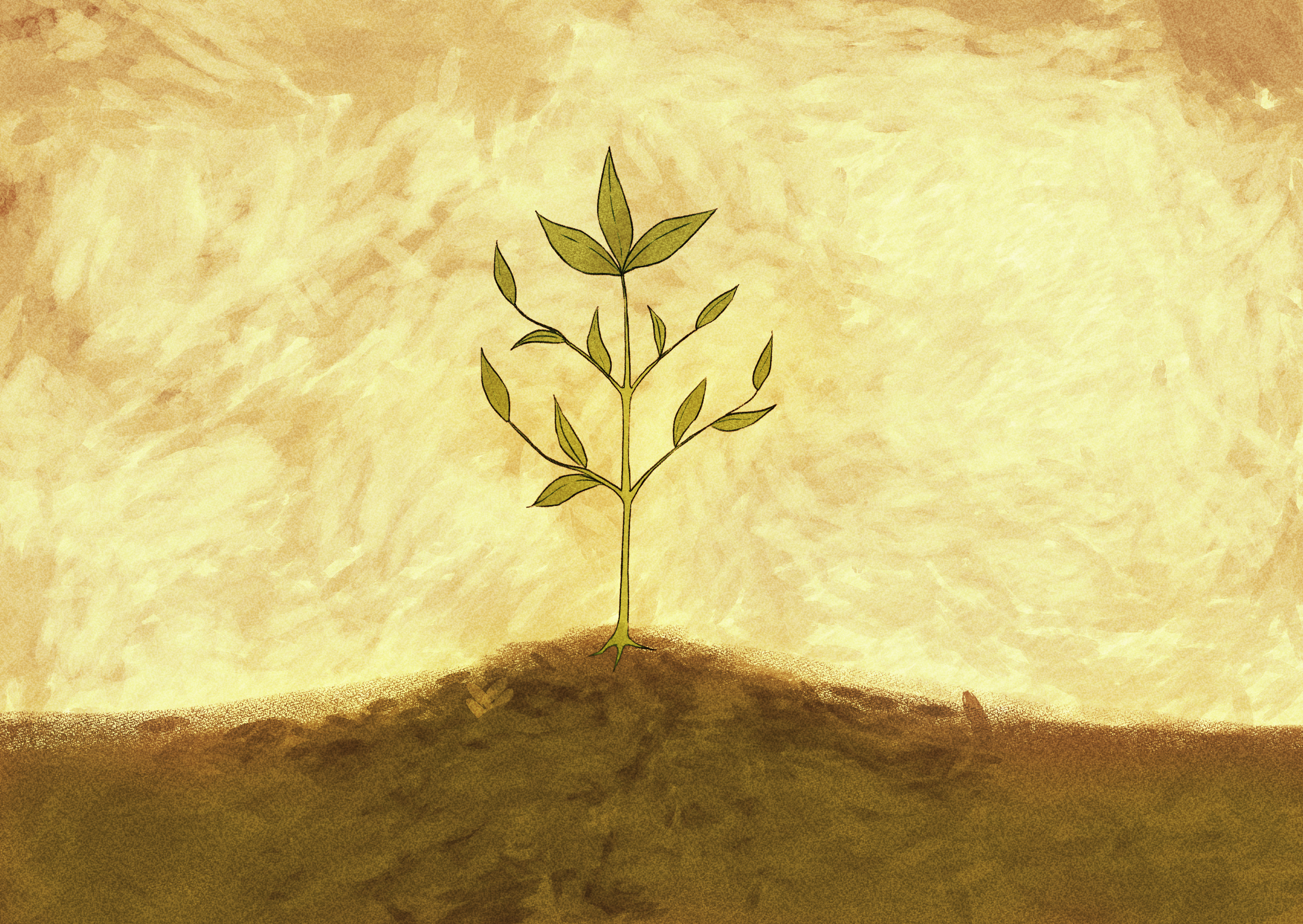
Starting at the jagged edge of the bark, she followed the years back through the wood. Beneath her thumb sat the year Caleb was born, a wide, pale ring from a season of heavy rain. Further in, her nail caught on a narrow, dark line. The hard winter the ice came down and they lost three steers, finding them frozen and upright in the barn’s lee.
Deeper still, she found the tight, bright circles of their first years, when the work was back-breaking but the bed was warm.
And then she found the beginning, the heartwood Silas had brought home in the back of his truck, a thin shoot wrapped in burlap, carried like a stolen thing from a life he intended to forget.
She didn’t tell her son he’d done wrong. All he saw was hazard and rot, a problem finally handled, the practicality Silas had taught.
By September, Clara’s knees cracked when she knelt. She tended the stump. She pulled the grass back in fistfuls, tearing runners until the dirt showed dark and willing. There she planted marigolds and phlox in a ring, pressing each root ball with both thumbs until her hands seized up.
When she finished, she sat on the porch steps and drank water that tasted like the hose.
Through winter she waited. The stump held snow in its cracks like a cupped hand. By April, it bore the weathered gray of old bone. Clara dragged a kitchen chair into the yard and positioned it facing the flowerbed. The chair had one loose rung that clicked when she shifted her weight.
She sat mornings with cooling coffee and watched the dirt around the stump the way you watch a sickbed, hopeful and unsure.
Summer meant more flowers, full and thick. Clara moved the chair into the shade. Caleb’s youngest visited often. They found kin in their quiet, thoughtful ways.
Her granddaughter was thirteen, all elbows, shoes always muddy, and would plop down on the porch steps with a book and a popsicle like she owned the place.
She came on her bicycle, always from the back of the property, leaning it against the fence post where the forsythia hid it from the road. Clara never asked about this. She’d hear the tick of the cooling metal and put a second glass on the counter.
The girl’s hands were the tell. Clean when she arrived, whatever she’d left behind still faint on her fingers. She’d drop into the yard and be in the dirt within ten minutes, and Clara would watch from the porch without comment, the way you watch weather come in.
Her parents wanted different things for her. Clara knew this without being told. She heard it in the way the girl arrived, a little breathless, a little unburdened, like she’d set something down at the fence line with the bicycle.
Clara left the back door unlocked.
“What’re you looking at?” she asked the first time she saw Clara in the chair.
Clara kept her gaze on the stump standing in the middle like a post. “Just sitting.”
The girl followed her eyes. “There used to be a tree there?”
Clara nodded once.
“I remember. It was an apple tree.”
“It was more than that,” Clara said, and the words came out clean. The girl didn’t push. She was old enough to know a shut door. She’d sit with Clara and talk about school, about boys, about small grievances.
Clara listened the way he used to listen, steady, uninterrupting, as if the act of hearing was a kind of love.
Some days the girl asked about Silas. “What was he like when he was young?” she said once.
Clara looked out at the bed. “He was quiet. And liked to save his words.”
“Did he ever get mad?”
Clara’s mouth tightened, not in bitterness but in memory. “He could. But he didn’t waste it. When he got mad, it meant something had gone wrong for real.”
Clara told her about small things. “Silas could fix a hinge with a nail and a rock if he had to.” The way he used to put apples in her coat pocket when they went to church, like a private joke between them.
She did not tell her about Cutter’s Gap. She kept that tucked back like money hidden in a Bible.
One evening in late July the girl stayed past supper without either of them planning it. The light went gold, then amber, then the particular blue that comes just before the fireflies. Clara had gone inside for water and come back out and the girl was still there, sitting on the porch steps with her chin on her knees, watching the stump the way you watch a fire.
Clara sat in her chair and didn’t say come in or you ought to get home. She handed the girl the second glass and they sat together while the light finished going.
The fireflies came up out of the grass one at a time, then all at once.
Neither of them spoke. The girl didn’t reach for her book. Clara didn’t offer anything. Somewhere down the road a screen door banged shut and a porch light came on, and neither of them moved toward it.
When it was full dark the girl stood, brushed off her jeans, and went around the side of the house. Clara heard the tick of the bicycle being lifted from the fence. The sound of tires on gravel going quiet as she reached the grass, then nothing.
Clara sat a while longer in the dark. The stump was invisible now, just a shape where the yard changed. She thought of nothing in particular, which was its own kind of rest.
After that the girl came more often. And stayed later.
They waited together. Clara because it was all that remained, and her granddaughter for reasons all her own.
Throughout that summer, nothing came.
By the next spring, Clara’s body betrayed her. Not pain. A slow dimming, like a lamp losing oil. The walk from kitchen to porch felt longer each week. The granddaughter, fourteen, then fifteen, kept coming. She’d sit alone when Clara slept, keeping her place as if presence alone could give her strength.
One evening in late June, when the light stayed in the sky until almost nine, Clara called the girl to her bed. “I want you to listen,” she said. Her voice was thin.
The girl sat on the edge of the mattress. “Okay.”
Clara stared at the ceiling a moment, lining up the words the way Silas might. “That tree,” she said. “The one your daddy cut. We never told him. But I’m telling you.”
The girl’s face went still.
Clara spoke carefully. She told her about the orchard behind a shack up past Cutter’s Gap. About a boy tending one living tree in secret, and a father who couldn’t stand to see his son proud. And she told her of an axe put into a child’s hands and a promise made afterward: never again.
They talked about the years later. The stump in the ferns and the three green shoots pushing up from rot like a refusal.
“Volunteers,” Clara said. “That’s what Silas called them.”
The girl tasted the word. “Volunteers.”
“He dug one up. Wrapped it up like you wrap a baby. Brought it home and planted it right there.” Clara’s eyes flicked toward the window. “It was the only thing he took from that place.”
The girl swallowed. “And you’ve been watching the dirt.”
Clara’s mouth quirked. “I have.”
“Why?”
Clara reached for the girl’s hand, her grip light but deliberate. “Because roots run deep. And because I want to see one more thing come right before I go.”
The girl’s throat bobbed. “Do you think it will?”
“I don’t know,” Clara said. “But I’ve learned not to call the world finished just because it gets quiet.”
The first spring after, she came every week. She’d linger by the stump, poke through the mulch to study the bare wood. Nothing. Inside, Clara would be in her chair or in bed.
“Anything?”
“Not yet.”
Through summer Clara’s voice grew soft. She was fading. By fall she slept more than she woke. Winter locked the ground, and the girl stood over the stump with her hands in her pockets, breath clouding.
Clara shrank into her bed like a bird settling into its last nest. On some visits, the girl stopped checking the stump first. She’d go straight inside, tell herself it didn’t matter. But on the clear days, when Clara’s mind came back sharp, she’d still ask. And the girl would still sit at the bedside and say, “Not yet.”
In late May, after a stretch of warm rain, the granddaughter walked outside. The flowers had come back stubborn as ever. The stump sat in the middle, bleached and split, wearing weather like an old man wears silence. She bent to pull a weed. At the edge of the stump, where the mulch thinned into dirt, a leaf had unfurled, small, bright, tender as a new fingernail.
She knelt and built a wall of mulch around the tiny shoot like a fort. She watered it with careful drips and set a cut-off mason jar to keep back the wind.
It was too early to tell her Grandmother. She wanted to bring the news to her the right way, offered like a gift.
Every day, she came. She watched and waited until the days turned to weeks. The leaf became two. The stem thickened and leaned toward the light and held itself there, trembling in the breeze.
On a Tuesday night in June, a summer storm rolled in. Clara’s breathing changed. It grew more shallow and measured. The granddaughter sat beside her bed until midnight, listening to the rain.
Clara’s eyes were closed. Her hand rested on top of the blanket, veins raised like roots.
“Tomorrow,” the girl whispered. “The rain will stop. And I’ll show you.” She left Clara sleeping, and walked home in the warm rain.
She was back the next morning. There were trucks in the drive. The girl walked up from the road and stopped at the gate. Through the open door she could see people moving: her mother, her aunt, neighbors in their Sunday clothes on a Wednesday morning. Her mother came out to the porch and saw her. Something in her face collapsed. She came down the steps and pulled the girl close without speaking.
“When?” the girl asked into her mother’s shoulder.
“Sometime in the night. Peaceful.”
They stood that way until her mother drew back, wiping her eyes. “Come inside. Your daddy’s—”
“I need a minute.”
Her mother looked at her, seemed about to argue, then nodded. “All right. But come in soon.”
The girl walked around the side of the house. Through the bedroom window she could see them. Her father stood at the foot of the bed, an older woman adjusting the quilt. Clara lay on her back, her face turned slightly toward the window, as if she’d been trying to see the flowerbed from where she was.
The girl turned away.
In the shed, her hand found the axe by feel. The handle was smooth from use, the head dark with old oil. It was cold, like he’d said it would be. She carried it to the bed and set it down in the grass. The shoot stood under its jar, bright and fragile, a small defiance.
The girl pulled the jar off and set it aside. She took the axe and turned it sideways, using the blade like a spade. She sank it into the earth carefully, working a circle around the sucker, cutting roots the way you cut cloth, slow and careful.
The dirt was damp and willing. Worms curled away from the light.
When she finally lifted the root section free, the shoot came with it, still attached and still alive. Cradling the clump against her hip like a baby, the way he must have, she stood and looked back.
The house looked smaller now. The chair was in the yard, facing the stump. The axe lay in the grass, the steel catching the morning light.
“It’s okay,” she whispered.
She carried it to a clearing beneath the hemlocks where the air stayed cool and the earth felt ancient. She pushed back the deep duff of leaves and rotted loam, exposing the black, waiting soil. The axe handle was cold. She carved a hollow in the earth, using the flat of the blade.
She set the little tree in, its roots white and hair-fine against the dark, and packed the dirt until the mountain rimmed her fingernails black as soot.
She’d trim the deadwood with a pocket knife.
It wasn’t far from the house. Or the well.
She’d have to carry buckets in the summer.