
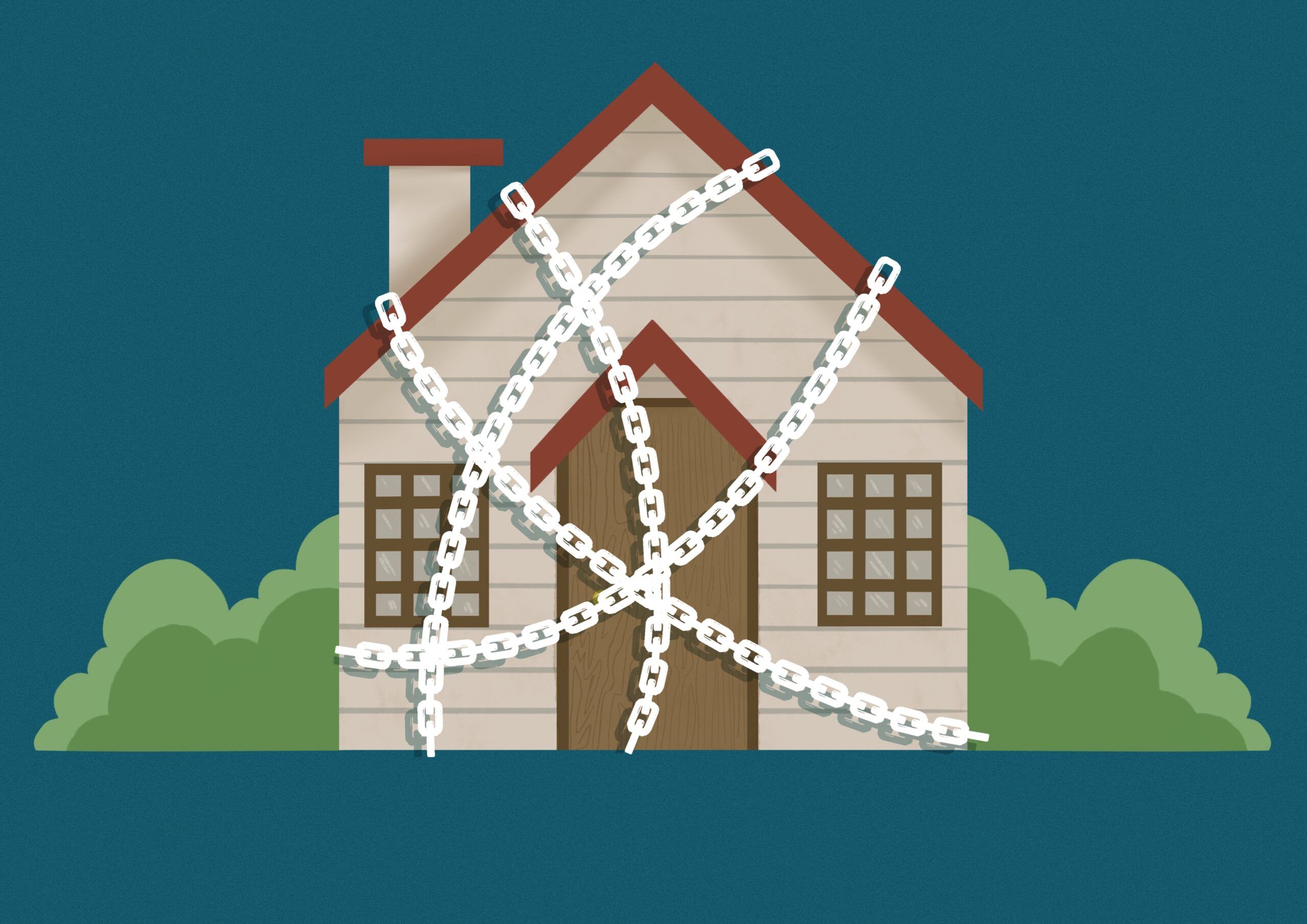
What do you do when the rent, having gone up by hundreds of bucks every year for your whole adult life, finally becomes too much to afford? And you have no savings to buy you more time? And no discretionary spending you can cut back on to balance the budget? And you have a disability that limits your ability to earn income? And you have no family to fall back on? And your friend support system isn’t great and you can’t fall back on your friends either? And you live in the United States of America, a failing state where the government and most of the citizens would rather you die than come knocking for help?
This was the predicament that Tina Park found herself in, one cold January morning when she received her annual lease renewal terms. It was declared by her property management corporation that the monthly rent on her studio apartment would, upon lease renewal this summer, be increased from $1,470 to $1,605.
That was it. That was the ballgame. It was all over.
$1,470 she could afford. With the help of electricity credits, low-income bus passes and a lot of walking, and eating almost entirely out of the food bank, she could manage. $1,605, on the other hand, was more than 100 percent of the money she earned in a month.
She sat there at her little table, drinking a cup of coffee from the dollar twenty-five store that she was pretty sure had very little actual coffee in it, but it tasted good all the same with a splash of food bank milk, and helped her wake up.
It always amused Tina how, wherever it came to correspondence whose outcome was to put money in her landlord’s pocket, her landlord always sent out the correspondence at the absolute crack of dawn.
Her hands trembled quietly around the coffee mug.
Then came a long sigh.
She got up and started breakfast: rice and eggs. A little mushroom sauce from a bouillon cube.
It was raining outside. Tina’s kind of weather, actually, and since she worked from home there was no danger of getting any wetter than she wanted to. A roof over her head, and food on the table. Sure was nice.
Tina took a picture of the streetlights outside shining in the rain and texted her friend:
Rainy today! 😁
As she waited for the rice to cook, her mind wandered to thoughts of people who were “so” poor that they would “go back to school,” or whose pay was “so” lousy that they would “leave the workforce.” And she boggled at it, because what those situations actually depicted was people having another roof they could stay under, or another wallet that could open up for them. By contrast, if Tina “left the workforce” she’d be dead. Or homeless, and then dead. It was a whole different tier of poverty, a new circle of Hell the academics hadn’t fully excavated yet.
It was some Third World shit.
In a civilized country, she’d be able to get some kind of qualifying diagnoses for her disabled state and then would be able to get help from the welfare system. But in this country, since her disability wasn’t visible—she wasn’t missing a leg or something—it wasn’t easy. Many psychological disorders appeared, to the wary eyes of misanthropic conservatives who seemed to populate the staffs at welfare offices, like laziness. Like personal irresponsibility. Like Tina “just didn’t want to work.” Like she expected the government to roll out the sacks of cash with dollar signs on them for her. The juxtaposition of this sick right-wing fantasy with her actual living circumstances was so ludicrous she could laugh.
It varied by a few dollars from month to month, but, on average, Tina had $1,590 per month last year. That was according to her own recordkeeping as an independent contractor, and it’s what would go on her taxes. Not so long ago, that would have been a perfectly handsome wage. Tina was old enough to remember when you could get an apartment for $500. Back then of course she was only earning about $800 a month. Her income had nearly doubled since then, but her rent had more than tripled…and the math didn’t work anymore.
She decided to add an apple to her breakfast. The food bank usually had apples. She picked a bruised apple and cut it up, then tossed it in a small pan with a shake of cinnamon and a pad of butter. The cinnamon joined the instant coffee as the only parts of her breakfast that she’d paid for herself; the butter was an inexplicable bit of largesse from the food bank. They never gave out oil, which would’ve been a lot more versatile, but they had butter on offer fairly regularly. Having grown up in a Korean household, butter wasn’t a very traditional part of her diet, but fat was fat and she’d found that butter got the job done most of the time. And with apples she actually like butter more than oil.
She sat back down at the table and looked at the e-mail one more time before closing the laptop and setting it aside. Another couple swigs of coffee, and she got up again to pull out the dishes from her tiny cupboard. To cut costs, the landlord had made the cupboards so shallow that the door couldn’t close all the way when she put her plates in there. No matter; leaving the door open a crack helped air out any leftover water that might be on the dishes when she put them up from the drying rack.
When you were poor, functionality became a completely different mode of interacting with the environment compared to form and aesthetics. Sure, it would be nice to live in a home with cupboards that closed all the way when you used them, but such luxuries were not worth fighting for with her limited army of care-ghosts. The cabinets held the plates, and that was good enough.
Years ago, Tina had made a resolution: After struggling on the verges of homelessness for most of her adult life—sometimes actually being homeless—she had decided she would do whatever it took to earn enough money to pay rent from here on out, no matter how much the landlords jacked it up. She had, through firsthand experience, decided that the hell of finding more and more money out of nowhere was preferable to the hell of constantly moving apartments or sleeping out of her car. These days she didn’t even have a car anymore—something had gone seriously wrong with it and she couldn’t afford repairs after what the pandemic had done to spare part prices and mechanic costs—which contributed even further to her logic. It made sense to do whatever she had to do to make rent in this place. This was where she was making her stand. And it had worked for a few years.
But unlike in Hollywood movies where the onslaught of the hordes eventually ends and the heroes stand triumphant, in real life the rent kept climbing forever. The battle never ended. Making her stand wasn’t an event; it was a lifestyle. Every month she did battle. And even though Tina did find ways to earn a little more money almost every year, the rent was just faster than her.
If she didn’t have such a hard time dealing with other human beings, Tina would have considered a roommate. But, in the past, roommates had exacerbated her mental health problems and ultimately made her earning power worse. They were noisy and untrustworthy and usually had bad hygiene, and, besides, even if they were perfectly decent—and she’d had a couple of those in the past—it still forced Tina to be “on” all the time, in her own home. She could never truly relax. Having roommates was like being trapped in an airplane in a holding pattern above the airport, circling and circling but never able to land and rest.
There were so many things like this that could help her situation on paper, but in practice ended up exacerbating other problems that actually left her worse off.
Finding the optimal path forward was a very tricky balancing act.
Her phone rang. The ringtone played the swelling theme from Smetana’s The Moldau as Tina looked to see who was calling. She hated phone calls, and she didn’t want roommates, but she wouldn’t have minded some human presence in that moment. She liked a little bit of socializing, but only on her own terms. If she’d had any money she could have simply gone to the café to get her dose of human contact, but, as it was, Tina didn’t really feel like she belonged in the world of respectable society. She wasn’t respectable: Any attempts by her to socialize in a bourgeois way would be a lie by omission about her desperate poverty. Spending ten bucks on a coffee and a tip was something other people did. That world was not built for her. Ten bucks was a significant percentage of her discretionary budget for an entire month.
Alas, the phone call wasn’t some misty-eyed friend from long ago to spirit her away from this wearying world of the present; it was only the power company with an automated message telling her that a “flex event” was coming tomorrow. In this instance, that meant a cold snap. Customers were being encouraged to use less power during the morning hours tomorrow so that the power company wouldn’t have to buy supplementary electricity at extreme prices off the spot market. Tina made a mental note to get her laundry done sometime today instead of tomorrow as she’d originally planned, but she wasn’t prepared to give up her morning shower tomorrow or the electric stove for her breakfast. The power company would just have to deal, and if it meant a blackout then fine. She had a coat.
This promised to be the first cold snap of the year, and Tina was hopeful for snow, but according to the weather forecast it seemed that the rain would dry up tonight just as the cold front moved in.
She loved the rain, but there was something depressing about that.
*
After her belly was full and Tina was working on her second cup of coffee, it was time to get ready for work for the day. Her freelance job was what allowed Tina to work from home, which had become increasingly necessary as she’d gotten older due to her ever-accumulating list of physical ailments and, more importantly, her difficulty functioning in traditional workplace settings where she was constantly distracted by other people and constantly on edge around them.
It was great to be able to work from home, but the problem with freelance work was twofold: First, the tax structure was vastly less favorable. She had to set aside an amount of her earnings every month for the self-employment tax, which was always hundreds of dollars no matter how poor she was. And she got no employer contributions to her payroll taxes for things like Social Security, which, given how her net income was often in the negative and she couldn’t afford to use the “optional method” most years for accumulating Social Security credits, meant that she wouldn’t be eligible for traditional Social Security benefits when she got older. She hoped, however, not to live long enough for that to be a problem. Currently at age 44, retirement age was still off in the fantastical far future anyway, alongside rocket ships to Jupiter and self-repairing artificial hearts.
The other main downside was that her effective pay was far worse as a freelancer. Traditional employment offered paid time off, healthcare coverage, the aforementioned employer payroll tax contributions, retirement plan contributions, and sometimes things like stock options and bonuses. As a freelancer, not only did she earn nothing but her fee, but she also had to supply all of her own equipment, do all of her own administration, and cover her own operating costs. It was expensive to be self-employed, and she wished she had the mental wellness to just go sit in an office somewhere and count beans, or stand in a McDonald’s all day—no, a Panda Express; they tended to hire more Asian employees.
In a healthy, competitive market, the solution would be for Tina to raise her fee as an independent contractor. But, in practice, the companies that hired her services had most of the rate-setting power, and they usually weren’t in the mood to pay more than a pittance. They only cared about their bottom line, and there were people who would work for pennies on her dollar. In the past she’d found herself in competition with stay-at-home moms doing this work as a side hustle to get some spending money, and, even more so, in competition with completely unqualified people from all over the world who could hardly even speak English. And now, with artificial intelligence offering companies more and more shortcuts to save a buck, Tina had to compete against side-hustle moms, dirt cheap foreign labor, and machines.
Tina got properly dressed, then opened up her computer back up, set up her videoconferencing software, and got to work. It would be a long day of fighting against her own, screaming impulses to be doing almost anything else. That was part of the job. Even though she liked the work, for the most part, her brain made it pure torture to actually do that work, day after day, indefinitely.
As she read her work e-mails, Tina knew it was critical that she get as much work as possible finished early in the day. Now that she was getting older her brain started turning to mush after a few hours of heavy use, and ever since she’d had COVID a few years ago it had gotten significantly worse. If she didn’t make clear progress by noon, it would often end up being a waste of a day. And her clients did not pay her by the hour. They paid only for deliverable work. That was fair, but it also added up to one more obstacle in Tina’s quest to make the rent, because it often took her much longer to do things than it would have taken an ordinary person.
*
The rain persisted, though at some point the day grew bright enough for the streetlights to turn off. Noon came, and, as Tina broke from her trance to take stock of where she was at, it appeared that the morning’s productivity had been mixed. She’d had her nose down to the grindstone just fine, but the rent had been throbbing in the back of her mind all morning, slowing her down.
How was she going to pay it?
How was she going to pay it?
She had six months to figure out an answer.
Lunch today was a bowl of bastardized doenjang guk, made from dry seasoning, miso paste, and vegetables and chicken from the food bank.
“I guess I’m just going to have to make more money,” Tina decided as she cut up an onion. “So, how am I going to do it?
“I can’t do more of the work that I’m doing now, or I’ll burn out. I can’t get more money for the existing work I’m doing now, because I don’t set the rates my clients pay me and most of them do not humor negotiation.
“I could ask the landlord for a lower increase. I hate sticking out from the pack when it comes to the people who allow me to have shelter, but maybe they’ll play nice.”
Of course, she knew there was a strong chance they wouldn’t. Washington State’s new rent stabilization law limited how much landlords could increase the rent, and the problem with it was that the limit was 10 percent, which was too much to be useful for tenants and too little for landlords to be gracious.
She’d checked the math earlier, and her landlord’s increase to $1,605 this year was just over 9 percent. Exactly as expected, just under the limit. She silently cursed the legislators who had raised the cap from the already-onerous 7 percent as had originally been proposed, to the eventual value of 10 percent, which made the cap—and the entire rent stabilization bill—completely pointless. Wages already weren’t going to increase 7 percent a year, and they were never, ever going to increase 10 percent. But rents were now going to go up about 10 percent a year, which was basically what they had been doing already. In the past, perhaps Tina could have negotiated with her landlord for a lower increase, with the unspoken logic being that her landlords could make it up in the future with a higher increase. But, now, 10 percent was the limit, so they were going to milk that 10 percent every year.
The unintended consequences of cowardly solutions to existential problems.
“I could move,” she said flatly. “I could get roommates. I could live in my car again.” She said those things out loud purely for the sake of adding them to the record, then instantly dismissed them. She’d been there; done that. Many, many times. It took so much out of her. She would rather die.
“Or, I could just die.” That was always an option, too. The world didn’t want her, and, increasingly over the years, Tina didn’t want the world.
But, for the moment, she did want doenjang guk. It smelled nice, and she was hungry. She would rather have had tofu in it instead of chicken, but the food bank made you choose between a small package of tofu and a considerably larger package of chicken, and, as always, function triumphed over form. She was also sad not to have any mushrooms to add in, but a little mushroom bouillon was her go-to method for getting her mushroom fix these days.
Now in her forties, there weren’t many trustworthy roommates her age to choose from. One’s forties were typically part of the good times. Very few women needed roommates. She didn’t want druggies, or maniacs, or people who were young enough to be her kid.
Likewise, there weren’t many places to move to even if she did move. Unless she were willing to go to a dying ghost town with no services, or a blighted city where she was in continual danger of being robbed or shot, rents were stupid everywhere now, from coast to coast and everywhere in between. All the housing was being gobbled up by capital groups, or converted to AirBNBs, or not built in the first place due to high construction costs and onerous permitting processes. The NIMBYs made sure that single-family homes reigned supreme and apartment buildings were limited to extremely small parts of cities, strangling large-scale growth of the housing supply. Washington had recently passed a law about that, too, and this law seemed like a better one than the rent stabilization law, as its purpose was to allow single-family homes to turn into multiplexes. But any relief from that direction would be decades in the making, dependent on homeowners individually deciding to densify their properties. And, as most homeowners were NIMBYs themselves, they weren’t going to do that with their own homes. Only their investment homes.
Not to mention that moving cost a thousand dollars just in direct expenses.
“How can I make more money?” she wondered out loud. “I’d have to do it in a different direction. I’d have to shake things up. It’s hard when you’re tired and it takes all you’ve got just to stay above water.”
Once upon a time, she had thought she was a pretty smart person. Now, Tina wasn’t so sure. A smart person—a really, actually smart person—wouldn’t be in a predicament like this, disability or not. She may have been isolated from society, but she wasn’t so isolated that she wasn’t aware that most people didn’t live like this. Most people in America got by. Maybe they complained about it. Maybe they griped and moaned about how much their roast beef cost or how their Hulu subscriptions were getting more expensive, or something like that, but they got by. Tina’s situation had much more in common with true, Third World poverty. And she lived in the richest country on Earth, a country with way too much money in it, where enterprising people could get rich in just a few years with luck and hard work. She would’ve thought that there should be some path forward for her, at least to survive if not get rich…but she couldn’t see it. She’d never seen such a path. She was beginning to think it didn’t exist, and that people like her were simply doomed.
The fragrances from her lunch cooking on the stove comforted her, and all the more so as she ladled its lovely broth and colorful veggies into a plain white bowl.
There was an ugly truth to being this poor: People didn’t want to see you. They didn’t want to acknowledge that you existed. They didn’t want to admit that their country and their way of life was such a colossal failure that people like Tina existed everywhere. In the American ethos, anyone this poor must have earned it somehow. Must’ve been a bad person, or a lazy person. That was the only respectable way to think about it. And so people turned their eyes away from the homeless, the sick. They made a mockery of their white religion of love and charity, which was conveniently constructed to glorify poverty through the lens of financial stability. That was why the white churches sent their missionaries to Africa and not Cincinnati. Americans talked and talked about their charity—and the statistics said they gave a decent amount of it—but when faced with reality they averted their eyes and never wanted to acknowledge the truth before their hypocritical faces. The cognitive dissonance was too much for them.
Tina always masked when she went out. Not a face mask, which would ironically mark her as the American equivalent of a leper and had directly subjected her to harassment from red-hat fascists during the height of the pandemic, but rather she wore a mask around her entire life, pretending to be just another normal American person, shopping at the grocery store, the dollar twenty-five store, riding the bus. Just a normal person. Not cripplingly poor. Not aching from the pain in her legs as she carried her groceries home from the bus stop. Not unable to clean the stain out of her coat when some stupid asshole spilled their chili cheese nachos on it. Not one financial setback away from true oblivion.
Friends didn’t like it when the only news you ever had for them was that things were bad. They got tired of it. So Tina had stopped talking to her friends about this stuff long ago. Her friends were nice enough, but they were not sisters, not brothers. A few had given her money, but usually only once or twice, and Tina had tapped those wells dry long ago. She had risked becoming a bum to them, and now both she and they pretended as if her past begging hadn’t happened. Now she presented a careful air of neutrality.
That was what they liked to see.
Her property management company would’ve kicked her out for sure if it had known how poor Tina was. Tina made absolutely sure, with all her might, that she was never, ever late on the rent. One time she had even stooped to stealing from a friend to pay rent, secretly swiping fifty bucks from her friend’s drawer only to return it a few days later after her paycheck had come in. The sad truth was that Tina would rather have lost that friendship than faced homelessness. But, as it was, she hadn’t gotten caught. So the option resided there, in her utilitarian mind, as a future option of desperate resort. Rent would drive a person mad, drive them to the depths of the most heinous crimes. That’s what Jean Valjean had done, stealing that loaf of bread. Unforgivable, as far as the system was concerned. Tina was no more than a petty thief.
Lunch was served, and as she let the soup cool Tina got up and stared out the window for a little while. It was still raining, good and strong. The sky was a nice, dark gray. She loved the rain, as only a Pacific Northwesterner could. The sun was glaring and harsh. Blue skies were her misery. But clouds? And wind? And cool air that smelled of the salt sea? Now that was home.
So long as one could put a roof between oneself and “home.”
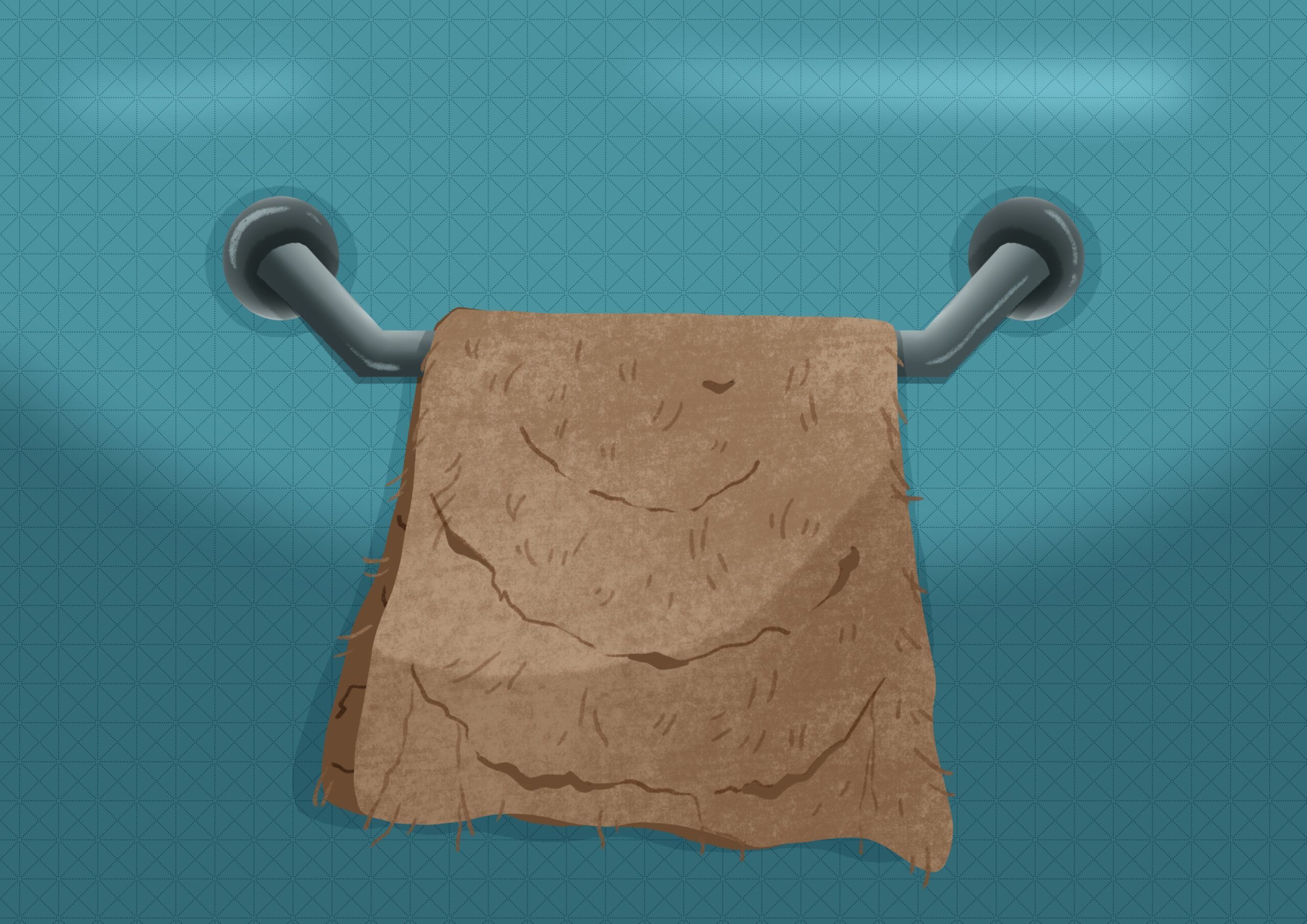
She went to YouTube and put on some soothing classical music: Handel’s Water Music, today. To be periodically interrupted by ludicrously noisy ads, of course. Handel’s warm, proud filigrees flowed and spilled out into her studio apartment room on the waves emitting from decently nice speakers, purchased on a rare island of financial stability many years ago. Many of the things in her apartment were like that. The dining table wasn’t some flimsy folding contraption; it was a solid, round wooden table that she’d bought together with her ex-boyfriend twenty years earlier. It was scratched and scuffed now, and faded in places, but the legs were still sturdy and the top surface was still smooth. You only had to get a nice thing once, and then you could keep it. In the bathroom she had towels from her childhood, more than thirty years old at this point, all frayed and raveled at the edges, their colors long faded. But they were still soft and wonderful and fluffy, and very good at drying. Who needed to throw them out every two years for a different color of towels—especially in a world where new products seemed to get worse and worse in quality? In the Great Depression, Tina would have been a natural. A pro! But even then she would still have been consigned to dwelling in the invisible places that no one saw. Because, back then, the United States was not as friendly toward “ethnics” as it was now.
“If you can believe that,” she said, walking to her window again and wondering if by chance she would catch a glimpse of masked thugs from ICE kidnap some poor random soul off the street.
She lingered a minute, watching the mostly empty sidewalks. No such spectacle emerged.
Tina went back to her table, and sat down to eat her lunch.
The day was barely half over.