
When her dad died at 43 years of age, Lucy and her mother planted a silver maple sapling in memory of the old bastard in what’s now our side yard. It’s grown bigger than we were told it would and drops seedlings that sprout wherever there’s a pinch of dirt. It’s a junk tree; useless. Lucy won’t let me cut it down. She has an undeserved loyalty to that tree.
I. The Roof
I thought it was the best day that summer when Sean Boylen knocked on our door back in 1974. The Irish accent hit me like a wave of cool water—that lilt, that ancient music. Fixing the leaks in our roof would be no problem at all, he said, and he asked me to call Lucy down to hear what he had to say. I need the wife here, he said, because she’ll want to pick the color of the shingles.
Aren’t they all gray?
Oh no, sir. There’s shades of gray like you wouldn’t believe. Other colors now, too.
Lucy looked him over. Where are your people from? she asked.
Lisburn. Outside of Belfast. It’s beautiful there. Ireland.
We wouldn’t know, Lucy said. Haven’t been. How did you come to Boston?
My father came over in ’64 and started the business.
Your dad still work with you?
He’s passed.
I’m sorry.
Don’t be. He was a bastard. Sean gave a big smile at that. Dad had a temper, he said.
Lucy patted his hand. It’s how some people love.
Sean didn’t know it, but with this, he had us in the bag. Lucy’s father had been a bastard too, fists and such with her mum, and Lucy’s heart was big when it came to others who’d suffered the same.
I can probably do the job for $3,000.
That so, Lucy said.
It is.
Well then.
It was only a few days later the crew came, and while Sean’s men set up ladders and tarps, we had him in for tea, and when Lucy passed him the plate of almond cookies, Sean took one and out of the blue said, Nitrobenzene smells like marzipan, did you know? Sweet like marzipan, and then boom! His hands shot up. Belfast confetti.
What confetti, Lucy asked.
Shattered glass and brick from the bombs.
Oh, Lucy said, that. Belfast. All that violence. And for what?
Sean lowered his voice. It’s British armored trucks against Irish nails in a beer can, he said. Not a fair fight.
It’s the cause, Lucy, I added gently. Their land, their language. You can see that can’t you, love?
Murder is murder, Lucy said. Why you did it doesn’t change the fact it was done.
For a split moment, I thought I saw Sean’s eyes flash with hate.
You should visit Ireland, he said quietly, once things settle down. I’ll give you the name of my cousin; he’ll show you around. If you get to Belfast, that is.
That would be nice, Lucy said, but she didn’t mean it.
If she hadn’t left the two of us there alone together in the kitchen, Sean wouldn’t have told me all he did, I wouldn’t have promised what I promised, and none of what happened next would have happened. So in a way, it was Lucy who brought it on.
On the next day, Sean’s men split a big piece of the roof open and squatted on the pitch, dark against the sun like crows, waiting. Sean told us our roof needed total rebuilding. A bigger job than he thought.
How much? Lucy asked.
$5000.
Total?
No. $5000 extra.
Lucy was furious. I suppose you’ve got us, haven’t you? With the roof wide open and a whole crew here. How do I know you’re not fleecing us?
I said nothing. Nor did Sean.
The men worked three more days in the hottest August I can remember. We watched their sun-boiled backs grow slick; their hats stiffen with sweat. Old boards came flying off the roof; new ones were hammered up. For hours, we listened to the thwap and punch of shingles being nailed down. When the job was finished, I handed Sean a bank check for $8,000. The paper shook in my hands. What was done, was done, I told myself, but still my hands trembled; I crammed them into the pockets of my pants. Sean folded the check, put it in his pocket, and gave me a wink. When his truck pulled out of our driveway I felt a wave of relief. But something else, too. Pride.
II. Belfast, 25 years later
All this time wanting to visit, and the city wasn’t what we thought it would be. Lucy and I had come through Clare, which was full of pastures with sheep scattered like pearl buttons on a kelly green cardigan. Belfast was all brick and concrete, walls and fences and people who looked like they’d been roughed by the same dirty wind. Second day there, we sat at a bar next to a man called Moe Lynch and got to talking.
You’re from Boston? You know the Gillies? Live in Charlestown?
We shook our heads.
You must know Clyde Farrell? He runs the souvenir shop next to the Revere house. No? How about Tim Taylor and all his kids over on Dorchester Ave? Must be seven kids he has.
Boston’s a big city, Lucy offered, we hardly know people outside those on our street or at church.
Moe wouldn’t give up, or maybe he was saving this one for last. How ’bout Sean Boylen?
At that we looked at each other. It had been ages since we’d mentioned him.
Sure, I said. Sean did our roof back in ’74.
Moe cocked his head. Sean did your roof?
He did.
I’ve heard he does good work.
Good enough, Lucy said crossly.
Moe nodded. I met the man only once, he said. His cousin Mickey and I grew up together. Moe gave us a good looking over. Let me give you a tour of the real Belfast. Any friend of Sean’s is a friend of Mickey’s, and any friend of Mickey’s is a friend of mine. Finish your pints, Moe said. There’s a lot to look at.
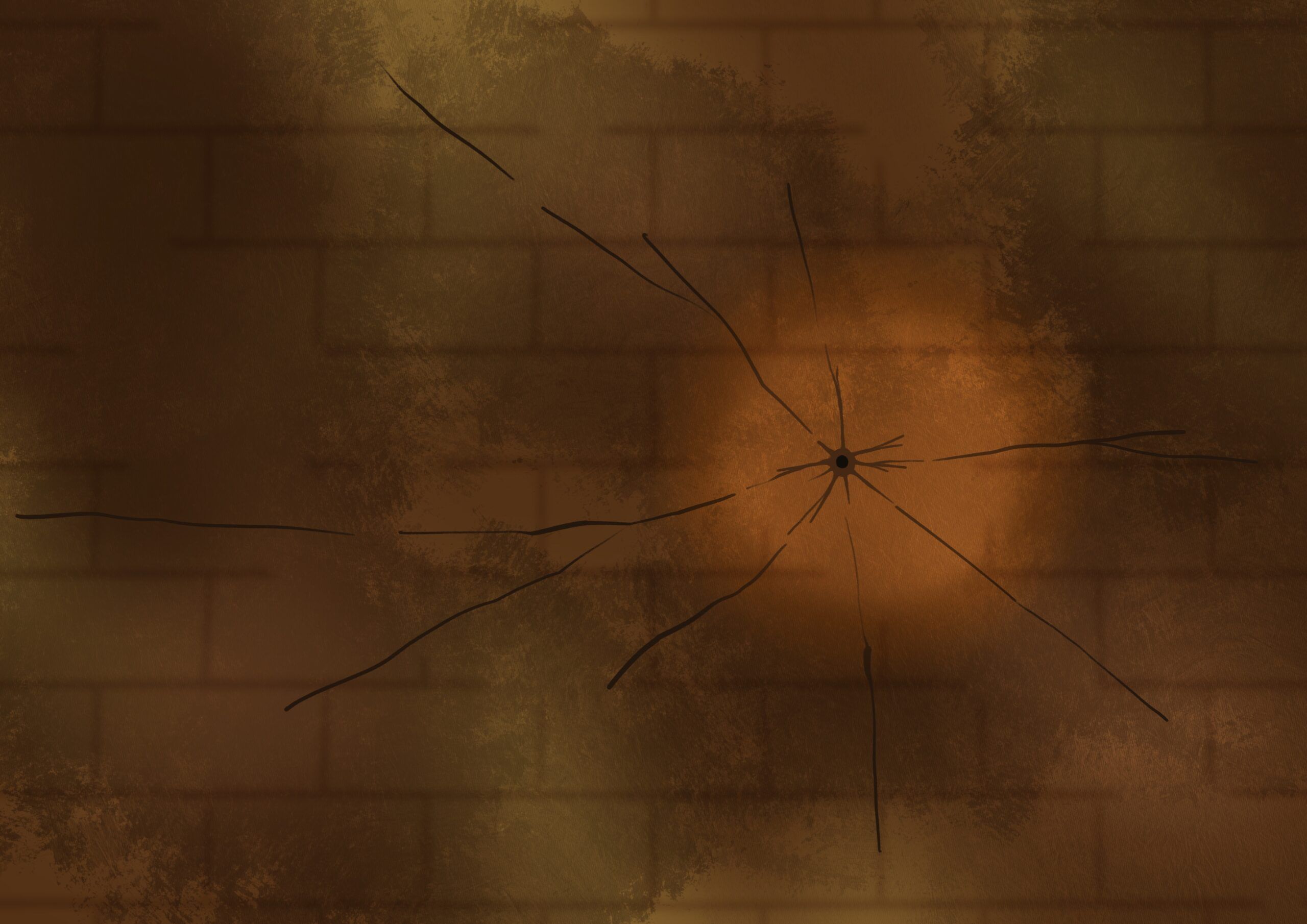
Moe led us out of the pub onto a street of rowhouses. He ran a finger over the brick of the end unit. See this hole? See how the cracks spider out? Bullet. He walked on a few steps. Here’s another. His finger traced a jagged edge. And this building here? It’s new. The one that used to be here was a pub, blown to bits in ’74. The whole of this side of the street burned to the ground. I was there. Broken bricks, stones, glass, streets pitted and cratered. All day and night you heard the sirens. Exploded car seats would land seven meters away. Belfast confetti.
Lucy’s eyes flickered.
I ran my finger over a depression in the brick and imagined I felt the heat of the bullet, smelled gasoline and gunpowder. No place is ever just a place. What happens always leaves an afterimage.
Moe kept walking. The thing I remember most about that day, he said, is that one lady brought out a push broom and went at the heap of trash, but what could she do, really? After a few minutes she lay the broom on the mountain of broken bricks and left. That’s where it stayed. No one ever tried to clean anything up.
We headed down an alley where the flats were so narrow there was only the width for one window. Moe was ahead of us now, gesturing. If the Brits came banging on doors looking for weapons, he said, we’d pass the guns out one window to the next, until they reached the other side of the flats. Mostly the wives.
He led us past a low wall to a door and knocked. Here we are! The door opened a crack. A man with red, patchy skin stood in the doorway in a U-2 Rattle and Hum T-shirt and plastic slippers. He was holding a beer.
What’s the news, Moe? he said. Voice thick with years of smoke, but that ancient music.
These are the McEnnisses, Moe said. Sean did their roof back in ’74. To us he said, this is Sean’s cousin Mickey I was telling you about.
Mickey eyed us, nodded, and opened the door wider.
The apartment was dark from the drapes drawn tight. A portable television played BBC One in another room. Lucy and I sat on the very edge of Mickey’s couch.
Beer? Mickey asked. Tea?
No, thanks, said Lucy. I shook my head.
I just gave them the tour, Moe said.
Mickey smiled. Sean did your roof, did he?
Yes, I said. Twenty-five years ago. In ’74.
How’s it doing?
Still holding, I said.
Mickey grinned. Even in the dim yellow light from his lamp, I could see he was missing bottom teeth. Nice to finally meet one of Sean’s clients, he said.
I felt Lucy getting twitchy. I put my hand on her knee.
Mickey lifted his beer to us. Here’s to Sean, he said. And the Armelites.
Best AR-16s made, Moe said. We got a lot of them from Sudan in those days, but they always wanted American dollars. Thanks to all you Boston folks who got their roofs done, we had a chance against the Brits. They had armored cars for God’s sake.
No, Lucy said. Not us. We never sent any money over.
Moe patted her shoulder. If you want to keep it quiet, I respect that. You don’t know us, of course. We won’t mention it again.
Wasn’t us, Lucy said again.
I tugged her to standing. We really have to get on, I said. You’ve been generous to show us around, and it’s nice to meet you both, but we’ve taken up enough of your time. I guided her to the door.
Wait, just a minute, Mickey said. He held onto the wall for balance and fished in his pocket. I collected these whenever I could, he said, pulling out a spent shell. He took Lucy’s hand and put the shell in it. I always carry one. It reminds me that we’re in this together. He closed Lucy’s fingers around the bullet. We’ll never forget the kindness of our brave brothers and sisters in Boston. We belong, all of us, to a league of heroes.
Mickey gave us each a damp hug and sat down in his chair facing the window. And God bless the souls that went, heads high, to die, he said softly, because they loved Ireland more than just themselves.
Moe opened the door for us and we emerged into bleaching sunlight. League of heroes, Mickey called after us. Don’t forget it.
I wouldn’t. I hadn’t. My heart was full with the bravery of these people. I was proud to call myself one of them.
On our last night in Belfast, Lucy and I sat in our hotel room looking out the window. The lights in the street came on. Neither of us moved to switch on a lamp but instead we watched the darkness swell. The clouds were muddy shapes piled on top of each other: sky dung. On the sidewalk below there was a flowerpot of dead asters. A shot of laughter came from nowhere and faded. Out there, I thought, is a boy who can’t take a certain route to school for being beaten. Out there is a rusted fire extinguisher buried under a pile of bricks that’s sat for 25 years. Out there is a pair of trousers lost in the rubble, a shoe with a blackened sole, a bathtub abandoned in the street. Out there are empty cans of gasoline and rags and hundreds of pounds of splintered glass. I took in a breath to tell Lucy this, how the past shapes our story, how it makes us who we are, but Lucy had that stony, far-away look that told me she was traveling hard somewhere else.
It started to rain. The street was dotted with black lily pads in a rush of water: umbrellas. The potholes filled. A man ran down the middle of the street calling a name I didn’t recognize; it was Irish.
We checked out in the morning, got into our rental car, and drove in silence through Newry and out of Northern Ireland. Once we arrived in Dublin and found a hotel, I got us a pint of whiskey. Lucy looked grateful when I took it out of the bag.
It was our money, wasn’t it Frank? she said. I always knew we paid too much for that roof. He was sending it, wasn’t he? He was taking our money and sending it over.
There are probably dozens of people with new roofs built by Sean Bolyen in the ’70s, Lucy; maybe he used our money, maybe he didn’t. And even if he did, we never held the guns.
We were fools, Frank, she said. There’s people that are dead because of those guns. That was it, you know. In the hotel back in Belfast, Lucy said.
What?
Why that English girl couldn’t look us in the eyes. She knew what we’d done.
Now you’re making things up, Lucy.
Lucy went to the window and opened it. She pulled something out of her pocket.
Don’t throw it, I said. I put out my hand. Give me the bullet.
Why?
I want a souvenir of this day.
No.
Give it. I’ll plant it at home and grow something nice on top. A memorial. Turn the bad into good.
I saw her think about it. She handed me the bullet, then went to lie on the bed. I sat at the table by the window, which didn’t close all the way and there were dead flies on the sill.
Hours passed. Now it was so dark we couldn’t see each other but I heard her mouth moving; the rosary. I stayed at the window, looking out and listening. There was a busyness to the dark at first; it was loud with the buzzing of electricity, a filtered dark. Then it was a dead dark, total and quiet. I could no longer hear Lucy: she had stopped praying. I crept closer to see if she was asleep. She wasn’t. She lay staring at the ceiling. Grief looks different on a woman’s face; it looks more like fear. Frank, she whispered. I lay down next to her. She reached for my hand. I feel frozen, she said. Like with dad.
When Lucy’s dad collapsed with what they learned was a heart attack, her mother dropped to the floor and screamed for Lucy to call 911. Lucy tells this story often, but only in bed and only to me.
I was nearly nineteen, it was dinner, and Dad got up from the kitchen table, bent at the knees, tried to grab onto the chair but missed and hit the floor hard. Ma dropped next to him and held his head and yelled for me to call 9-1-1. I went to the phone but my fingers wouldn’t do it. The phone was beeping like when it’s off the hook. My hands were numb. I couldn’t move my fingers.
It’s not your fault, I told her.
He died right there on the floor.
He would have died anyway.
We’d hide from him sometimes, Ma and me. In my closet, and he threatened to get an axe and chop the door down, then us.
He was a bastard.
My fingers were sticks that wouldn’t bend, she said. Like now. It was a bad thing. Then and now, a bad thing. She turned away from me.
I tried to sync my breath with Lucy’s. Couldn’t. I lay still for a long time. I drifted. I dreamt. Hands—creased with age, freckled hands, hands with short fingers, sickly hands, hands with pink palms, hands with ridged, yellowing nails and crooked pinkies, hands scratched, calloused, tar-stained, filthy, arthritic, and bandaged, and when I woke I realized these were the hands that mixed candle grease and nails to make bombs, the hands that smuggled, kidnapped, beat, and burned. I thought about British soldiers pounding on doors, and jobless husbands hiding their guns under the baby’s crib. It would have been so easy to keep quiet and not make trouble; find a workaround for the shit life they were given. I’d touched the wall and felt the heat. There was courage in those cracks and craters, and it had weight. Who of my own people walked those streets before me? I’d never seen so many faces that felt familiar as I did there. My heart was full with what they’d done. With what we’d done.
III. Home
It seemed as if the damn tree grew in the two weeks we were away. Its knees stuck up out of the grass and there were more cracks in the driveway. The tree had shit dozens of twigs onto the roof. Let the wind take care of those. And it’s windy for sure. Perfect Halloween weather with the branches snapping at each other and the dead leaves whirling.
The Lucy I took to Belfast was not the Lucy I brought home. If we’re having supper or watching TV, she glances constantly at the door as if someone’s going to break it down. She is disarranged.
We’re monsters, you and me, Frank, she whispers in bed.
No, we’re not, I say.
Dusk. The children came for trick or treat. Lucy sat, spine-locked, in a chair watching for them. I heard our dog, Daisy, pacing in the kitchen, a rattle of tags as she shook her head. The weak light of a refrigerator leaked through a window at the neighbor’s house. Lucy will imagine that Daisy is ill, that the neighbor is looking for ice to soothe his fist from a brawl. But I know the dog is bored and the man hungry. This is the difference now between Lucy and me.
I heard kids coming. I opened the door. Two children in costume—a policeman and a firefighter—stood in the doorway. I offered the candy bowl.
I’ve been waiting for you, Lucy said softly, raising her wrists for handcuffs. Please don’t hurt me.
The children laughed nervously. They took their candy and left.
For God’s sake, Lucy, I said.
Seriously, Frank. Shouldn’t we tell the police about Sean Boylen?
Don’t be ridiculous. Put it out of your mind. What was done is long in the past, and frankly, Sean was right to do it.
Lucy whipped her head around toward me. Right to do the killing? Kidnapping?
There was murder on both sides, I said.
You sound like them now, she said. A snake in my own house. I saw you over there, Frank. You loved hearing them talk about fire-bombing cars and shooting guns, and I never saw that in you before, ever. You should have seen yourself. All dewy-eyed like it was you throwing Molotov cocktails and mowing down soldiers. A big man. A fighter. You think you get to be some kind of hero now, Frank? You’re no hero for getting taken for a fool by Sean Boylen.
I felt my face flush hot. I grabbed hold of a kitchen chair to keep my hands still and gave it a thump on the linoleum. Lucy came a step closer. Pathetic, that’s what you are.
I could smell her, the salty sweat from her scalp, that’s how close she was, as if goading me to do the thing, hit her. I held firm to the chair, locked my hands there, met her gaze, kept my voice low, and did worse.
I gave them the money, I said.
Lucy’s eyes narrowed. I saw her taking it in, working her mouth without sound.
I was remarkably calm, considering what I was saying. Of course our roof didn’t cost all that, I said. The roof work cost a bit and the rest was for the cause. I knew how many rifles it would buy and I knew how the money would work—I knew it all, just like I knew you would never agree. And I don’t regret it, Lucy. I’ve never been a victim and I won’t ever be.
Lucy slapped me hard across the face.
My knuckles went white on the chair. Watch yourself, Lucy.
She slapped me again. Murderer, she hissed.
. I paused. Took a breath. At least, I said calmly, I didn’t let my own father die on the kitchen floor.
I saw the words land in her. She blinked a few times, then straightened herself and left the room; the bedroom door closed, locked.
I got in our car and drove, but I didn’t know where I was going. There were costumed kids in clumps on the sidewalks. Ghosts and Batmen, Power Rangers, witches, and hotdogs. The wind was October-perfect and the chill in the air was thrilling. The further I got away from our house the better I felt. Decades of hiding the truth about the money and the rifles had exhausted me and now I was done with it. It was good, I thought, my secret out in the air. Lucy would be angry, but I’d apologize and we’d get back on track; we always did. When I got to the big parking lot next to the river I stopped. The wind was wild and the water was fast and chipped.
Men need to stand up and fight. Too many times we lay down and take what’s easy, make no trouble, get by with less.
It snowed that Halloween. When I got back around 9 o’clock, Lucy and Daisy were gone. The weather was bad and I didn’t like the idea of them out in it. I got back in the car and patrolled the streets near our house, the snow whipping little tornados on the pavement in front of me. I rolled down my window and called, Lucy! Daisy! When I passed by the park I heard the dog’s frenetic barking. I bolted out of the car and ran to the sound, and there was Lucy standing in the middle of the brook, up to her shins, head back, looking at the sky. Even in the dark I could see that her skin was a watery blue. The brook’s edge was sharp with new ice, that’s how cold it was. I waded in, took Lucy by the elbow, led her to shore, back across the park, up to our car and drove us all home. Her hair had tiny bits of leaf in it and her face was white from lack of blood. I put her in bed and piled comforters on top of her. I rubbed her feet until the color came. I make her drink hot tea. She wouldn’t speak.
Suffering and violence are two sides of the same coin.
I called the doc and asked if I should bring her in. He said to give her Tylenol and keep an eye on her fever, call him back if it didn’t break. It did. That was a Sunday. On Monday, Lucy slept like a shovel dug into the dirt. She wouldn’t eat. Her hands shook. On Tuesday she hid her face from me. On Wednesday she opened her eyes and stared at me but it was a dead rabbit stare. On Thursday, I sat next to the bed and held her hand. Come back to me, Lucy, I prayed. Please. We can sort this out.
There’s a cruise ship, she whispered, eyes closed, and a salt wind, oh.
I touched my forehead to hers.
She opened her eyes and smiled. It’s so sweet here. Tangerines, sunshine, salt on my tongue. Oh, the dancing! The dancing! Yes, I will, yes. She took a quick breath in, and laughed.
Where are we? I whispered.
Her lips stretched over dry teeth into an expression I didn’t recognize. She patted my face. Not you, Frank, only me.
I sat with Lucy while she slept and watched the rain pouring down the color of slate. I heard the clatter of a trashcan blowing over. The whoop of an alarmed bird. Our neighbor’s screen door slammed against their porch railing. I concentrated on the indoors: Daisy’s toenails on the kitchen linoleum, ticking of the heat coming up through the radiators. And although I should have been used to it, I found pleasure in the fact that the roof held perfectly.
On Friday I heard the bedsprings squeak. Before I could get up the stairs, there was a stream of curse words. When I got to the bedroom, Lucy was sitting on the floor. My damn legs don’t work, she said. What the hell, Frank?
Lucy had reassembled. I was so relieved I laughed. She cut me a fierce look. Her eyes—they were different.
That next March was colder than it should’ve been. Lucy is now sharper—a knife of a woman with dangerous edges, a double blade. When I talk to her she says one thing but is thinking another. I imagine so, Frank, she says, but I know she’s thinking, go to hell, Frank; shut the hell up, Frank; leave me be, Frank. She leaves dishes in the sink and ignores my shopping lists. I can’t remember the last time I heard the vacuum. She’s not lazy; she’s busy. The ladies’ guild at church. A water exercise class. I don’t even know. She hides it from me, like she wants it all to herself. The things we can’t talk about now outnumber the things we can. We are an untied knot. You only see in hindsight how one life comes to an end and another forms; it’s so quiet, that shifting.
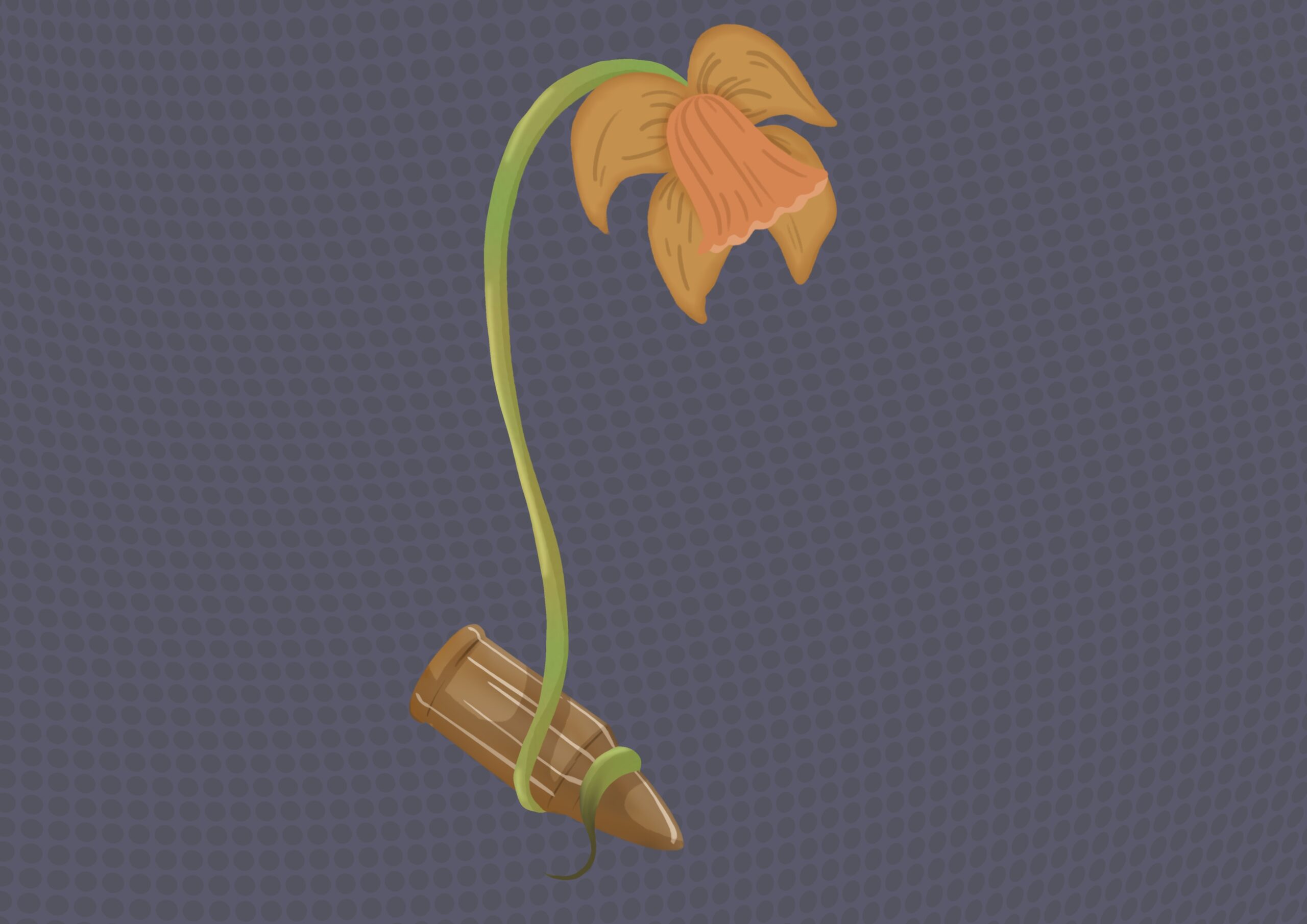
The roots of the silver maple have grown so thick I can’t find a piece of ground soft enough to bury the bullet. I have to dig close to the house to be able to work my spade in four inches, a narrow hole. I drop the bullet in and plant three daffodil bulbs on top. It’s a small gesture, I know, but an important one, a memorial of sorts. I think it will make her happy.
They don’t grow. I wait and watch. Eventually, a weak, off-color stalk emerges. Hardly a daffodil, no glory there.
Near dawn, not even light yet, I wake for no reason. I put on my glasses and go to the window. I see Lucy, nightgown bunched up around her thighs, squatting over the scrawny daffodil. Her hair is white in the gloaming, her nightgown is white, and I hear a steady stream of piss splattering on the ground below her. I step back from the curtain, get back into bed. She comes upstairs and slips under the covers. Her body shakes slightly. A chill? No. She is laughing.
It may not be fair to fight a dead man, but I that’s what I’m doing. I’ve called a man to cut down that tree.
Lucy and I are in the kitchen watching the crew. It’s a marvel. There’s one in a harness up in the top branches. He loops a rope around a branch, severs it from the trunk with a chainsaw. A man on the ground holds the other end of the rope. The branch swings out into space and is lowered to the ground. The third man drags it to the chipper and feeds it in. The noise is bone-rattling. Branch by branch the tree is dismantled, then the trunk is cut to the ground.
With the tree gone we can see our neighbors’ fences, patio furniture, kiddie pools, tire swings. It is too intimate; Lucy shuts the curtains.
I shut off the kitchen light. Lucy turns down the thermostat in the living room and locks the front door. I pick up my glasses and my book, say goodnight. Lucy closes the door to her bedroom and I hear bedsprings as she sits. I am dismissed, nothing but air. I lie on Liam’s old bed, now mine, and do what I always do now: stare at the ceiling and wish we could go back in time. What we know about each other is too heavy between us. But we are who we are, and what happened, happened, and what we said, we said, and there is really no forgiveness for it in this life, and I don’t know about the next.
I ran the guns that killed a British soldier, a priest, a father of three.
I ran the guns that killed a British soldier, a priest, a father of three.
I ran the guns that killed
I ran the guns that killed
I ran the guns
I ran the guns
I ran
I ran
Ireland
Ireland
Ireland
The sheep, like pearl buttons on a kelly green cardigan. Do you remember, Lucy? The people were so good to us there.
Such a nice people, she’ll say. Such a beautiful country.
Lucy’s eyes are a lighter blue than before, or maybe I’d never noticed. You get so used to looking at someone. This is the irony of learning who you are, who you’re married to, this light that terrifies you.
The end