
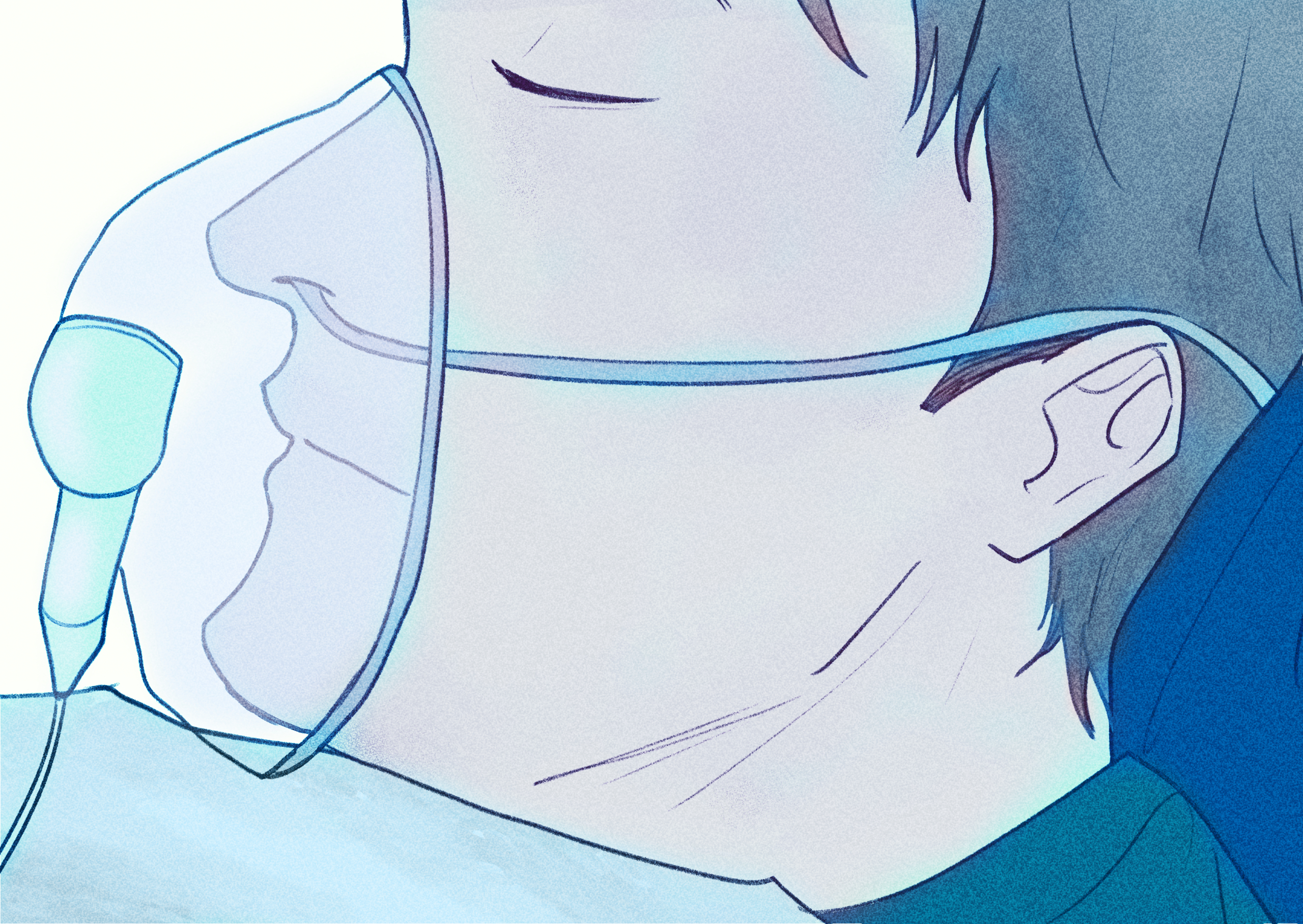
Zephyr Johanson drove out of the long road leading to his house, and pulled out onto Bellevue Way. He moved across the road into the right lane and was heading north, when suddenly he could not move. He couldn’t move his arms or legs, couldn’t push down on the brake on his car. Zephyr could see everything out ahead of him, could see the cars approaching from the other lanes. But he couldn’t do anything. He couldn’t shout or call out. He saw the Cybertruck out in front of him in the left lane, and he felt his little BMW convertible drift over, crossing the center line on the road and head right for the huge silver truck. And he couldn’t move to steer out of the way.
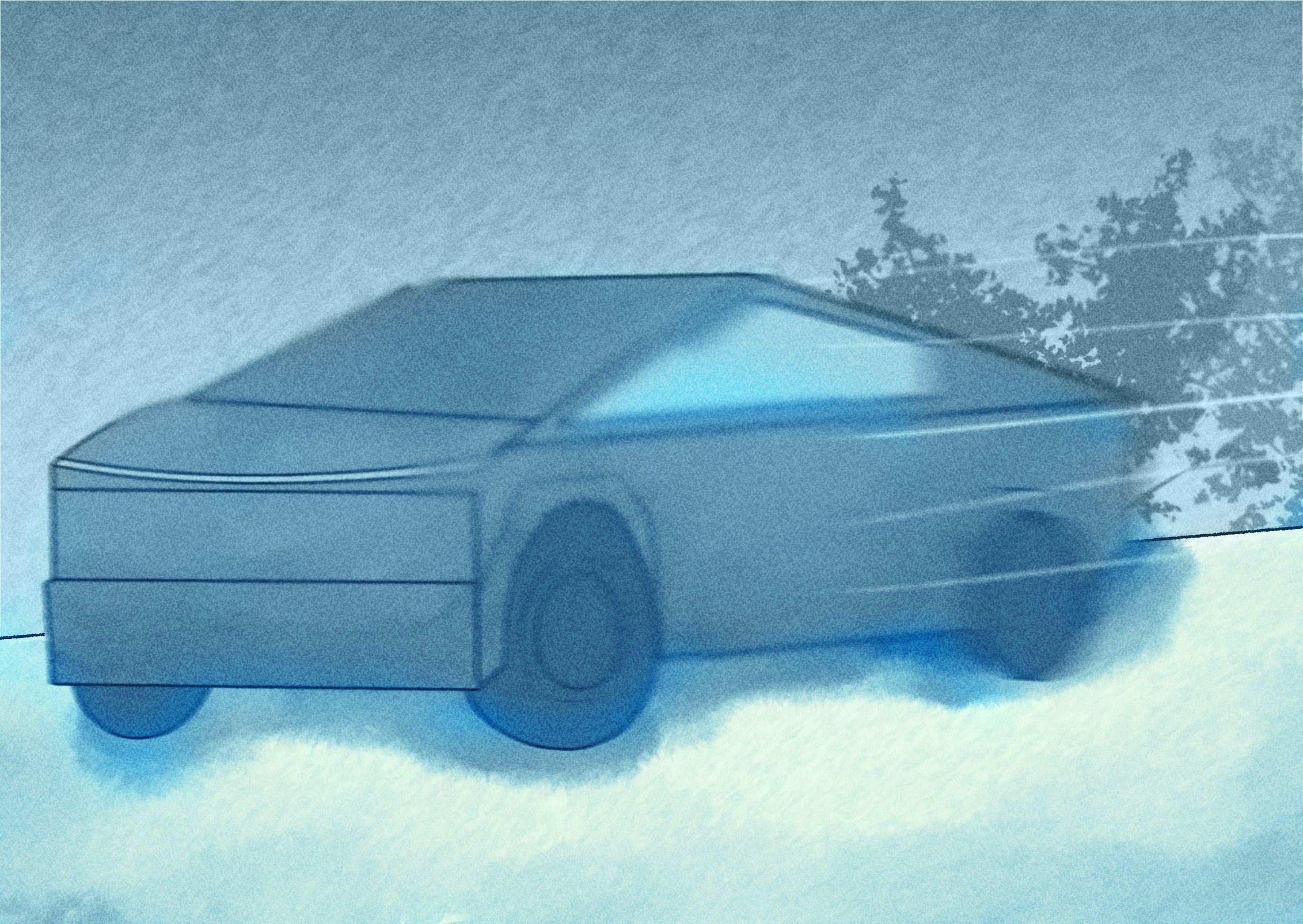
The Cybertruck was a dull silver color, merging into the color of the day in a way that made it almost invisible. It was big and solid, coming down the road fast. Zephyr felt his arms and legs ,and even his neck and face, freeze into the space inside of the car as his BMW drifted to the left and into the oncoming lane of the truck. He saw the front end of the truck just before it smashed into his vehicle. He heard only a loud clapping sound, and then nothing as he fell into darkness. No pain. No other sound. Only darkness.
Zephyr Johanson ( his friends called him Z) was unaware of what followed. He did not hear the sirens, or see the police cars and the ambulance that pulled up to his crumpled vehicle. He didn’t see the people rushing around him, the men trying to pull him out of his car, and then succeeding and carefully lifting him up onto the stretcher. He didn’t hear the wail of the siren as the ambulance bounced along the road on it’s way to the hospital.
The Emergency room was just a few miles away. Overlake hospital. It was early in the morning, and the ER was not busy as the stretcher rolled into the building. But he didn’t hear any of this. None of it. It was later, much later, when he awoke in the Intensive care unit. The ICU. He awoke laying on his back on a hospital bed, staring up at the ceiling with a white tube inserted into his mouth – breathing for him. Around him, he could hear the beep beep beep of the heart monitor. The hiss of the ventilator. And the softer sounds of the intravenous line, dripping into his veins. Then he heard the louder sound of a long BEEEEP. An alarm going off on a machine somewhere in the room.
None of the sounds made any sense to him at first. He didn’t know where he was. He didn’t know what had happened. He didn’t remember anything. It was like he was being born into the world again, emerging into a strange environment, coming awake suddenly in a place he had never seen before.
Z tried to move, to sit up, but he couldn’t. He couldn’t even move his head from side to side. He couldn’t see anything except the ceiling above him, a white tiled ceiling. A blank. And beyond the sounds of the machines in his room, he could hear the vague murmur of what he thought were voices in the distance. He couldn’t make out what they were saying. Only murmurs, like the sound of conversations one would hear off in the distance.
Now the panic came, the fear rising up inside of him as he tried to move. He tried to push up with his chest, to sit up. But he couldn’t. He tried to move his hands, first the right one, and then the left. But his arms wouldn’t move. He wanted to stand up, to walk out of this place. But he couldn’t. And the fear became terror.
Z could hear everything around him. He could see everything. He could see the white coats passing him in the room, the nurses and doctors rushing past. They were writing down things on their pads, adjusting the dials on the machinery above his head, twisting the gauges to the left and right. He tried to speak. Z tried to ask what was going on. No words would come out of his mouth. He tried to reach out with his right hand, to tap one of the white coats – a nurse, he thought – on the arm. He could see his arm move in his mind, but it would not move off of the stretcher. His arm lay still by his side. Z wanted to scream. He wanted to jump up and off of his stretcher. But he couldn’t.
Z closed his eyes. He could still see the scene in his mind, the chaos of the white coats rushing back and forth, the shouts of the doctors and the nurses in the ICU, their swirling up and down movements as they moved past his stretcher. And in his thoughts he drifted back to a time in the distant past when he himself had worked in an ICU during his training, when he had been attending to a sick patient in an ICU, when he had looked up at a TV in the room. It was January, 1986. He was 29 years old and doing his medical Internship in a New York City Hospital.
On the TV screen he saw the Space Challenger rising up from the Kennedy Space Center in Florida. It had been on the news that morning, as he got ready for work, for going into the hospital to see his patients that day. And there it was on the TV, first the countdown, 10,9, 8 and on, until blastoff and the rocket rose up off the launching pad – rising up into the sky as the announcers cheered it on. He remembered watching it power up into air.
He had paused for a moment and looked down at his patient, a man with pulmonary disease who was being kept alive on a respirator that was breathing for him, pumping oxygen into his lungs. Z recalled thinking at the time how amazed he was that medicine could not cure severe lung disease, but science could send people to the moon. He remembered shaking his head from side to side, and looking back up at the television screen. He looked back up just as he heard the announcer say –
“Obviously a major malfunction.”
On the screen Z saw the shuttle break apart, the image of bright orange flames and grey smoke trailing off in two directions like a giant peace sign as the Challenger disintegrated in the atmosphere. At first, Z didn’t realize what had happened. And then the respirator on his patient sounded an alarm and he had to look back down and continue to take care of his patient. It wasn’t until later that he understood what had happened.
Z felt a tug on on his right arm. He opened his eyes, and the image of the exploding Challenger vanished. Up above him, he saw Dr. Ehrlich, an ER physician, his colleague for many years, looking down at him. He heard him ask –
“Can you hear me, Z?”
He could hear him, but he could not move. He couldn’t nod his head. He could only blink his eyes open and shut. So he blinked them open and shut, once, twice, three times. Dr. Ehrlich understood. He nodded his head.
“Just blink twice if you understand.”
Z blinked twice.
“OK”. Dr. Erhlich said. “We are taking you for an MRI scan now, to see what we’ve got. Hang in there.”
The words ‘ hang in there’ stuck in his mind. A poor choice of words, he thought. He tried to laugh, but he couldn’t. Then he felt the stretcher slide forward as an aid pushed him out of the door and down the hallway. That was the last thing that Z felt until he regained consciousness back in the now darkened room in the Intensive Care Unit. He must have been sedated, he thought, although he didn’t remember.
Z lay on his back on his hospital bed, staring up into the darkness. It was quiet around him, very quiet. In a few moments, the door to the room slid open and a nurse entered. She touched his leg, which he could feel, and spoke to him.
“You are back in the ICU now.” She said. “ You will be here for awhile, until the doctors make sure you are stable, and then we can move you to the medical surgical unit.” The nurse smiled, although he couldn’t see her in the darkness.
“I know you can’t talk.” She said. “Blink your eyes, if you need any water or anything, and we’ll take care of you.”
The nurse shined a soft light down on his face, and waited for a short time to see if his eyes would move. But Z didn’t blink. The nurse smiled, and left the room. Z heard the door close, and then he closed his eyes again.
“It must be a brainstem infarct”, he thought. This is what must have caused the condition he was in. It must have happened just before the Cybertruck slammed into his car. He recalled, from his medical training, that this condition was rare. It was usually a stroke, a blockage in blood flow to the brainstem, that caused it. It was called a locked-in Syndrome.
The communication between his brain and spinal cord, to all of his muscles, had been cut off. His sensory pathways were intact – he could see and hear and smell things. But the commands from his brain to his arms and legs and face were severed, as if a knife had sliced through the nerve tracks.
Z hoped that he was wrong about this. He did not want to exist like this, immobile, frozen in place like an object, like a piece of furniture. These were the thoughts that passed through his mind as he lay awake through the night and the hours passed. He could not sleep. He could not rest. All that he could do was think about the morning that had lead up to all of this.
It was a morning like any other morning. He had not slept well the night before. He was worried about his upcoming retirement, which he was planning for the next month. Z had awakened and showered, before he left for the day. He was quiet in his house, as he didn’t want to awaken his young daughter who was visiting. His wife was already out the door, working out at her gym. His two cats were hungry, and he fed them before he left for the day.
Z was a psychiatrist, and he worked with very ill patients on an inpatient unit in the hospital. Very ill patients. People who heard voices telling them to do unimaginable things to themselves and others. Patients who tried to injure themselves by drinking toxic substances. Individuals who attacked others in their homes and on the streets, believing these people were possessed by evil. He worked with these people. This is what he did for a living. There was nothing that was unusual about the start of his day – until he saw the approach of the Cybertruck.
Now he found himself unable to move, laying on a hospital stretcher in an Intensive Care Unit. Drifting through the darkness, waiting for the morning as the hours passed. 3 am. 4am. 5am Until morning finally came, though he could not see the sun from his dark windowless room. But he could see, and hear, the movements begin around him as the interior of the hospital came alive with activity. Nurses moving in and out of rooms. Doctors making their rounds. Patients pressing on their call buttons to get help. Life moving forward around him.
But Z remained laying on his back with the white tube protruding from his mouth, breathing for him in its rhythmic compressions, the sound drifting through the room. Until finally the door to his room slid open and Dr. Ehrlich walked in.
“Good Morning.” He said.
Z tried to discern, from the sound of his voice, whether he had good news or bad. But he couldn’t tell. Dr. Ehrlich’s two words came across flat – neither up or down in tone. The expression on his face provided no clue either. Z waited to hear what he had to say. He waited, and waited, as the seconds passed. It seemed like a long time, before the doctor spoke again.
“It’s pretty much what I thought we would see, Z.” he said. “You suffered a bilateral infarct of the ventral pons. The posterior pons is intact.”
Z blinked his eyes twice. In his thoughts, he tried to remember from his training, exactly what this all meant. Dr. Ehrlich filled it in for him.
“It looks like this was most likely a Basilar artery infarct. The corticospinal tracts and corticobulbar …”
But Z was not focusing any longer on Dr. Ehrlich’s words. He knew what they meant now. He was paralyzed. He couldn’t’ move or speak. But he was conscious. He was aware of everything happening around him.
Dr. Ehrlich continued talking for what seemed like a long time, as Z lay there. When he finally finished his description of Z’s stroke and it’s results, he paused and looked down at him again.
“We moved to treatment as soon as we could.” He said. “We gave you intravenous tPA thrombolysis. Your wife signed the consent, as you couldn’t. The next step is maybe a thrombectomy of the lesion, if possible. I’ve called in the neurosurgeon.”
Again, his words went on and on as Z lay in his hospital bed, staring up at the ceiling with the bright lights in the room now turned on. Dr. Ehrlich was explaining that they had injected an agent into his veins to break down any clots that had formed, that were blocking the blood flow to the brainstem. That was what he meant by the intravenous agent, the tPA. And he had asked for a neurosurgeon to come in and look at the possibility of surgically removing anything blocking the blood flow to his brainstem.
Z knew all of this. He remembered it, from his training. And he remembered something else as well. He recalled that most people who suffered this kind of stroke, which caused this locked in syndrome, did not recover from it. Their speech did not come back. They didn’t regain the use of their arms or legs, or much of their movements, other than their eyes. They often had to have a hole cut in their neck, a tracheotomy, for a tube to help them breathe at times. They remained immobile, under the care of others, not able to take care of themselves.
He knew all of this. All of it. Those were the words that rose up in his thoughts. All of it. And the words kept repeating, over and over, almost flashing like bright colored things in his brain, All of it, All of it, All of it. Like neon lights, the colors erupting in a rushing cascade as he lay in his hospital bed looking at Dr. Ehrlich in the quiet room. He didn’t want any of it. None of it. He wanted it all to stop.
But how? How could he get it to stop? How could he escape? He didn’t know how. Now in the brightly lit ICU Z remembered his Mother and her life and death. He could see her face, in his memory.
She rose up before him, and he saw her visage staring at him like a warning sign. He saw her as she lay in her bed in the nursing home. The place where she had existed in her small room oblivious to everything around her. Her TV turned on, to a game show she could no longer understand. Her face stiffened in fear as she held up her hands to ward off the threats that she felt. The sounds coming out of her mouth that no longer made any sense.
The memory was painful, and Z closed his eyes tightly to try to block it out. Her image faded from his thoughts, slipping away and Z felt a sense of relief. Then his Father’s face appeared, his father’s face smiling in front of his barbeque out in the backyard where Z had grown up. His father cooking hamburgers on the barbeque, his face alive as he handed the burgers out to Z and his Mother. It was a warm memory, a comforting image, and Z felt a sense of peace.
But then it was gone. In it’s place Z saw another vision appear. He saw himself standing above his Father – looking down at his father’s now waxy face in the coffin in the church where the funeral took place so many years ago. He was standing above his father, crying as he looked down into his father’s now blank eyes. Crying as he looked down at him. His father had died in an accident. An accident that could have been avoided.
Z felt an overwhelming sadness, as he gazed at his father in the coffin. He had died too young, only a few years after he retired. Retired. The word rose up in Z’s mind. Retired. Z himself was on the verge of retiring, of closing his practice. The realization spread out, expanding in Z’s thoughts until it covered him up, all of him, until that’s all that he could see was the word ‘Retire’ hovering above his head.
It was then that he heard an alarm go off somewhere in the room, and he opened his eyes. The alarm sounded again, but it didn’t sound like any of the mechanical beeps that he had been hearing. It sounded like a long stretch of soothing music. It sounded like a harp playing in the distance. The sound repeated, over and over, without stopping. Over and over. And it sounded familiar to him.
Z felt something wet on his face, something cold and wet. He reached up with his hand to wipe it away, dragging his sleeve over the wet spot. He opened his eyes and stared into the green eyes of his cat Kumulus, who had just rubbed his cold nose over Z’s face. And Z realized that he could move, that he was no longer paralyzed. He could move his arms and legs.
Z was in his bedroom, in his home. He had overslept, and his alarm was going off. This was the sound of the harp. He was late for work. He sat up, and looked over on the bed where his wife was still asleep. He could hear her breathing slowly, in and out. Her eyes were closed. He looked back at his cat, who was now laying on it’s back on the bed.
Z reached over, onto the table where his phone was laying. He turned off the alarm, and lay back down on his bed. In his chest he felt his heart beating, faster and faster, and suddenly he couldn’t breathe in the darkened room. And all that he could hear was the sound of his cat purring in a soft rumble that drifted up into his ears.