
I.
McKinsey sent me down to Rio for a strategy project last year after I was promoted to Engagement Manager. I had only been there for a couple of weeks when this whole thing happened.
I was going to the Zona Sul supermarket on Carlos Góis, just a couple of blocks away from my hotel in Leblon. Despite my feigned calm, I knew that walking around as a six-foot pale white redheaded woman meant I was a target for every type of potential crime. It was the middle of 2015 and Rio was getting bad with crime because the economy was crashing. I might as well have been waving a flag that said “clueless gringa.” In poorer countries you often feel that everyone is out to screw you, even in ways you can’t quite clock, taking advantage of your lack of street smarts. Especially as a foreign woman, you can’t risk these things. So over the years I had perfected this warm, kind head shake and smile to say no. But I guess this one time was different.
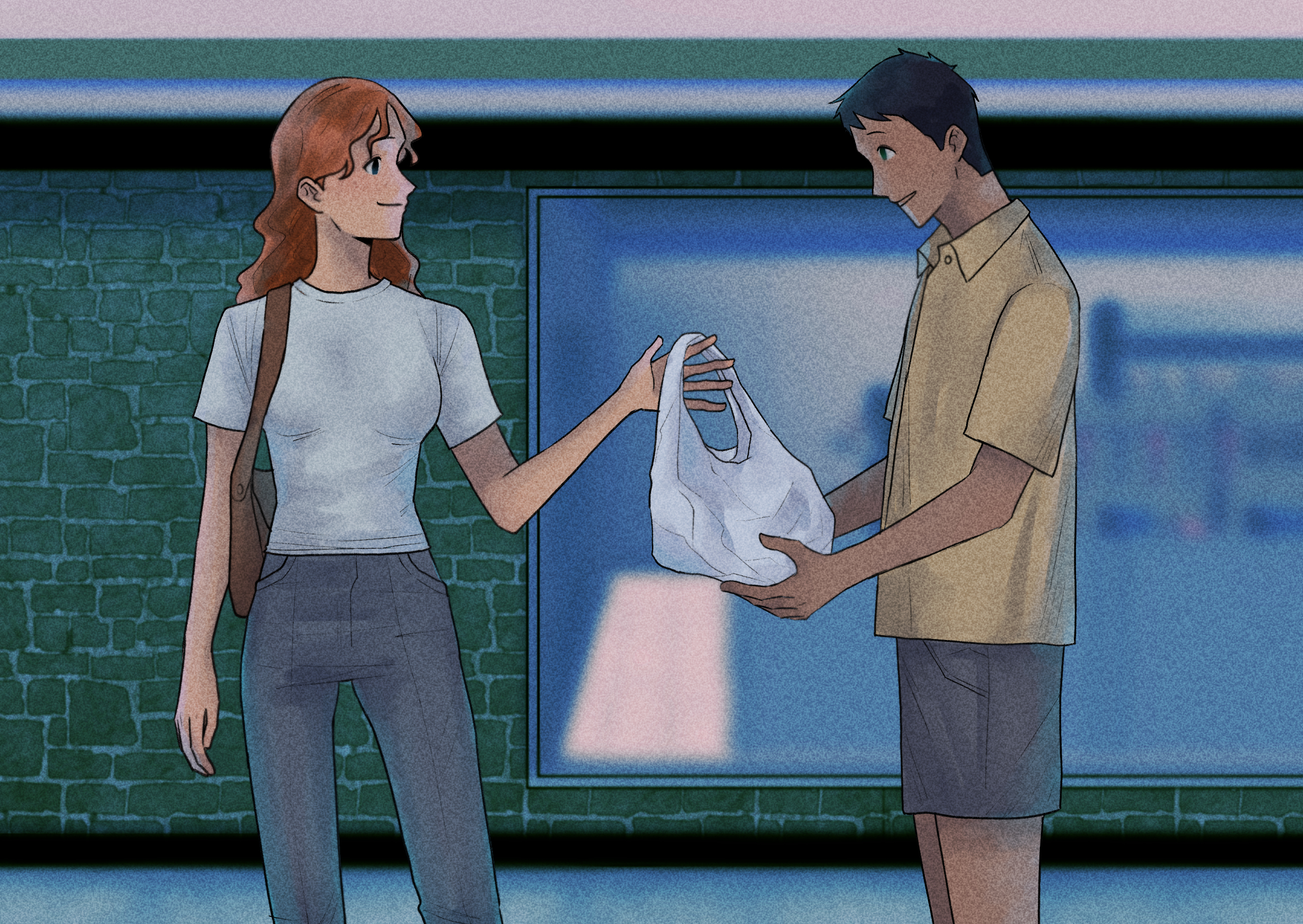
I was approaching the entrance to the supermarket and a man walked up to me slowly, nonchalantly. He was about my age, early 30s, light-skinned for a Brazilian, in jeans and an old-looking buttoned shirt, clearly lower income, but not a beggar. He greeted me and actually put his hand out in front of me, gently, to stop me from walking in. “Oi,” he said, smiling. I actually stopped, maybe because his manner was so calm. He was speaking very slowly and my college Spanish and recent weeks of Portuguese classes helped me understand him: “I am not a beggar, I am not asking for money, I am not hitting on you, don’t worry, I’m married, I’m father to three children. I lost my job last month. With this economy I can’t get another job…” He kept talking, telling me he used to be an assistant to a butcher but now people weren’t buying meat anymore so he had been fired. He looked me right in the eyes the whole time. I noticed he had green eyes, which surprised me, for a poor person. That’s not insensitive, that’s just a demographic unlikelihood in a place like Brazil. So the upshot is, he tells me his wife just had a baby, she can’t work either, and they’re struggling. He hates asking like this, but I looked like a really nice lady and he is desperate, so he wanted to ask if I could buy him a few cans of baby food. He even tells me what brand, what flavor and what the can looked like.
I smile and say yes. He wanted baby food – not money, not alcohol, not even food for himself. He thought of his baby first, ahead of his own comfort. Easy yes.
I go inside and do my shopping. I pick up the baby food. For a second I think about the comedy of my being a stereotypical American corporate yuppie female, purposefully childless, but buying baby food abroad for a stranger. I also notice how busy the butcher section was. Either his boss had lied to him about people buying less meat or the recession just hadn’t hit the rich in Leblon. Or both.
At the end the cashier rang up the baby food. The total for his cans was 40 reais, or about 10 dollars, at the time. I asked the cashier whether she had seen the man before, nodding toward him outside, but she said no. This made me feel better, since it gave more credibility to the guy’s story. But it also made me feel like an untrusting heartless bitch, doubting the poor man.
Outside I gave him the bag with his cans of baby food. He thanked me very politely with a small bow, said “God bless you” and left. I watched him walk away. There was a casual gait to his walk and he did not look back.
I wanted to go, but an irritation suddenly hit me and I just stood there as it sank in. I had just spent 40 reais. Did people do this for him every day? Did he think it was my duty, as a rich foreigner? Did he not think 40 reais was a lot? Did he expect me to give him more? I don’t give even 5 dollars to street people in New York, and the cost of living there is triple what it was here.
Then it passed. Had I expected this man to bow down and kiss my feet? For him to get my e-mail and to send me a thank you message with a picture of his kid eating the baby food? The man was worried about getting home to give his baby the food. I could be a real self-righteous grouch sometimes. I let it go and walked back home, feeling proud and feeling good about the world. I thought about emailing the MD at the office if I could do some non-profit work back in the US once this project was done.
II.
That night I went to a small expat dinner party at my American friend’s place in Ipanema. I had decided not to tell anyone about the baby food incident. Sure, it was a unique story, and it was the kind of experience that foreigners talk about with each other. But it would sound holier-than-thou no matter how I told it. Especially in Brazil, where poverty was just in your face all the time. I had seen that this was a trend with expats here. Conversations turned into a competition of who had done the most good that week, or had seen the most abject destitution. “I volunteered with Teto at Jardim Gramacho, you know, where the landfill is. You wouldn’t believe how they live, these kids scavenging like rats…” “I bring kids from Rocinha to spend the day with my employees at the office. They love it and it’s so great for them. They’ve never seen an office before and they have no exposure to responsible working adults…” Sanctimonious. Fuck that. It was as if they had come to Brazil to accumulate stories of kindness and third-worldiness to tell back home.
But then, of course, there’s wine and its magic. I had three glasses and ended up telling my story. I told it smiling, in detail. I even focused on the man’s big, honest green eyes.
I regretted it immediately. Rather than the gushing congratulations I expected, there was an unwelcome shower of conflicting opinions:
“It’s giving money to cons like this that keep these people in poverty. They keep thinking they don’t need jobs.”
“You fell for a scam. You know he’s just going to sell it and keep all of the profit.”
“Hell, even if it’s not a con and there was a hungry kid, giving him money in any way keeps him from getting a job.”
“Did you ask to see the baby? Maybe a picture on his phone? Well, there is no way to know whether there was really a hungry kid or not. So since you didn’t know, you did the right thing. But it probably would have been better if you saw the baby yourself.”
“Baby food, that’s smart. It makes it easier to get someone to buy it. Would you have believed him if he had asked for batteries, orange juice or meat?”
“That’s why they target foreigners for this. And women. He mentioned babies, it’s a soft spot. Not a sick relative, not his wife. Babies. Baby food. No woman can say no.”
“You have to applaud Brazilian ingenuity. If he had asked for 40 reais so that he could buy baby food, you would have ignored him. If he had asked for 2 reais, or any money, you would have ignored him. But no. He asks for merchandise instead, hits you in the feels with a sob story, and suddenly you’ve given him 40 reais.”
III.
That night, back at the hotel, I couldn’t sleep. It wasn’t the wine, it was the realization that I was an idiot. In fact, I was a triple idiot:
- For having given the guy money
- Having felt so proud of myself for it
- Needing to brag about it to a table of privileged, bloodless Americans
But, what if it wasn’t a scam?
And why do we always suspect the worst of people?
I was chewing on this for several days. I gave no money to any beggars I saw, and anywhere I went in Rio, there were plenty. This actually made me feel worse.
I went back to Zona Sul for groceries, but more in the hope of seeing the man there – ideally with his wife, with a baby wrapped in a torn blanket, asking for food. But of course, I never saw him. I did see a homeless man accepting money with a credit card machine. The guy at dinner was right: you have to admire their ingenuity.
My overactive consultant brain did endless cycles on this, distracting me from work, seeking some type of resolution to the case, an answer I could put on a slide and move on to the next problem. So I sat down to research, and to my chagrin, there it was on Google, clear as day.
This is known as the “baby formula scam” and apparently somehow this became famous in Cambodia, of all places. But there were also reports of versions of this happening in South Africa, the UK, even my own New York City. Women wait with their babies outside grocery stores in areas with lots of foreign tourists. They approach tourists, normally women, and ask for formula for their baby. The tourist doesn’t doubt anything: the woman looks poor, she has a baby with her, she is asking for baby formula and not money. So they buy the baby formula and give it to the woman. The tourist walks away smugly, probably hoping everyone around saw their Mother Teresa act. Then, after the tourist is gone, the woman returns the formula to the store for a partial refund. She gets paid, and the store owner, in on it, gets the baby formula back to sell again.
I, Miss Independent Emerging Market Explorer, Miss Harvard MBA, Miss 21-month McKinsey Promotion, had fallen for a basic, well-documented scam. I might as well have fallen for a Nigerian Prince spam e-mail. Now I knew: I was a gullible dupe, not a saint.
I was angry. Maybe some people in this situation would be sad, but I was just mad. The more I thought about it, the angrier I got. It wasn’t that the man had preyed on my gullibility, it was that he preyed on my goodness. I had an MBA and I was an Engagement Manager at the top consulting firm in the world, a cutthroat American executive, no kids, no husband, no cat, not even a plant, a life focused almost entirely on my career, and when I decide it’s OK to show a little kindness to the world, I get slapped in the face. That was infuriating.
It stayed with me. At work, in the shower, on the ride back to the hotel, every day for several days. I kept analyzing it. Zona Sul wasn’t a village shop in Cambodia, it was a big corporation with over 30 modern, digitalized supermarkets around Rio. The cashier could be in on it, maybe, but they were watched intensely by the store managers. No, the guy would probably sell the baby food, not return it. He could sell it to any of the lower income families with a baby where he lived. He could even sell it to another grocery store, a smaller one, maybe a mom-and-pop store instead of a corporate one. I wondered about his margins. He could probably sell it for 30 reais, I thought, to make it an attractive discount if he sold it directly to the consumer, and also to allow for a markup of 30% or so if another store was going to resell it to a consumer for a price similar to what I paid at Zona Sul. If he can do this three times a day at different places in the city, that’s 90 reais a day, tax free. In a month that’s about 2,500 reais, or 3 times the minimum wage. And that’s tax free! What a great idea. You have to admire their ingenuity.
I even thought about using this problem for case interviews when recruiting season came around again:
“What’s the total addressable market size for contraband baby food in Rio de Janeiro?”
“What is one individual’s potential earnings under this model?”
“The man hires you to figure out whether he should incorporate and hire other people to do this at scale. Please do a SWOT analysis of this business model.”
IV.
Eventually the sting subsided, though, and I let it go. I was able to see it just as money lost, a $10 bill that could have just fallen out of my pocket somewhere. I felt a little silly for worrying so much about 10 dollars. I could see that it was my ego that was hurt. Hell, during these weeks in Brazil I had probably been unknowingly scammed out of way more than 10 dollars. Taxis, food vendors, souvenir shops, name it. If I spent any money in Brazil, I was probably paying the famous “gringo tax.” Fuck it. It’s the cost of doing business. McKinsey was paying for most of my expenses anyway.
I hadn’t told my team about it because I was afraid it would make me look stupid. But in the final week of the engagement, we were at a team dinner sharing our personal stories about what we had been up to in Brazil when we weren’t together in a conference room making powerpoints. I honestly thought I wouldn’t tell them. But again, after experiencing the magic of wine, I told my two analysts.
Rohit and Gabrielle: first year analysts, fresh out of college, both Economics majors, one from Stanford and one from Yale, analytical confidence emanating from every pore. Probably the last two people on the planet to whom you want to reveal a dumb mistake like this, I realized too late.
I told them the whole story, even my American friends’ reactions, my idea for case interviews, everything. My intended point was that you have to be careful out there, or you get made into a sucker. Have your guard up at all times. So here I was, thinking I was imparting some wisdom on these young inexperienced kids, about how dark life was, about how malicious human beings are, about how not to be the idiot foreigner paying gringo tax in the developing world. But this is not what they understood.
“It’s funny you called it gringo tax,” Gabrielle said. “Gringos pay more for things for a few possible reasons related to their market power: 1) they don’t know the real price of things, 2) they are gullible and unquestioning, 3) they are just richer and don’t care about spending more. So, gringo tax is the economic premium you pay for this imbalance. Calling it a tax is actually really apt. Taxes are…”
“Gabrielle, we’re not billing for this,” I interrupted her, trying to lighten the mood. She did not understand.
“Taxes are what governments collect in part to be able to redistribute money downwards. Taxes allow governments to do for the less privileged what society doesn’t do on its own. Gringo tax is the same. And because you’re a foreigner, there’s currency and purchasing power arbitrage, so it’s negligible money to you on each transaction, but really impactful for the locals. And, other than you not wanting to feel stupid, it means very little to you. So the gringo tax is actually a way simpler and less painful way to redistribute wealth than real tax or foreign aid, if you think about it.”
I sat there with my mouth slightly open, entertained but also slightly insulted at how she had turned my very personal anecdote into a Wall Street Journal op-ed. I looked at Rohit for support.
“She’s right,” Rohit said. “Besides, so what if it was a scam? That’s actually even better if it was a scam.”
“Are you kidding right now?” I asked him, growing annoyed.
“If it’s not a scam and he just asked you for money, you’re likely to say no. There’s no transaction, nobody benefits. But instead, he runs this scam and gets you to engage. First, you benefit because you feel good about helping and it costs you very little. The guy benefits because he gets 40 reais worth of merchandise. The supermarket benefits from the revenue. They stay in business, employing underskilled locals, providing benefits, paying taxes. Your scammed baby food generated tax money for the government to help even more people.”
“A regular John Maynard Keynes over here,” I said, sipping more wine, still annoyed, but actually entertained.
“Yes! Exactly.” Rohit continued. “Now your guy goes to a slum and sells the baby food to a poor family for 30 reais. That’s a 25% discount off of Zona Sul’s price. These are really price-sensitive people and that 10 reais discount is huge. And if someone is willing to buy contraband baby food, you know they really need the baby food at a lower price. So that family benefited too, as the supply found the demand at their lower willingness to pay. And that 10 reais the family saved by buying your guy’s baby food instead of going to the supermarket, that can be spent on something else they need. Think of this multiplicative effect. It’s actually quite fascinating.”
“It really is,” I said. I meant it. After all this time wrestling with my soul, my 23-year-old teammates had the answer all along. Or at least one type of answer – but the type I would have clung to early on, that could have allowed me to easily just forget the whole thing.
“And,” Gabrielle said, “the beauty of the whole thing is, if the guy had just asked you for money, you probably would have ignored him and walked right past him.”
“Because I’m such a heartless bitch?” I asked her, a little hurt.
“No. Because statistically speaking, that’s what most people would do! You would have behaved like most people. You would have avoided him.”
“That’s actually true,” I said, smiling.
Brilliant insights, yes, though based on pure intellect and no experience. But, it’s exactly why McKinsey hires kids like this to work on the toughest business problems in the world. Hell, it’s exactly why they hired people like me. I guess I was going soft.
V.
A few days later I left Brazil. On my ride to the airport I watched the city from my uber, which looked poorer and less exuberant due to a dark grey late afternoon sky, threatening to rain. I mulled about what the learning from all this had been, how I could package all this for a fun presentation at the office, or write it up for an article I could publish in the McKinsey Quarterly. But there was no learning, just… experience.
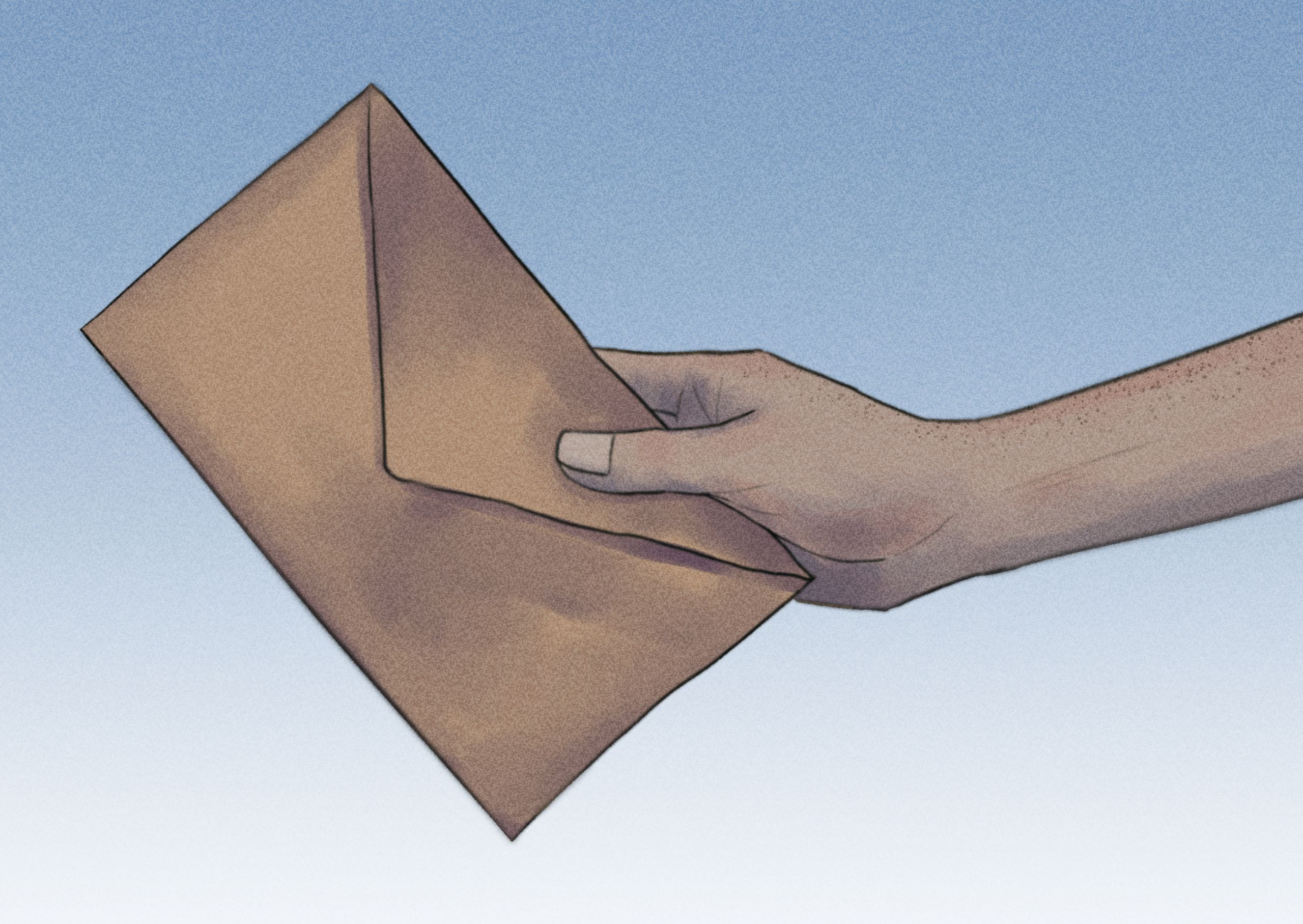
The uber dropped me off at Galeão International. As he handed me my luggage I said “obrigada” and gave him a big wad of all the cash I had left in reais, about two hundred dollars’ worth. The driver was young, younger than me, pretty well dressed and – as these were the early days of Uber in Rio – probably tech savvy and likely not poor. He looked confusedly at the envelope and pointed to the phone in his hand, trying to explain that the ride was already paid via the app, as if I did not know how Uber worked. “No, no. For you,” I said, smiling and pointing at him. Then he actually tried to hand me back the envelope, but I was faster and turned around, walking away from him and into the airport, not looking back.