
Mira notices the light first. How it cuts through steam, fractures into prisms against the brass machinery, bathes the wrists of customers as they reach for their cups. At seventeen, she is all angles and watchfulness, her height making her tower over the espresso machine where other baristas must stretch.
The man with the leather portfolio comes in at four-thirty, always. His name is Vincent. Not Vince—he corrected her once, gently, when she abbreviated it on his cup. She knows other things about him too: how he takes his Americano (black, extra hot), how his wedding ring disappeared six months ago, how his eyes track across sentences in the manuscripts he edits with the same deliberate pace as they follow her movements.
“You remind me of a young Stella Tennant,” he tells her on a Tuesday as she places his drink on the table near the window where he always sits. The café is emptying. The light has shifted to amber, casting long shadows.
“Who?” she asks, pausing longer than she should.
“Famous model. Aristocratic features. Like yours.” His eyes don’t return to his manuscript.
She walks away with her spine straighter, looking up the name on her phone during her break. The woman is tall, sharp-featured. Beautiful in a way Mira has never considered herself to be. She studies her reflection in the bathroom mirror differently that night.
Her father left when she was eight. Her mother works doubles at the hospital. The apartment smells perpetually of microwaved meals and absence. School is a place she visits but doesn’t inhabit. The café is where she lives.
Vincent offers book recommendations. Brings them to her, sometimes, slim volumes with notes in the margins. “You’ll understand this,” he says, as if bestowing something precious. “Most wouldn’t.” His hand brushes hers during the exchange. She reads them all.
“You have an extraordinary eye,” he tells her when she mentions the recurring motif in the latest novel. “Have you considered studying literature?”
“Community college next fall,” she says, wiping down the counter, avoiding his eyes.
“Waste of your talent,” he says, shaking his head slightly.
The first time he stays until closing, she feels like she’s passed some test she didn’t know she was taking. He sits at the counter while she counts the register, laptop open, glasses low on his nose.
“Come look at this,” he says, and she does.
The document is filled with descriptions of clothing—fabrics that flow like water, architectural shapes, garments that transform their wearers. His words make ordinary things magical. “I’m stuck on this section,” he says, and she leans forward, pointing to a sentence that feels clumsy amid the others.
“There,” she says. “The rhythm breaks.”
He looks at her with something like wonder. “Precisely.”
After that, he brings his work to her regularly. The café owner notices but says nothing—Vincent tips well, buys expensive pastries he barely touches. Mira’s suggestions make their way into his text. Sometimes he reads passages aloud to her when the café is empty, his voice like warm honey.
“I have a colleague,” he says one evening in late winter. “Casting director. Looking for new faces.”
“For what?” she asks, though she knows already, feels the question like a hook in her chest.
“Editorial shoot. High fashion. Paid.”
Her mother works that Sunday. The meeting is at an agency in the city that looks like something from a movie—all glass and steel. Vincent introduces her to people whose names she immediately forgets. They photograph her against a white wall, ask her to walk, turn, look over her shoulder.
“She’s perfect,” someone says. Not to her.
“I told you,” Vincent replies.
She gets the job. Then another. Her mother is suspicious until she sees the check. “Just don’t let it interfere with school,” she says, but her eyes linger on the amount.
The first time Vincent touches her—really touches her, his hand on the small of her back as he guides her into a showroom—she feels a cold flutter in her stomach that might be fear or might be something else. She can’t tell anymore. She’s stopped trying to name the feeling.
“When you turn eighteen,” he says, driving her home from a shoot, “we should celebrate properly. Paris, maybe. I’m heading there for fashion week in September.”
She watches the streetlights blur through the windshield. “My birthday’s in August,” she says. The information feels dangerous once spoken.
“Perfect timing,” he says, and smiles.
In April, she drops two classes. By May, she’s only going to school enough to avoid truancy officers. Her mother notices but doesn’t fight it—the modeling money pays bills that have been overdue for years.
Vincent gives her a phone—”for work,” he says—with his number programmed as the first contact. It chimes with messages at all hours. She answers them all immediately.
Her friend Lucia, the only one who still calls, says, “This guy is like, super creepy, right?”
“You don’t understand,” Mira says. “He sees something in me.”
“Yeah,” Lucia says. “That’s what I’m afraid of.”
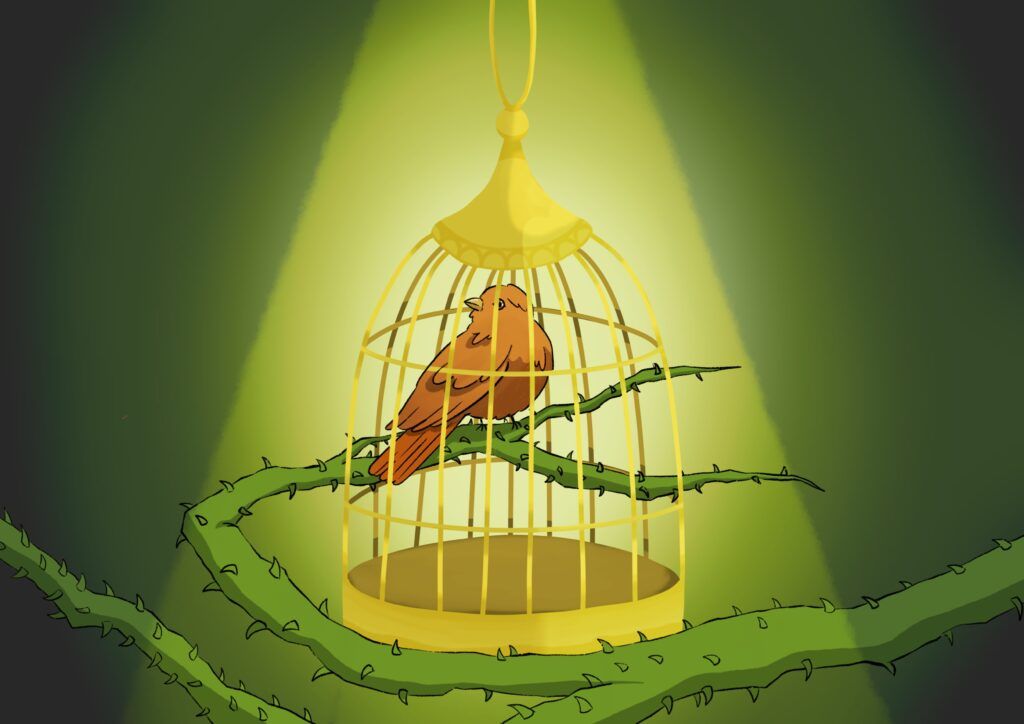
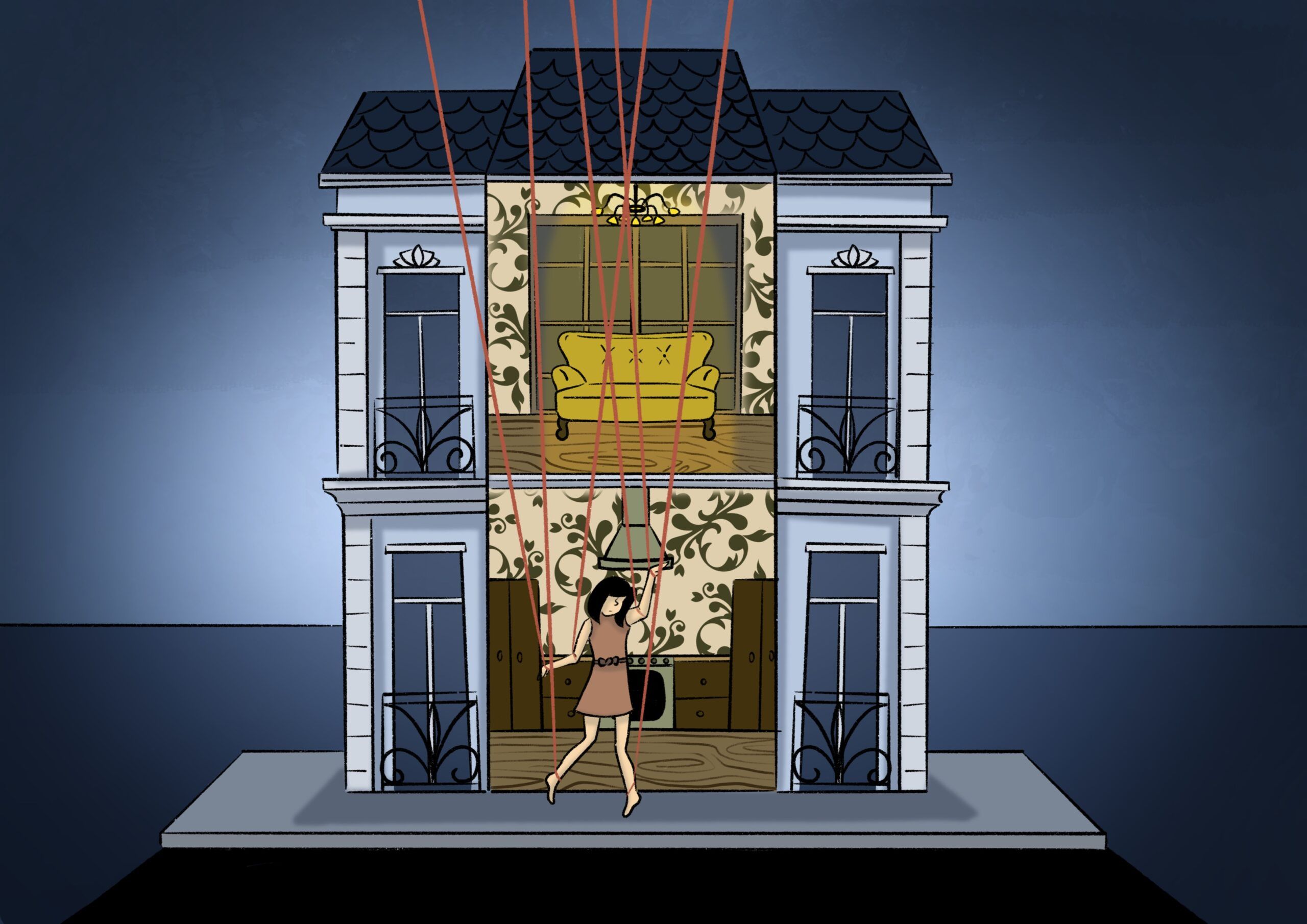
Sometimes at night, Mira dreams of birds with clipped wings, of glass houses with no doors, of rooms that keep shrinking. She wakes with her heart racing but can never remember why.
In July, Vincent takes her to dinner at a restaurant where the waiters know him by name. He orders wine for them both. When the waiter hesitates, looking at her, Vincent says, “It’s a special occasion,” with such authority that the glasses appear without further question.
“To your future,” he says, clinking his glass against hers.
She sips slowly, feeling the warmth spread through her chest, watching his eyes watch her throat as she swallows.
“I’ve been thinking,” he says. “You should consider deferring college. Just for a year. The momentum you’re building now—it would be a shame to interrupt it.”
The wine makes her brave. “And what happens after the year?”
Something flickers across his face—irritation? Amusement? It’s gone too quickly to name.
“After?” He reaches across the table, his fingers brushing hers. “After, you’ll have options. More than you can imagine now.”
She should check with her mother, she thinks. But in the morning, when the wine has worn off, she doesn’t. Instead, she signs the forms Vincent has prepared. He stands beside her, hand steady on her shoulder.
Paris in September is golden. The apartment he’s arranged has high ceilings and herringbone floors. Windows that open onto a narrow street where musicians play in the evenings. Fashion Week is a blur of backstage chaos, cameras, clothing that weighs nothing and costs more than a year’s rent back home.
“You were born for this,” Vincent tells her after her first runway show, and it feels true in a way nothing else ever has.
Her mother’s voice on the phone grows distant, confused by time zones and the growing gap between their lives. “When are you coming home?” she asks every call. Mira always has a new date, always just a little further away.
The messages from Lucia taper off by November. Mira is too busy to notice at first. Too consumed by the newness of everything—the language she’s learning in fragments, the parties that last until dawn, the photographers who speak to Vincent about her as if she’s not present.
“The angles,” they say, gesturing at her body. “Extraordinary.”
Vincent moves into the apartment in December. To save on rent, he explains, though money never seems to be a concern for him. The bedroom becomes his, naturally. She takes the sofa without discussion.
The first time he kisses her is on her birthday. Eighteen, finally. They’ve been drinking champagne on the balcony, watching Paris spread out before them like a carpet of lights.
“You’re not a child anymore,” he says, and his mouth tastes of bitterness and promise.
That night, she gives him the only thing she has that’s still entirely hers. His hands map her body like territory long claimed but only now possessed. She feels herself becoming a different person beneath his touch, someone she doesn’t recognize but can’t stop becoming.
Afterward, she cries silently, her back to him, not knowing why exactly. He strokes her hair until she stops.
Winter arrives, and the shoots become less frequent. Vincent spends more time at his keyboard, more time with his connections. “Building our future,” he says. She’s not sure when it became our future, but she doesn’t question it.
The apartment shrinks. She notices how he checks her phone, casually at first, then openly. How he sighs when she mentions home. How he has an explanation for everything—why she shouldn’t renew her passport yet, why the money is in accounts she cannot access, why they shouldn’t waste time with her mother’s tiresome phone calls.
By spring, she no longer questions when he stays out until dawn, when he brings colleagues home who look at her with knowing eyes, when he tells her to wear particular things for particular people. She is a bird in a cage made of golden promises, fed just enough to stay alive but never enough to fly.
Her dreams change. Now she dreams of drowning in clear water, of sinking while everyone watches from the shore. She wakes gasping but silent—she’s learned not to make noise in the night.
Summer again, and Paris is stifling. Her body, once all angles, has softened from the wine she drinks to sleep and the pastries that are her only indulgence. A photographer mentions it, casually cruel. Vincent’s disapproval is a physical weight.
“We need to be careful,” he says. “The industry is fickle.”
The diet he designs for her is sparse and precise. He watches her eat, monitors her exercise. The control should frighten her, but instead it feels like care—the only consistent thing in her life now.
It’s only when he begins bringing others home—younger girls, their eyes bright with the same wonder she once felt—that something cold and hard forms in her center. She watches him with them, deploying the same words, the same touches. A performance she knows by heart.
The call to Lucia happens during one of Vincent’s trips. Three days alone in the apartment have made her reckless, or perhaps brave. She uses a phone borrowed from the girl who cleans the building.
“I didn’t think you’d answer,” Mira says when she hears her friend’s voice.
“I almost didn’t,” Lucia replies. Then, softer: “Are you okay?”
The question breaks something in her. The words spill out—fragmented, disjointed, but enough. Enough for Lucia to understand.
“Where are you exactly?” she asks. Mira gives her the address, unsure why until Lucia says, “My uncle works for the embassy. Just stay put.”
When she hangs up, Mira sits very still in the center of the room that has been her cage. Looks at the elegant prison Vincent has built for her. At the clothes he’s selected, the books he’s allowed, the life he’s constructed—a life in which she is both centerpiece and ghost.
She packs nothing. Takes only her original passport, hidden months ago in the spine of a book he never touched. The air outside tastes like possibility, like danger.
Vincent will return tomorrow. He will find the space where she was. Will he see her absence as a betrayal or a theft? She cannot decide which is worse—that he might miss her or that he might simply replace her.
As she walks toward the metro, toward Lucia’s uncle, toward whatever comes after, Mira thinks of the café where this all began. Of the light through steam. Of the girl who noticed everything but couldn’t see what was happening to her.
She boards the train. As it pulls away from the platform, she catches a glimpse of her reflection in the window—a face she barely recognizes, eyes older than their years, a mouth that has forgotten how to form certain words. Behind her, Paris recedes.
It will be months before she speaks of what happened. Years before she understands it. Some nights she still dreams of birds, but now they are flying, their wings carrying them higher and higher until they disappear into a limitless sky.