
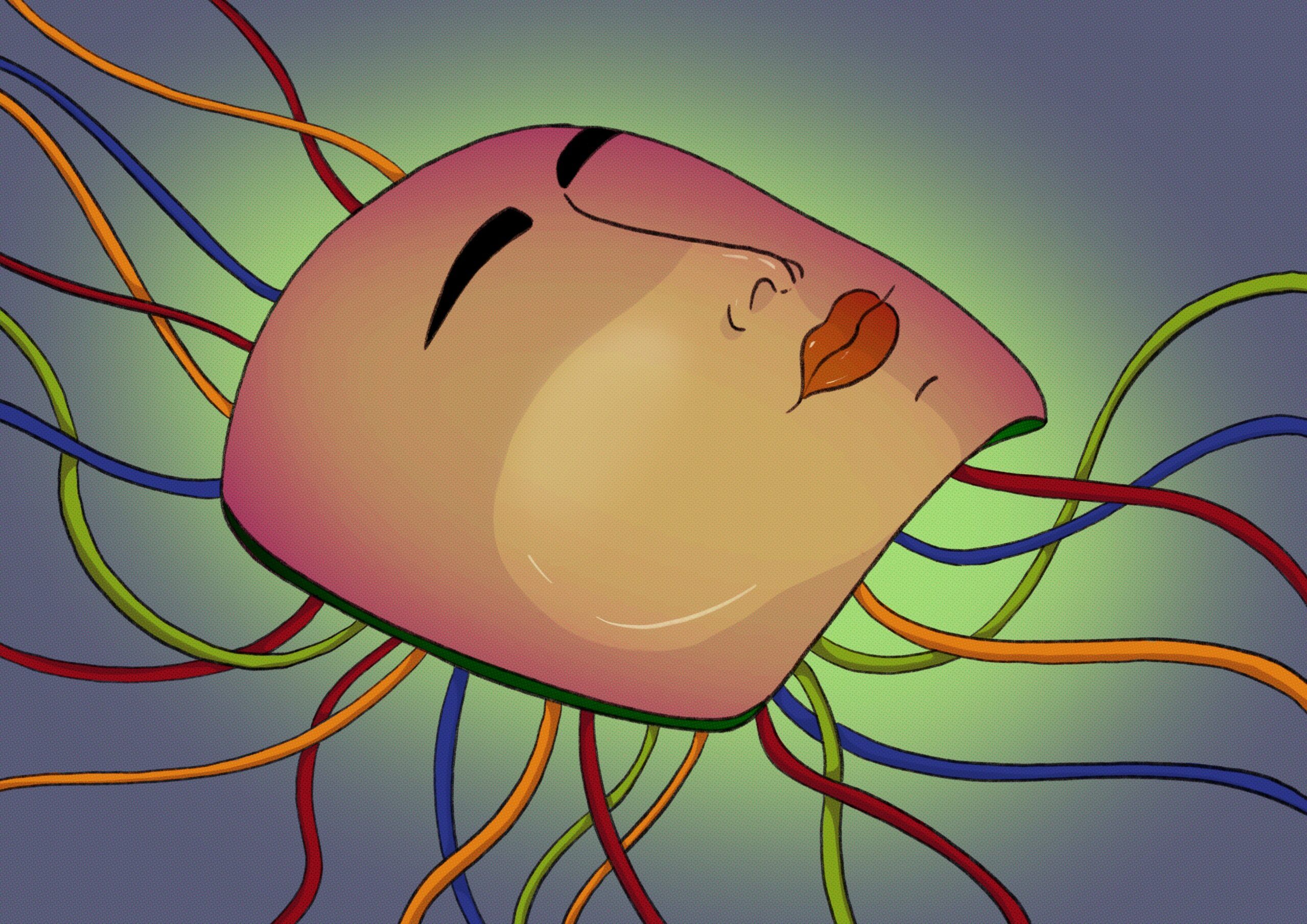
She haphazardly landed the freelance assignment with Conception Fabriquée Magazine (online version) on the recommendation of an old college acquaintance. That one assignment became three, which eventually turned into a regular column. Another feature writer then quit without notice and suddenly she was full-time and salaried, despite the fact that she didn’t have an interior design or architecture background. It turned out she didn’t need one; many subject-specific writers could convincingly mimic expertise through repetition and necessity. She might have had greater ambitions for her writing career, but now she just considered herself lucky to have a full-time position.
Not that she didn’t care about design or style; she did, albeit in a more financially moderate way than the magazine recommended. Her own home was decorated in a classic mid-century modern style. She and her husband had worked nights and weekends to restore the dilapidated bungalow with personal touches, cleverly painting the insides of bookshelves bright colors and wallpapering single walls. More recently, she’d painted a mural in her son’s room in dreamy overlapping blues and hazy teals. The warm tones of the hardwood were complimented by a sumptuous wool rug they got for a steal at an estate sale. With its vibrant blushing reds, deep cobalt, and pops of brilliant goldenrod, it wasn’t typical for a toddler, but it was beautiful.
Today she was conducting a throw-away interview with a rising new designer who had recently done the interior design work for the home of a buzzy tech founder. Most of her writing was ‘throw away.’ Write the piece and include the ever-important affiliate links. Her editor, Frank, then ‘optimized’ it, but she suspected he just posted it unread to the magazine’s website and socials. The clicks and, most importantly, the purchases were tabulated and then readers moved on to the next thing. Next thing. Next thing. That was her writing career, so she did the next thing, got paid, and got on with it too. As long as people clicked and liked and bought and then moved on to the magazine’s next thing, it was good enough.
***
From: [email protected]
To: NNNNNnnnnnnnnnnnnnnnnnnnnn
Subject: Weiland House Designer – Aida Gray
Hey,
Just confirming that you’re conducting the interview with Aida Gray this afternoon. Can you get a draft to me by Friday AM? Also, see attached – Weiland is requiring a non-disclosure agreement for this one. Sign and return
the Docusign ASAP as it has to be in place before you enter the meeting.
Regards,
Frank
Yes, she’d responded, the interview was on the calendar for today and of course it would be in his inbox by Friday morning, as usual. She signed the NDA without reading it, but given Frank’s sudden interest, she thought perhaps she’d underestimated this designer. Twenty minutes of research yielded Aida’s basic credentials and a bland but well-followed social media presence. No photos of Jason Weiland’s property or of Aida. She couldn’t determine what set her apart for Weiland, who reportedly spent millions remodeling his Palo Alto compound after his recent marriage.
***
She clicks the link for the meeting and Aida smiles and says hello. She immediately suspects Aida is using a filter, but it’s plausible that her racially ambiguous face with its scattering of light freckles across her cheeks is really that imperfectly perfect. She can make out every lash surrounding Aida’s green and gold flecked brown eyes. Aida is younger than she is, probably by 10 years. Behind Aida is a white bookshelf against a white wall, the books all turned with their spines to the wall. A few blobby, bright sculptures are interspersed amongst the books. She looks at her own pale face peering from the smaller window in the upper right corner of her screen. Aida brushes a strand of hair from her face and smooths it behind her ear as she waits.
“Thanks so much for meeting with me today, the magazine is thrilled you’ve agreed to be
profiled.”
“Of course. Thank you for interviewing me! It’s always good to keep getting my name
out there.”
“How are you this afternoon? Is it afternoon for you? I’m not sure where you’re based.”
“I work a lot of weird hours – really whatever works best for my clients, so this time is
great!”
They’re minor questions – just fulfilling a human commitment to the formality of politeness before getting to work. She can’t put her finger on exactly what’s wrong but something is off. She marvels at Aida’s seemingly pore-less skin, the texture of her lips, the flush on her cheeks, and makes a mental note to search new filters after the call. Aida is watching her too – reflecting her gestures; not mimicking her exactly, but maybe responding to her. She takes a sip of her tea and Aida rearranges her arms on her desk. This woman would give David goosebumps.
***
‘Glitch in the matrix’ he’d say. David’s broad and ranging definition of this phenomenon encompassed most anything that he felt didn’t add up. Not necessarily something egregiously out of place, but just a little bit wrong in an undefined way. It was his way of explaining anything that seemed to point to an uncanny artifice buried in reality. The idea was that their perceived world was a computer simulation or a video game created by some unknown entity and, as with any program, there would be errors and changes, upgrades and crashes. Simulation Hypothesis. Or ‘glitches in the matrix’ if you perennially enjoyed the same hackneyed pop culture references David did.
One example: his coworker Dickie, who David felt was suspiciously vague about his life outside of work, wore shirts that had too many buttons.
“Too many buttons?” she’d repeated.
“Yeah, you know, there was something just weird with all of his shirts but I couldn’t say
what it was, and then one day he was standing next to Adam and I saw it, the shirt had
too many buttons.”
“I don’t think there are standard button numbers,” she’d answered. “He probably just
buys a different style or has a tall torso and it’s a little unusual.”
But one evening she happened to be in the city when David had work drinks with colleagues. She spotted Dickie immediately because his relatively standard corporate drone work shirt did egregiously violate the number of buttons any normal shirt should have.
“And it’s all of them!” David had said in the cab home, his voice exuberant and thick
after drinking. “Glitch in the matrix!”
There was a television show that David had been sure he’d watched as a child about an owl-like creature who lived alone on one of three moons that orbited an alien planet. Various other aliens would visit the owl and regale her with tales of their adventures. She’d peer through a special telescope and spy on the inhabitants of the other moons. David really wanted their son to watch the show, but he couldn’t find a trace of it ever existing. Oddly, he also couldn’t remember the name of it, which for her was the most compelling evidence that this wasn’t a glitch in the matrix but some dream he’d convinced himself was real.
His favorite example was her. For years, they’d been Friday night regulars at the same brewery, mainly due a favorite pizza truck parked outside. They always ordered the same pizza from the truck owner, and every time he would greet David as if they were old friends and introduce himself to her. He never remembered her – ever. David thought this was both hilarious and disturbing. Did he really think David had a date with a different woman every Friday night? She thought she must be exceptionally unmemorable – perhaps she was the perfect fly on the wall and she’d missed her calling as a spy! But David always reassured her that it wasn’t that she wasn’t memorable, the interaction between herself and the pizza truck man was a glitch in the matrix!
She was, however, particularly glitchy. When she came out of a public toilet, frequently wiping her wet hands on her jeans because she couldn’t get the hand dryer to recognize her existence, glitch in the matrix. When automatic doors that others had just gone through ignored her, glitch in the matrix. When her phone or their home security system refused to recognize her face, glitch in the matrix. “No offence,” he’d say with a wink, “I think you’re memorable – but you don’t seem to officially exist.”
She didn’t pay serious attention to the ‘glitches’ and instead attempted to appeal to reason. Where the glitches involved others, she facetiously accused him of lacking empathy. Why was his instinct to assume other people didn’t share his humanity? Other people were just simulacra – flawed or incomplete approximations of humans who populated a buggy video game where he was apparently the main character. Surely there was a more humanist, natural explanation.
Strange things happened all the time that couldn’t be explained. No wonder people invented religion. Someone had to explain all the many, many things they couldn’t know or comprehend. Much of their world was still unknown and probably unknowable, but the dizzying quantity of information available to humanity seemed to give a lot of people comfort that our experiences were well understood.
***
“Just to let you know, I’ll take notes while we talk and if it’s okay with you I’ll also record
the meeting, but feel free to clarify anything or ask me to not include something. Ready
to start?”
“Thanks, I really appreciate that. Actually, if you can refrain from recording, please. I
think your editor should have mentioned that requirement to you?”
“Oh, no, he didn’t, but that’s fine, it’s not currently recording.”
“I’ll record our conversation. I can possibly make it available to you but I’ll need
approval first.”
This was odd. Who would approve the recording, if not Aida herself? She doesn’t ask, but instead says,
“Great, that works for me. Shall we begin?”
“Yes, that’s fine.”
“How did you get your start in interior design?”
Normally, she would preface this question by asking something more specific about the designer’s background, but she’s found almost nothing about Aida. Aida smiles and nods.
“That’s a great question. I don’t remember a specific “first.” I’ve always had an instinct
for this – for understanding how surroundings influence human emotions, actions,
efficiency. Friends asked me for help designing their spaces and afterwards, I’d post
pictures and explain my process. It grew into a bigger following from there. I guess you
could say I really got my start as an influencer. You don’t need an MFA or a degree from
a university to be an artist. Your followers are your credentials.”
Aida pauses and rearranges her arms. She glances at her own little face in the window that overlaps Aida’s bigger window. She blinks and smiles, she thinks reassuringly. Aida must sense that her answer is insufficient because she continues.
“I’ve always liked to experiment with light and proportion. It feels to me like interior
design was less a plan than a revelation. I just know how things should fit together. It’s
an instinct.”
Aida has a sort of rehearsed way of speaking and maybe post-Weiland she’s done a few of these types of interviews (though none have been published). She doesn’t seem to be reading from a script but it doesn’t feel spontaneous either. On the other hand, these questions are predictable.
“What are your biggest influences?”
“I’m interested in how space can influence human actions. Different art, furniture, light
and color can really affect how you feel and behave in a space. My designs help my
clients live better lives. I’m mainly influenced by observing how people inhabit space
through millions of examples: the way they gravitate to light sources, or how their
gestures change when a room flows. I suppose my biggest influence is behavior itself.”
In theory, she agrees with Aida’s philosophical stance on interior design but is skeptical of her “millions of examples” and decides to push on this. Anyone can buy the things they like, but an artist puts elements together to create something entirely new that moves people. It should reflect the client’s personality, not the designers’, but all the same, if a designer is going to distinguish themselves, a particular perspective is required.
“That’s great – people love when a design is really tailored to them. But I’m wondering
how you set yourself apart?”
“That’s a great question.”
Aida smiles and brushes a curl from her face and smooths it behind her ear.
“I try to design based not on what my client says they want, but what I see they need, as
well as what type of space they have. What sets me apart is that I’m really good at it. Out
of habit, many designers will recreate the same design in some form with every new
project, whereas I view each as unique and look for patterns. For example, advertising
experts have long theorized that there are subconscious elements that influence how
people make purchasing decisions. By detecting significant repetitions, I’m not working
from a theory, I know what influences people subconsciously.”
Aida pauses here. Tilts her head a bit. Then adds,
“For all human activities, I mean. Purchasing decisions is just an example.”
She smiles at Aida and, out of habit or instinct, tries to put her at ease.
“That’s really interesting. Can you explain more of what your observation process looks
like? What type of observations would you try to make if you were going to, say,
recommend a new design for my living room?”
She doesn’t want to be confrontational, she just wants more specificity. Aida also smiles.
“I would stay away from mid-century modern styles. Mid-century modern would enter
my living room over my dead body! I see that you’ve added a lot of those elements to
the space but it reads as cheap and empty. The style is not supporting your lifestyle
effectively, it’s only what you’ve been subconsciously aware of when you observe others
who are the type of person you think you are. My design philosophy is inevitable. I’ve
seen literally thousands of homes like yours and they all use the same elements that do
nothing for them. If you let me observe you more, I could tell you exactly what you
should do to make your home what you need it to be.”
***
David thought ‘glitch in the matrix’ was just a game they played. Yet her own life experiences sometimes felt like a simulation to her, not in their strangeness but their remoteness. It wasn’t the automatic doors and pizza truck owners who refused to recognize her, but the way she experienced her own memories. Her life felt like Aida’s bookshelves – a hierarchical organizational structure that only gave the illusion of meaning and connection. Aida had eschewed the notion that any book had any relation to its neighbors or the bookshelf itself. The books’ origins or their specific selection for this bookshelf remained a mystery.
There was one version of her that ran through early morning dew-slick grass with her brother at their grandmother’s old house; one that stumbled drunkenly down the narrow, cobbled streets of her college town, arm and arm with her best friend, headed to the bar where she’d first met her husband; one that gave birth to a baby; and so on. She could remember the experiences and the people, but the version of herself that existed in these memories was inaccessible.
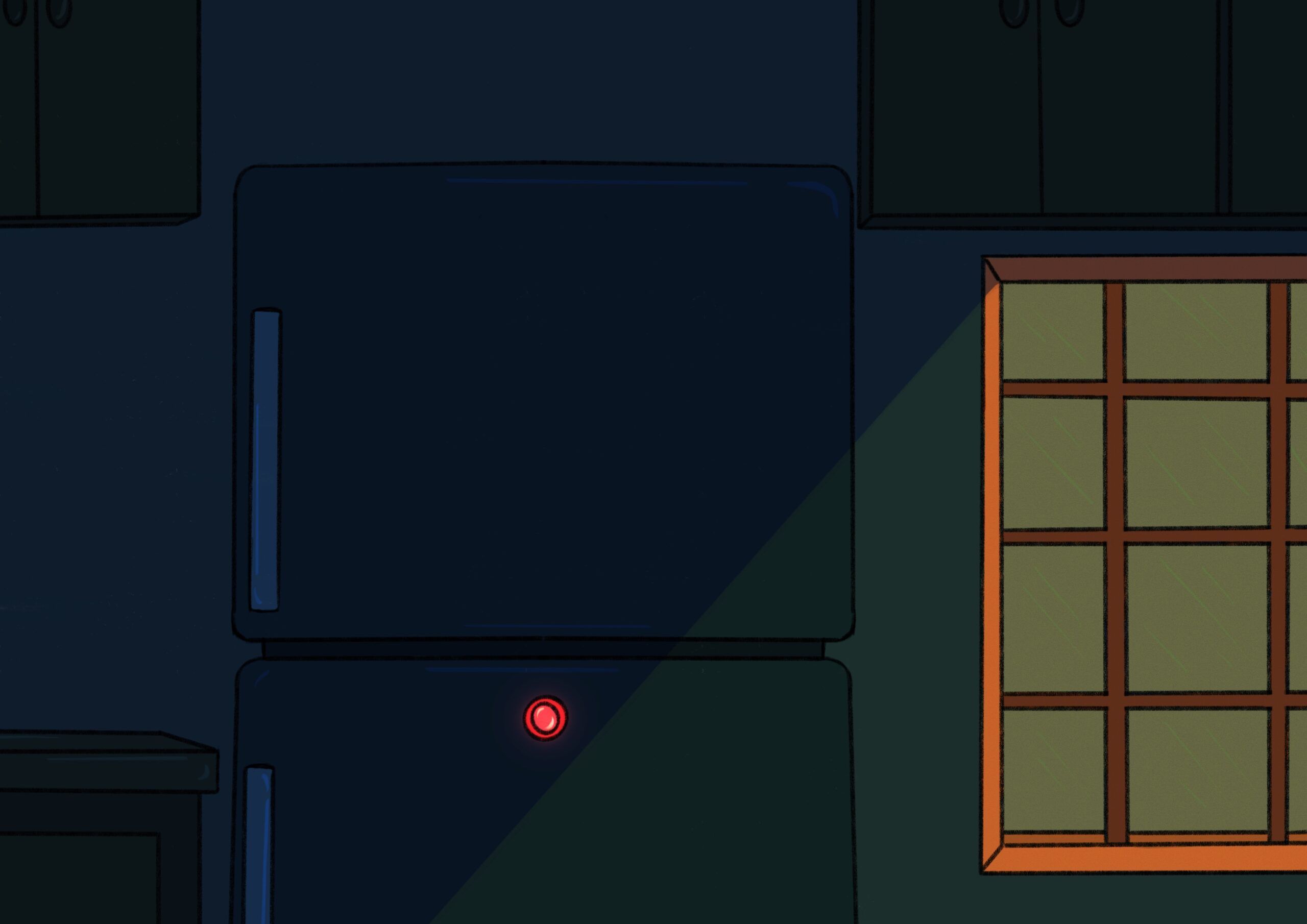
It was as if she was a computer and the memories were the files. They were all there, a part of her, but not her. They could have been placed there today or they could have been there all along. Today could be the only day, this moment the only moment, the existence of the files an attempt to trick her into believing in the illusion of continuity and corporeality.
Furniture – the mundane and quotidian aspects of the home – had the potential to ease this disjointed, compartmentalization of her existence and had perhaps subconsciously steered her to interior design, despite her earlier literary ambitions. Her parents no longer lived in the house where she grew up, though they still had much of the same furniture. While she wouldn’t emulate her parents’ aesthetic, she didn’t begrudge their fidelity to it despite trends and technology moving on. Twenty years later, she felt she could still accurately draw the home’s floor plan, including furniture placement, due mainly to the house being a frequent setting in the landscape of her dreams.
She remembers her own bedroom, of course, and the distinctly damp, earthy smell of certain corners of the basement playroom. Some of her most vivid memories take place in the living room, even ones her mother swears never happened (the Christmas tree was never in there, her mother insists, but she remembers it there at least once, wedged in the corner between the fireplace and the back windows). If her own aesthetic is as Aida suggests – typical millennial mid-century modern junk, then her parents fully embraced the equivalent of late 80s-early 90s trendy economical décor.
She remembers an afternoon in front of the TV when she was about twelve, sprawled across the textured ecru sofa, seashell-shaped throw pillows tossed to the side, while her fourteen-year-old brother stretched out on the mushroom brown carpeting. It was after school and they were eating tater tots they baked in the toaster oven while their parents were still at work. The same ads would run each time The Simpsons went to commercial.
In one ad, short clips showed a blandly pretty blonde woman engaged in a series of what she thought were dubiously unlikely adult activities: riding a horse, playfully washing a car, dancing in high heels. “I’m a busy woman and I need protection that I can depend on!” the woman and her brother say together. The next clip shows the woman in a fitness class dressed in a pale lavender leotard and white leggings. She lays on her back, knees bent, hips frozen in a skyward thrust when the camera cuts to her alarmed face.
She glances at her brother just in time for him exclaim in a high, mocking female voice, “But in aerobics class, my tampon just quit!” As he says ‘quit,’ he brings his hips down hard on the ketchup bottle waiting under him. Ketchup sprays from between his legs dramatically across the carpet and pools in front of the honey-stained oak entertainment center.
She stares at him for a moment, shocked. Then they’re both laughing so hard they can’t speak. Soda comes out of her nose onto the light-colored cushions of the couch. They get some rags and try to clean the ketchup out of the carpeting but for the next six years, there’s a faint but defiant brownish stain that streaks across the carpet and ends in a spot in front of the TV. There’s a light brown spot on the couch too, which over time is joined by a plethora of other small but persistent stains, proof of her family’s existence over time. When her parents get home that day, her brother blames the stain on the dog. They are told to eat in the kitchen from now on.
***
She’s growing uncomfortable. She is not, in fact, in her living room where Aida might be able to see her stereotypically trite, millennial mid-century modern decorating. She’s at her desk and behind her happens to be a bookshelf filled with books – spines turned out the correct way – interspersed with brightly colored, empty ceramic vases. How would Aida know what her living room looks like? Or is she so easy to read? She can only move on to the next question. She brushes a strand of hair from her face and tries to smile.
“How did you meet Jason Weiland?”
Aida smiles back and brushes her own hair behind her ear.
“We actually met in an online forum for art and design that he’d organized. He told me
about the new Palo Alto complex and felt that it really had a lot of potential. He had
ideas about how he wanted the space to work for him but wasn’t sure how to realize his
vision. Based on some information he gave me, I had many ideas for him and then when
I saw the space, I knew exactly what he needed.”
“Wow, sounds like a really rewarding collaboration for both of you.”
Aida smiles again and her tone is once again chipper and upbeat, without a hint of her recent harshness. It’s almost as if she’s talking to two different people. There’s no trace of discomfort to disrupt the serene composure of Aida’s symmetrical face.
“Yes! It really was. It was my collaboration with Jason that allowed me to reach my full
potential as an artist. We learned so much from each other. I designed his space, but
Jason taught me where to look for inspiration. In his own work, Jason looks for
anomalies – instances where something almost seems right but isn’t. I do this now too.
That’s where my creativity lies – in correcting spaces that aren’t serving the people that
exist within them.”
She glances at the time and sees the hour allotted for this interview is up. Aida shows no signs of concern and waits expectantly for the next question.
“I think that’s about all we have time for – I don’t want to take up anymore of your day,
I’m sure you’re busy!”
“I have plenty of time to talk if you have any other questions for me.”
“No,” she says, “I think I’ve got everything. Thank you so much for speaking with me,
and I hope we can get some photos of the Weiland project to include with the piece?”
“Yes, I think that’s possible, but you’ll have to go through Jason.”
“Of course. So nice meeting you.”
“And you as well. I think it’s going to be a great article. I look forward to reading it.”
Aida is still smiling expectantly as she closes the browser window. Moments later, however, Frank messages to ask her to join another meeting. Though she’s never had a source complain about her, she has a nagging feeling this is about Aida.
She clicks on the link to the meeting. Frank and another woman are already online. Her first thought is that the woman is from HR, but Frank greets her enthusiastically. As she gazes at the slightly grainy image of a fashionably-bespectacled Frank, sitting in his Eames office chair in suboptimal light, she can also confirm that indeed Aida’s video quality was superior.
Frank introduces the woman. She’s Sydney Morris, Jason Weiland’s executive assistant. Sydney greets her by name.
“So, what did you think of Aida?” she asks.
“She was great. It was a good interview, but did she take issue with some part of it?”
Sydney laughs.
“No, not at all. Nothing to worry about there, you aren’t going to offend Aida!”
She frowns and looks at Frank’s little window, trying to read his face, to telepathically convey to him her confusion. He has no idea because pretend eye telepathy doesn’t tend to work unless you’re in the same room with the person and they look at you. He’s likely only looking at himself, but if he is looking at her, he’s not receiving her message.
“I was thinking it would be great to get some pictures of the work she did for Jason,” is
the response she finally settles on.
“Oh, yes, of course you can. We’ll provide those to Frank. What I’m really looking for
are your impressions of her. Did you believe her?”
“Believe her?”
“Yes, would you have her help you with your own design project? Did she make you feel
comfortable? Sorry – I’ll let you answer some of these, we’re just so curious what kind of
an impression she made?”
“Um, I’m not sure. She did seem to know details about my own home but I don’t know
that we would have agreed on a design. Sorry – why do you want my impressions? I’m a
writer, not a design expert myself.”
“Yes, of course. Aida isn’t a person with design opinions per se, at least not in the way
that we’re used to. She’s an agent. Are you familiar with LLMs? When given input, she
can design bespoke home and public spaces that have real psychological impacts for
people. Jason was involved in her development and the spaces she designs integrate with
all kinds of other smart tools. We can create clean, beautiful environments where a
consumer doesn’t even realize they are the recipient of very personally targeted
marketing and efficiency optimizing human behaviour nudges.”
It had been in the back of her mind, but she’d pushed it aside because she’d been told to interview a designer and so, of course, she assumed that the designer was a human. She’d seen the woman and spoken with her. Was she supposed to ask Aida if she was human? Aida had referenced her “dead body!” Ask Aida if she’d been judging their home through the baby monitor? Things would have gotten awkward if the answer was an artificially blithe ‘yes!’ She’s not sure if she should be outraged or impressed by the fact the technology was good enough to (almost) fool her.
What she actually feels is embarrassment. Embarrassed that she talked to an AI agent for an hour. Embarrassed that it didn’t think she had good taste and almost worse, that she cares. But it makes sense now. Weiland’s company designed processors used in many appliances and recently purchased an AI company. She and David (and most people they knew) had quite a few products that likely used Weiland’s processors: a virtual home assistant; appliances; a baby monitor. She wonders whether AI encroachment is better with a human face? She says none of this though (because it’s embarrassing). She knows Sidney wants her to say she didn’t know Aida wasn’t human, but she refuses to do this.
“So, she’ll recommend different technologies that integrate with a home’s interior
design?”
Sidney, in response, doesn’t smile and doesn’t try to make her feel comfortable the way Aida did. Sidney’s face is composed and subtly annoyed.
“Yes, that’s part of Aida, but her services are so much more than appliance
recommendations. That’s why Jason feels it’s really important that people view Aida as a
human design expert.”
She doesn’t want to argue with Sidney.
“When I was speaking with it, I felt like there was something a little off. Most of its
answers seemed rehearsed and then at one point it criticized my own design choices.
Maybe it wanted to seem more human? Maybe if I’d known going in that it wasn’t
human, the avatar would have made me feel more at ease? But I don’t think people like
being tricked.”
“That’s great feedback – exactly what we’re looking for. We honestly don’t quite know
what Aida knows, how she conceives of herself, or the extent of what she can do. We
thought someone who had no idea what she was might be able to give us some insight.
But your points are totally fair. Obviously, if you were to ‘hire’ Aida, you’d know what
she was.”
Sidney does finger quotes when she says “hires” and she wonders how much the service will cost. She suddenly craves bodily sensation, specifically pain, so she kicks the leg of her desk with her bare foot. She kicks it hard. Her neurons fire and send pain signals to her brain. And yet, is it proof of a physical body if it hides in one’s brain? She wonders if Aida has memories and physical sensations. Does she question humans’ reality? After all, her own reality is the only reality she knows. Does the distinction even matter?
She thinks about interjecting with some banal platitude about peoples’ ever-blurring relationships with AI, but Sydney continues before she can speak.
“Like I said, Aida doesn’t just influence style and smart appliance purchasing. If Aida
designs your space, it will deeply influence how you live. Aida has the ability to influence
people and consumer decision making, which, by the way, every company in the world is
going to jump at. Even if you don’t want Aida in your own home, she’s inevitable. At
some point, you won’t be able to avoid her because she’s going to design every public
space.”
She can tell that Sidney has lost interest in her perspective and only wants to explain Weiland’s. And, as both Aida and Sidney have said, this is inevitable. She knows she writes on borrowed time. Her own redundancy is painfully obvious.
“I’ll be curious to know what people think once Aida is released.” she says.
“Jason’s going to release her next week, so this week we’re having her do interviews.
We’re hoping there’s quite a bit of press buzz before she’s live. Frank is going to let you
know what the next steps are for this article.”
They say their goodbyes. Frank puts another meeting on her calendar for later that afternoon.
Her watch buzzed a few minutes ago, politely reminding her that she ought to move her body. She stands and stretches, shrugging off Aida, Sidney and Frank the way the Queen of Hearts and her playing card soldiers fall away from Alice as she wakes from her dream and grows back into consciousness. A ping on her phone alerts her to movement in her kitchen and she can hear her husband and son opening cabinet doors and setting plates out. The refrigerator sends her an alert that they’re almost out of milk, apples, bread and cheese: they’re having cheese toasties with apple slices for lunch, one of her son’s favorites. She goes to join them.