
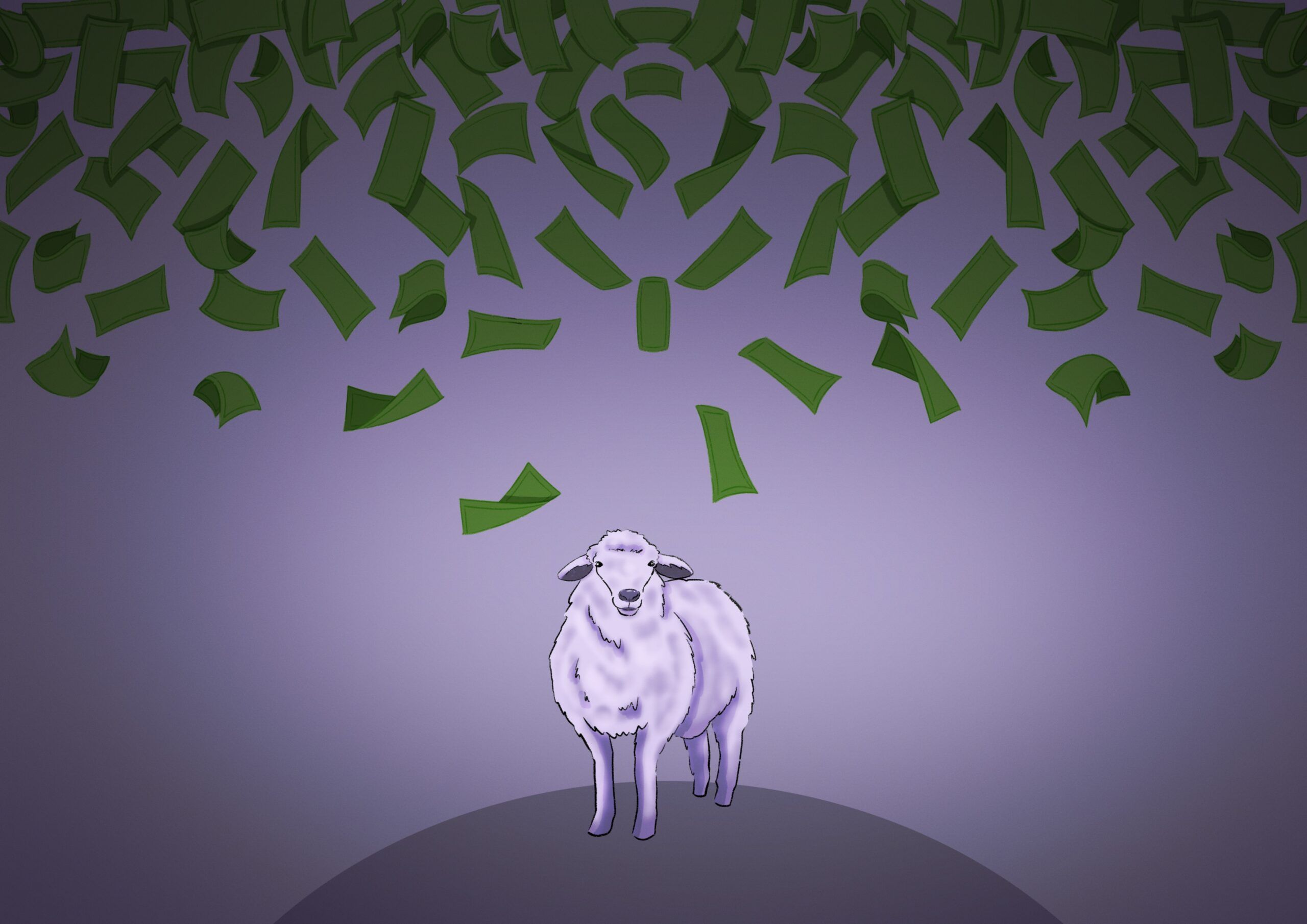
Note: Khan: a traditional Kurdish title referring to landowning elites who held social and economic power in their communities.
Translated from Kurdish
1.
From far away, the sun looked like a blood orange. The new black asphalt soaked up the harsh morning light, thirsty as dry earth. To the right, an alley was filled with the noise of schoolchildren. Dara, dressed neatly, stood out among them. His parents stood behind him, stiff and watchful, eyeing the neighbors and other children with suspicion. This was the first time Dara would be apart from them, even for a few hours. His first day of school felt dull. He pressed his lips together, sulking.
The house servant appeared, laughing repeatedly.
“Congratulations, dear Dara, congratulations on your school. God willing, you’ll grow up to be a doctor, an engineer.”
His laughter stopped when Bahram Khan gave him a sharp look. With his hands behind his back, the servant fell silent. Bahram Khan reached into the chest pocket of his Kurdish clothes and took out his watch, a family heirloom from his great-grandfather. He always checked it with deliberate care. It was 7:20 in the morning. The school was only a five-minute drive away.
Before getting into the car, Bahram Khan turned to the servant.
“Jafar, listen carefully. From today on, everyone calls him Dara Khan. I don’t want to hear anyone say just Dara.”
On a foggy autumn day in 1980, when his son had been born, Bahram Khan had made a vow: the moment the boy turned seven and went to school, everyone would address him as Khan. After seven years, that day had finally come, and Jafar was the first to be informed. He returned to the yard and announced loudly, so the whole household could hear:
“Dara Khan. From now on, only Dara Khan.”
Zeinab, Jafar’s old mother, sat in a corner of the yard like a beggar, in filthy, torn clothes. She struggled to shake the ants crawling over her body. Hearing her son’s words, she raised her hands in prayer.
“God is with the Khan’s house. God is always with the Khan’s house.”
Jafar ignored her and headed toward the garage. She called after him again:
“Tell Bahram Khan I prayed. Tell him I always say God is with the Khan’s house.”
He paid no attention and disappeared inside. Moments later, Touran—his wife and the household maid—emerged from the kitchen. She cast a look of disgust at her mother-in-law and shouted in a harsh, grating voice:
“Jafar! Hey, Jafar, where have you vanished?”
Jafar could not ignore his wife the way he ignored his mother. He came out of the garage almost immediately. Touran, adjusting her scarf, pointed at the wheelbarrow near the older woman.
“Put your mother in that and take her to her room. I don’t want her in front of my eyes.”
The older woman lifted her head and shouted:
“This is the Khan’s house. God is with the Khan’s house.”
Then, under her breath, she cursed her daughter-in-law. Jafar stepped between them, speaking softly so as not to provoke Touran further.
“That’s not right. Mrs. Mohtaram upstairs might hear.”
The sound of a radio came from upstairs. Mrs. Mohtaram, Bahram Khan’s mother, rarely left the upper floor. Her legs were weak and her bones thin. Touran was always moving between floors, bringing her breakfast—bread, milk, fig jam—bathing her, and washing her clothes. Whenever Touran met her mother-in-law’s eyes, she spat quietly on the ground and whispered prayers for her death. The older woman whispered even darker curses back. After Bahram Khan’s last warning, neither of them, especially Touran, dared to argue openly. He had threatened to throw them both out if they fought again. Since then, their conflict stayed quiet and bitter, hidden beneath the surface.
Near noon, the radio upstairs fell silent. Mrs. Mohtaram stood in the autumn sunlight, holding two red scarves, and every few minutes she called out loudly:
“Any moment now, Dara Khan will be back from school. Jafar, bring the sheep. Get it ready.”
Each time, Jafar’s mother echoed from below: “God is with the Khan’s house.”
Jafar, his face blackened from cleaning the garage since dawn, appeared exhausted.
“Yes, Mrs. Mohtaram. The sheep is in the garage. My knife is sharp—ready.”
He brought the sheep into the yard. Everything was ready. Bahram Khan and his wife had spent the morning waiting at a relative’s house across from the school. At every recess, the boy’s mother had brought him snacks.
At one o’clock sharp, the sound of Bahram Khan’s car echoed through the alley. Dara—now Dara Khan—jumped out ahead of his parents and ran to the door, pounding it with his small fists. Jafar opened, knife in hand. Bahram Khan stepped out, and his wife leaned from the car window.
“Jafar, why isn’t the sheep outside? Didn’t I tell you it should be sacrificed in the street, right in front of the house?”
Jafar bowed respectfully.
“Mrs. Zoleikha, Bahram Khan said the yard would be enough.”
Bahram Khan cut in.
“Do as she says. Bring it outside.”
Jafar obeyed. The sheep was dragged into the street. Schoolchildren and neighboring women gathered to watch. The knife was pressed against its throat.
“Baa…” the sheep bleated.
“In the name of God…” Jafar said.
Dara stepped closer. Bahram Khan laughed. Mrs. Zoleikha, Dara’s mother, stood watching
the street, hoping more people would gather.
The blade cut. Blood burst out. Drops landed on Dara’s clean white shirt. He smiled, touched the blood with his finger. The children moved closer. The sheep gasped, dying.
Bahram Khan threw banknotes into the air.
“To Dara Khan’s health! Come on, kids, come collect!”
Some of the money fell into the pool of blood. The children rushed forward, hands and faces smeared red, scrambling for the last note beneath the carcass.
Jafar stepped back, still holding the knife, watching Bahram Khan.
“Shall I take the sheep inside?”
“No, wait! Dad, tell him to give me the knife!” Dara said, excited.
With a gesture, Bahram Khan agreed. Dara grabbed the knife and lunged at the carcass. He knelt and stabbed the sheep’s belly again and again. Finally, he drove the blade into its left eye and left it there. Laughing triumphantly, he threw his schoolbag at Jafar and walked into the yard without a glance at anyone.
“Welcome, Dara Khan, welcome…”
Jafar’s mother stammered, leaning against the tree.
Touran watched her from the corner of her eye. Above them, Mrs. Mohtaram turned up the radio—cheerful Kurdish music—and waved her red scarves like flags, smiling softly.
Moments later, Dara’s parents entered the yard.
“God is with the Khan’s house. May the Khan and his family prosper,” the old woman repeated.
Touran rushed forward before she could finish, taking bags from Mrs. Zoleikha’s hands.
“Dara Khan, Khan of Khans—may he rule a thousand years.”
Meanwhile, Jafar dragged the carcass inside and shut the gate. The children were left outside.
“Go on, don’t crowd here. I’ll bring your share later!” he shouted.
The children dispersed, satisfied.
The sun had grown harsher. Across the street stood another alley, its first house marked by a large yellow gate.
The gate swung open. A man emerged, carrying a pregnant woman on his back, frantic. He crossed the street and pounded on Bahram Khan’s gate, lowering her gently to the ground. Jafar appeared, hands still bloody, knife in hand.
“What is it, Kak Mahmoud?”
“Help me, Jafar! Is Bahram Khan home? I need his car—my wife’s giving birth. I’ve got no one!”
Bahram Khan came out and, without hesitation, brought the car around. He was one of the few men in the neighborhood who owned one. The woman groaned as they lifted her inside. Ten minutes later, they reached the hospital.
Bahram Khan stood in the yard, smoking. He never hesitated in moments like this. Still, the past bothered him. Being a Khan used to mean something different. The dignity and authority were gone. After their land was given to the peasants, he lost his sense of purpose. In his mind, everything had changed: peasants could now force a Khan out of his own home and make him a driver. There were stories about walls built from corpses, but Bahram Khan thought these were exaggerated. He believed his father and grandfather were fair men. He could not remember ever hurting anyone. In fact, he felt he was the one who had been wronged.
“Peasants are peasants,” he would say. “They stay that way. There’s always been high and low. That’s how the world works.”
He believed peasants should remain on the margins. What did they need land for? As long as their stomachs were full, that was enough.
Soon, Kak Mahmoud reappeared, smiling broadly.
“Bahram Khan, may God give you a long life. Without you, I would’ve lost both my wife and my child. We’ve been blessed with a healthy baby.”
He bent and kissed Bahram Khan’s hand. Bahram Khan did not pull it away. He slipped some banknotes into Mahmoud’s pocket.
“Congratulations. Here—something sweet from me.”
“I’m your servant, Khan. May your shadow always be over us,” Mahmoud said, kissing his other hand as well.
“Boy or girl?”
“A healthy girl. We named her Ziba.”
Mahmoud crossed the hot asphalt, glanced both ways, and entered his alley. The yellow gate, reddened under the fierce sun, closed behind him.
2
Fifteen Years Later
The alley had been cleaned and decorated. From Bahram Khan’s house all the way to the corner, plastic chairs, artificial and real flowers, and strings of colored lights had been arranged. The band was among the first to arrive, busy setting up their equipment. Guests trickled in, little by little. The singer held a microphone and kept repeating, “One… two… three.”
The neighborhood children gathered the moment they heard the sound of the keyboard and the singer. It was the first time they had seen electronic instruments. Bahram Khan had brought them from another city. By ten in the morning, the crowd was growing thicker. Soon, the line of dancers formed. The singer shouted with everything he had, his eyes fixed on the dancers’ pockets. He moved up and down the street like a circus clown, tearing his throat with every verse. Sweat ran down his face.
The musician tried several times to take over and give him a break with the keyboard, but the singer would not stop—until Bahram Khan stepped forward and placed a few banknotes in his hands. The shouting, the singing, the strain—everything shifted at once into:
“Shabash! Shabash from Bahram Khan, the Khan of Khans, father of the groom—may all the guests be blessed!”
Women sat on one side of the street, men on the other. The air was thick with the scent of perfume, fresh tea, lamb, chicken, beans, and rice. After giving his tip, Bahram Khan stepped straight into the line of dancers, took the dance scarf, and began to move. The singer came alive again like a machine, following him step by step, shouting. Every song ended with Bahram Khan’s name—or Dara’s.
From across the street, Kak Mahmoud arrived with his family. Ziba wore a turquoise dress, a thin white scarf draped over her head and shoulders. Her hair fell softly along her sides. Her makeup was simple. Her dark eyes drew every gaze. Her younger brother, Hirsh, twelve years old, held her hand. Their mother, worn and thin, moved slowly, her loose Kurdish clothes hanging awkwardly on her body.
Before even reaching the wedding, Kak Mahmoud slipped into the line of dancers beside Bahram Khan. No one dared take the scarf from Khan. Suddenly, Hirsh ran toward the singer, holding out a banknote.
“This tip’s from my dad—the one dancing next to Bahram Khan!”
The singer spun around, snatched the note in a flash, and scanned the line until he found Mahmoud.
“Shabash from Kak Mahmoud—for Bahram Khan! Only Bahram Khan! Shabash, shabash!”
At last, Bahram left the line. Jafar was in charge of serving the guests that day, and Mahmoud helped whenever he wasn’t dancing. They had insisted on it—it was the least they could do for Bahram Khan.
Jafar was the busiest person there. He hardly left the yard. Under the apple tree, Mrs. Mohtaram sat in a big chair, with older women sitting on the ground around her. Jafar’s mother sat next to her, holding onto one leg of the chair like a child holding a mother’s hand. She had grown small and fragile, almost like a child herself. She whispered prayers, but spoke louder whenever she mentioned Bahram Khan’s name so everyone could hear.
People joked that she had the lifespan of Noah. Touran, when she lost patience, would curse loudly:
“This old hag won’t die until she buries all of us. All the trouble in this house is because of her.”
For twenty years, Jafar had carried her in a wheelbarrow—or sometimes on his back.
Old rugs were laid out under the apple tree. Every older woman who came to the wedding went straight to that spot. Touran served tea, always making sure her mother-in-law got hers last. Each time she handed her something, she whispered to herself:
“May this be the last thing you ever eat.”
From the balcony, Dara’s mother, dressed in bright silk, threw handfuls of sugar-coated almonds and coins into the yard.
“Be happy, my dear Dara!”
She repeated this every half hour, welcoming guests. Each time, Jafar’s mother shouted at the top of her lungs:
“Blessings on the Khan! God is with the Khan’s house!”
Touran, louder still, drowned her out with celebratory cries.
Dara finally appeared, his father’s car decorated with artificial flowers. The singer abandoned everyone else and aimed every verse at the groom. The musician intensified the rhythm. All eyes turned to Dara. With his thin mustache and slow, proud steps, he approached the dancers.
The singer closed in, his words now entirely Dara—Dara and the title Khan trailing behind his name.
Dara threw a handful of banknotes into the air. The children surged forward. The singer’s eyes burned with envy. Dara reached into his pocket again—this time handing a stack of notes to the singer and even stuffing a couple into his mouth. The singer fell silent. The musician took over.
Dara kept throwing money. The children climbed over one another. Hirsh was crushed beneath them. He vomited, soiling some of the notes. Spit and bile hung from his lips. His wrist was cut deep, blood running down. He barely felt it.
He gathered even the notes mixed with his vomit, stuffed them into a wet black bag, and left. The crumpled, dirty money erased every pain.
He walked away from the wedding, through several alleys, into a mosque. Older men sat in the shade, eating watermelon. Hirsh washed himself by the pool, then left for a nearby shop. Outside, watermelons were stacked high, one cut open for display with a sign:
“Buy watermelon. Slice it first. Taste it. If you like it, buy it.”
Inside, he bought a Coca-Cola, drank it in two gulps, bought a bandage, and wrapped his wrist. He straightened the money, dried it, counted it, and put it in his pockets. Then he headed back.
At noon, the music stopped.
“Dear guests, it’s lunchtime. We’ll be back after,” the singer announced.
The crowd rushed into the house. The yard looked like Judgment Day. Men filled the upper floor, women the lower, children everywhere. All eyes were fixed on the garage door.
Jafar’s mother still sat under the tree, clutching the chair. She had not moved for a long time. Jafar noticed. Quietly, he approached, shook her, and called her name. Nothing. She was stiff like a statue. Fear gripped him.
He ran to Bahram Khan.
Bahram came, checked her pulse, then said calmly:
“Don’t worry. She’s fainted. Carry her to Mahmoud’s house. We’ll deal with it after the wedding. I’ll tell his wife and daughter to look after her.”
“But they’re here at the wedding,” Jafar said.
“Ziba will stay. Hurry. Don’t let anyone notice. If they ask, say she fainted.”
Jafar lifted his mother and left. Touran saw him.
“What happened? What’s wrong with her?”
“Nothing. She just fainted. I’m taking her to rest.”
He crossed the busy street and entered Mahmoud’s house. Ziba was waiting. They laid the older woman on a mattress. Jafar pressed his ear to her chest, then looked at Ziba.
“You listen. See if her heart’s beating.”
Ziba hesitated.
“You? Did you hear anything? You should take her to the hospital.”
Jafar said nothing. Ziba listened.
“I swear I hear nothing. Why don’t you take her now?”
Jafar’s voice trembled.
“I have to go back. Bahram Khan is waiting. The bride will arrive soon.”
Ziba lost control.
“This is your mother! What if she’s dead?”
“No—no. Bahram Khan said she fainted.”
“Is Bahram a doctor?” she snapped.
Jafar listened again, then said quickly:
“It’s beating. It is. Bahram Khan said she fainted. I’ll come back later and take her to a doctor.”
He left.
Ziba remained alone with the older woman, now no more than a small, lifeless body. She splashed water on her face, slapped her gently—nothing. She listened again. Silence. To her, the older woman was already a corpse.
She went to call her father. Mahmoud came, checked, and then covered the body with a blanket.
“We belong to God, and to Him we return. May God have mercy on you, Zeinab.”
The music rose again. The wedding resumed.
Meanwhile, Jafar kept checking his watch, feeling uneasy. He looked again and again at the empty spot under the apple tree. He had made himself believe everything was fine. When he heard no heartbeat, he still said, “It’s beating.” Now, though, the lie felt like it was closing in on him, weighing on his mind over and over.
Then the music swelled louder. The bride and groom arrived. The crowd surged forward, throwing sweets into the air. Children surrounded them like bodyguards, eyes fixed on Bahram Khan’s hands.
He threw half the banknotes into the air. They floated down like snow. The wind carried them behind the couple. The children rushed.
Chaos erupted. Within seconds, it turned into a wrestling ring. Hirsh fought for a note, punched another boy, blood running from his nose. The note was returned. They looked up again.
Bahram Khan threw the rest.
The wind rose stronger. The notes spun wildly, as if pulled by an unseen force, drifting into the street. The children chased them. Hirsh was the fastest.
He dove. The notes were trapped beneath him.
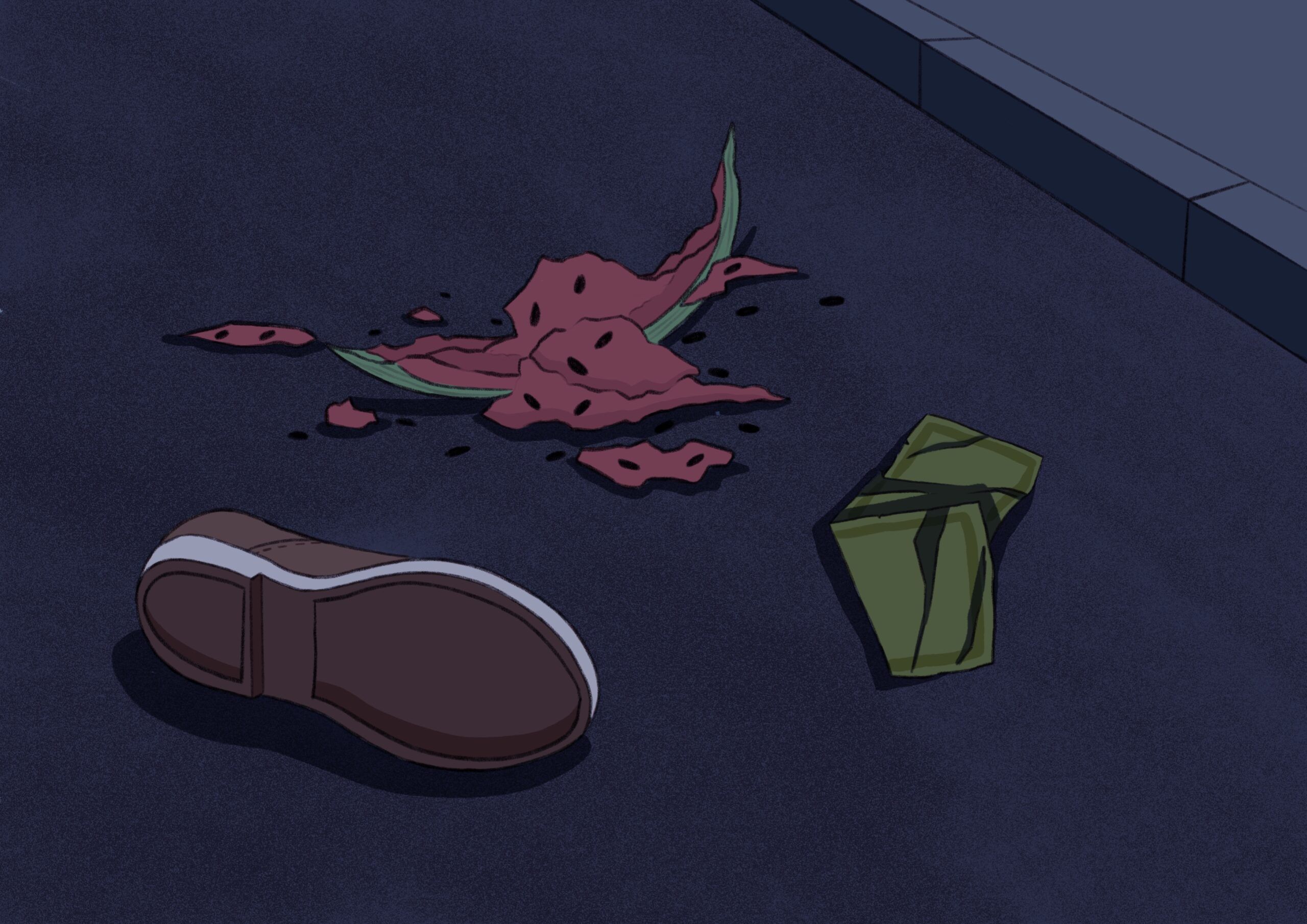
A gray mini-truck loaded with watermelons hit him at nearly seventy kilometers per hour.
The front tire crushed his head into a flattened shape. Blood burst from his mouth and ears. His body jerked like a trapped fish—then went still.
A single banknote slipped from under him. The wind pushed it toward the white pulp of his brain and the spreading blood. On the black asphalt, under the fading sun, it glistened.
The children screamed. The crowd rushed forward. Bahram Khan reached the body first. The music stopped.
The driver stood beside his truck, beating his head with his hands. No one dared approach the corpse.
Only Bahram Khan, stunned, untied his Kurdish sash and covered the boy.
One by one, people threw coins and the smallest banknotes over the blood and the body.
By the time the ambulance arrived, Hirsh’s corpse was buried beneath money.