
Some people on the Jersey Shore might remember our act. Sonny and I worked up and down the island the summer of 2006. We started in a Cape May bar and finished up at the Laugh Shop in SoHo (closed in 2009). We made it to Manhattan! Sonny Landowsky and I met sophomore year at Rutgers playing student union open mikes. We teamed up and began appearing at a few clubs on weekends. We were a guitar duo – folk in the coffee houses, country in blue collar bars, and Irish ballads in the plastic paddy pubs. In between songs we did some comedy, mostly quips and jokes – but not much at first. The summer after graduation we decided to work full time, at least until fall.
So, the Sonny and Sal act was born. I thought of us as the Smothers Brothers, but it jumped into full Dean and Jerry after the first week. I’d come onstage and sit on a stool with my guitar, turtleneck, tweed sportscoat, rimless glasses, and trim goatee. Looking very serious, I would begin “Bridge Over Troubled Waters” and deliberately miss a chord. Then Sonny would reach over and say, “Here you sing, let me play.” He took the guitar and stepped back, and we began again. I would get out two lines, then Sonny switched to strumming the tune to Deliverance, crossing his eyes and making a toothy grin. Then he was off, reminding customers to order their burgers well-done because the horse meat had e-coli and shouting to the bartenders for faster service. “Hey, people came here to drink, not watch us!” He worked it in the act for a bosomy waitress to drop a tray of glasses, so he could quip, “Don’t mind us.” If people were talking and not listening, he’d jump off stage, join them, wolf down their pizza, call for more beer, and toss popcorn at me doing a woefully lame Bobby Darin impression.
Then Sonny came up with our hat act. In an Irish pub I would wear a yarmulke and start a Yiddish song, then Sonny would tap me, “Sal, the bar mitzvah was last night.” He would put a flat cap on my head, and I launched into “Four Green Fields.” Shaking his head, he’d rip it off and replace it with a beret, and I immediately went into a mournful Yves Montand version of “Le Mer.” Rolling his eyes in dismay, he’d smack a cowboy hat over my beret, and I’d go mid-lyric into “Good Time Charlie’s Got the Blues.”
Then he came up with another shtick. I’d come onstage very serious, sit down, and began “Bridge Over Troubled Waters.” Looking totally coked up, Sonny would lurch on stage with a girl done up like a hooker and tap my shoulder. I would dig in my pocket and hand him our room key. They’d stumble out. Then he would lurch back onstage to whisper in my ear, and I’d dig in my pocket and hand him a twenty-dollar bill. I started singing again, then he would tap my shoulder like a woodpecker until I handed him a Trojan.
I know it doesn’t look funny on the page. It was the ultimate “you had to be there” all summer. It was all in Sonny’s timing and delivery. His flexibility, his range was stunning. His voice could twill flutelike faggy then descend into a bellicose gravel like a honking saxophone. He was a great mimic. He did Elvis. A striking Elvis. No lip curling, no hip shaking, no gesturing. No clowning around. Ramrod straight, he’d sing “Heartbreak Hotel” and “In the Ghetto,” catching every nuance and inflection. People sat, eyes closed, nodding in affirmation. Sonny could do a range of voices and did radio spots for a Jersey Shore sub shop with improbable pairs arguing what to order in the drive-thru. Joe Pesci and Obama. Michael Caine and Woody Allen. Christopher Walken and Liam Neeson. Visually, he was amazing. Lon Chaney without makeup. In repose he was male model handsome with the face of a news anchor or a Congressional spokesman. A pitchman for life insurance. But he could grimace and contort his features from teeth-gnashing villain to goofy village idiot, widening his eyes into Home Alone awe or narrowing them into Fu Manchu slits.
And he was a master of improv. He could read a room, catch the vibe, and reshape our act on the fly. One night we were working a divey biker bar. God knows why they booked a “folk act.” Our first set was painfully bad. We had a long break, and the crowd got larger and drunker. Sonny surveyed the club with a smile, nudged me, and told me to sit it out. He had a plan. “Watch this!,” he smirked and disappeared.
The crowd was getting louder and several raucous pool games were in motion, so I hoped the owner would just let us go for half-pay. But Sonny convinced him to let us stay. I couldn’t hear him talking from across the bar, but when I saw the owner crack up, I knew Sonny hit gold. The owner was still shaking his head and laughing when Sonny slipped backstage to change. He parted his hair in the middle, slipped on a tie, borrowed my glasses, grabbed a book from his back pack and minced onstage, doing a prissy Percy Dovetonsils.
Taking center stage, Sonny cleared his throat and in a femmy lisp and announced, “It has been proffered that a skilled orator can entertain an audience reading the telephone book. Well, I don’t have a telephone book, but I do have a po-em by Wilfrid Scawen Blunt.” He began his recitation in earnest:
Dark to me is the earth. Dark to me are the heavens.
Where is she that I loved, the woman with eyes like stars?
Behind him a pair of strippers from next door emerged, slipped off their robes and began twirling tassels from their silicone tits. The crowd went nuts, and Sonny rolled on as if entertaining
a ladies tea:
It was rough, it was juvenile, and often raunchy. We did antics and parodies. Then in July he booked us into a country club for a straight musical act with me as solo. It was a middle-aged upscale crowd. We dressed in black suits. Sonny accompanied me on the piano, meek and wordless, never looking up from his music. Alone onstage with a microphone I labored through “Night and Day,” and “It was Just One of Those Things,” doing my best Harry Connick. I finished with “Our Love is Here to Stay.” The applause was tepid. Polite applause. Courtesy applause. Obligatory smiles and nods while they signaled for more drinks. It was my one and only solo that summer. I was crushed. I started to bow, wanting to get off stage as fast as I could, when Sonny began “Begin the Beguin,” and I had to hurry to catch the second line. Taken aback, the audience seemed annoyed, and when I finished, the applause was a painful patter. I bowed awkwardly. When I looked behind me, Sonny was gone.
Backstage, Sonny was ecstatic. He shook my hand, then high-fived me. “We did it! We did it!,” he cried, like we won the lottery. “Don’t you see? We pulled off a straight act! You were great!”
I was hurt. I felt abandoned, exposed, and humiliated.
Sonny punched my shoulder. “Don’t you see? We did it! We fooled them. Hell, we were awesome! You had it down.”
I still didn’t get it. I wanted to cry or punch him in the mouth.
“Look, don’t you see? We’re this goofy show, a pair of clowns, but tonight we did something different, and we scored! We pulled off a straight act. Look, if you’re in law school and you ace a test on tort reform, that’s OK. That’s what you’re expected to do. But suppose you went cross campus to the medical school and get a C on a neurology exam?” He raised his eyebrow, “Which shows you’re better than everybody else? For a couple of goofball kids, we scored.” He reached over and punched my shoulder. “And pal, all that applause tonight was for you.”
The tepid obligatory applause. What did he mean by that? Was that a gift to me or a slug in the face, a litmus test letting me know just how bankable I was on my own? Was that why he was happy? Was he testing the waters before he soloed? Like a long-married woman flirting at the country club before filing for divorce, maybe he was just making sure.
Still, we had a great time that summer. Our friends were taking the train to Manhattan, interviewing for jobs, waiting tables until grad school started, beginning internships, and getting that face slap of adult job reality. We were having fun, getting paid, signing autographs, and getting laid. A lot.
Women were turned on by Sonny but intimidated. I was more approachable, the go-to guy, the wingman and Veep. Like hitting on Biden to get a date with Obama. When we sat at the bar after a show, girls would edge closer to me, trying to see if they would catch Sonny’s eye. Sonny sent me signals. If he smoothed his hair, it meant brush her off. If he was interested, he’d tap his drink, and I would slide out of the way, so he could close in to score. Girls usually come in pairs, and I knew my place. Sonny always got first choice. The second girl would roll her eyes and hook up with me. If we scored we’d take the girls to our hotel for drinks. We had adjoining rooms, and I always saw my date shoot envious glances at the girl going into Sonny’s room. I was second choice all summer.
In August we got a last-minute replacement lounge gig in Atlantic City. It was a one-night stand, but the casino was impressed and offered Sonny two weeks as a solo. He had an appointment with the manager and insisted I accompany him. Sid Green was put off when I walked in behind Sonny. He glowered at me and motioned me to sit on a sofa near the door.
Sonny did all the talking. “This is a great opportunity for us, Mr. Green, but you have to understand, we’re a team. Sal is the backbone of the act. Me alone on stage? It wouldn’t work. Humor is contrast. He’s cool, he’s calm, he’s collected. I’m the nut. Half the act is his reaction takes. It’s like sweet and sour. We’re doing Dean and Jerry. You need the combination. Alone onstage I can be funny two minutes. Maybe five. But fifteen-twenty minutes nonstop of me being a buffoon? I would wear the audience out. Overkill. You eat a steak then have a scoop of ice cream. Al’s the steak. Everyone likes dessert because it’s just that, dessert, not the entrée. You don’t walk into Enrico’s and order a quart of French vanilla.
“Look, every entertainer produces love and hate. People love you. People can’t stand you, right? So with us it’s a team. Half the audience wants to hear Sal sing and can’t stand my shenanigans, but they will tolerate my interruptions waiting for a song. The other half think Sal’s a stiff but will sit through his song waiting for me to take over. We read the room. One night it’s drunks and college kids on spring break, so it’s seventy percent me cutting up. An older crowd, lots of middle aged couples? I back off and do low key bits between Sal’s songs. Frosting on the cake. I get all the laughs, but without Sal, it’s one hand clapping. In fact, we’ll take your offer, but we gotta split it sixty/forty. Sal gets the sixty. He’s the act.”
When we got paid, I offered to divide the take evenly. Sonny was offended. “A deal’s a deal, Sal. OK, I said all that to save your job, but a deal’s a deal. You take sixty percent. I’m getting laid on pizza dates. You take ‘em to Sardi’s. But remember, I’m the star. People come to see me. Not you. Without you, I’m just ice cream. And nobody wants a quart of French vanilla for dinner. Trust me, I’m smart enough to know what makes me the star. It’s you. Or,” he said smugly, “somebody like you. So don’t you get an ego, too. You can be replaced. I can’t. I can always find another straight man. But you will never find another me.”
And he kept his word, at last at Caesar’s in AC. It was Sixty-Forty down the line, including the merch, the luncheon dates, the radio commercials, and the publicity appearances in New York and Philly.
In September Sonny got an agent and went solo. Apparently, America was ready for his quart of French vanilla. He showed me the contract. A management company wanted him to tour with a rock band as an opening act. I was hurt, but I knew it was coming. The summer was ending. I had just gotten a job at Price Matheson, and the PR head thought Sonny Lane was a riot. I can’t say the connection got me the job, but it definitely helped. Even Jack Matheson mentioned it during my onboarding.
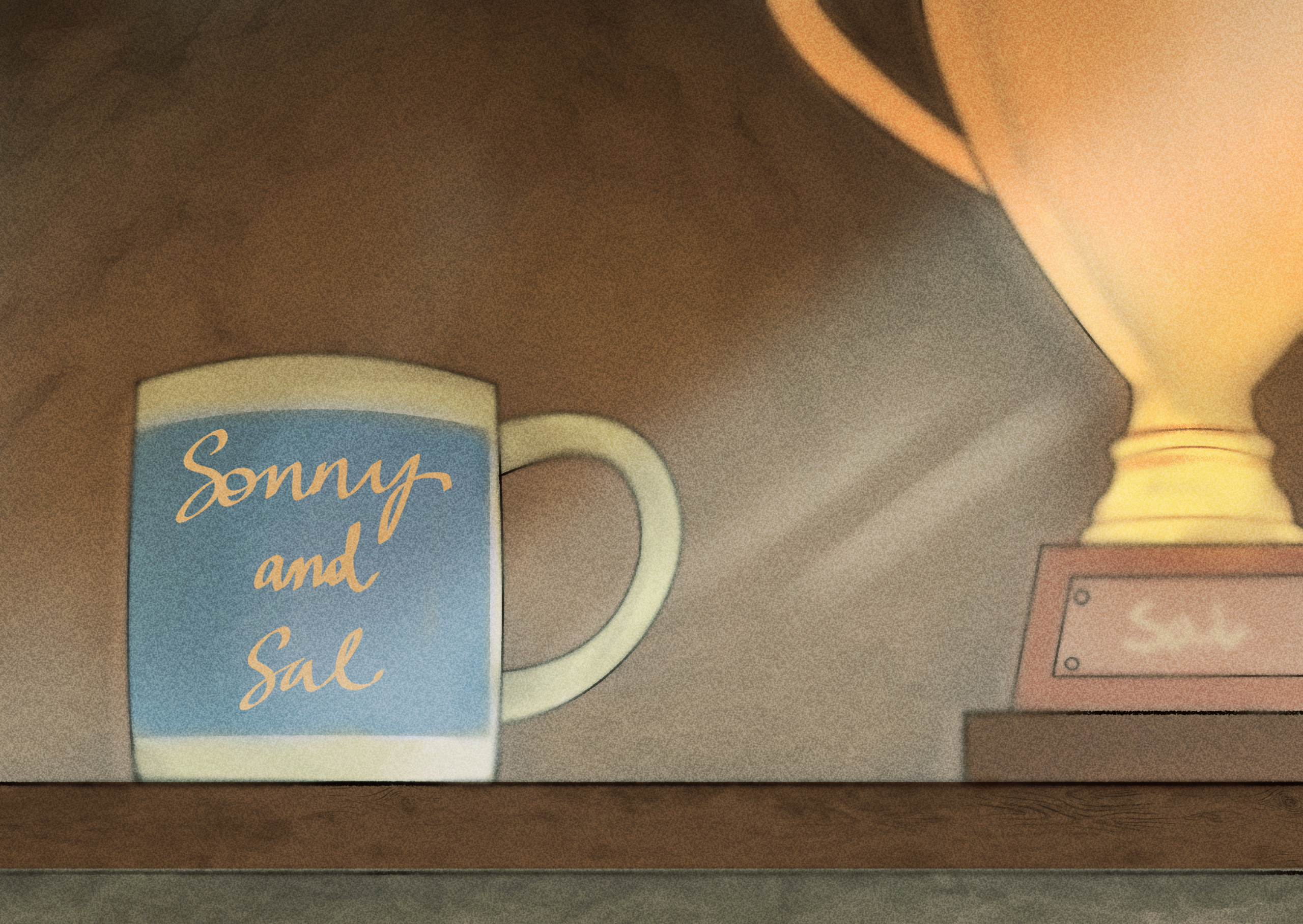
So we parted ways. He was going to be Robin Williams, and I was going to be Don Draper. We celebrated at the top of the Marriott. We joked about our summer on the shore, traded stories, and got drunk. His graduation. My funeral. Without Sonny, I got a few weekend gigs in coffee houses and student unions, playing for tips. Then I packed it in, leaving my Sonny and Sal coffee mugs in a display case along with my varsity trophy.
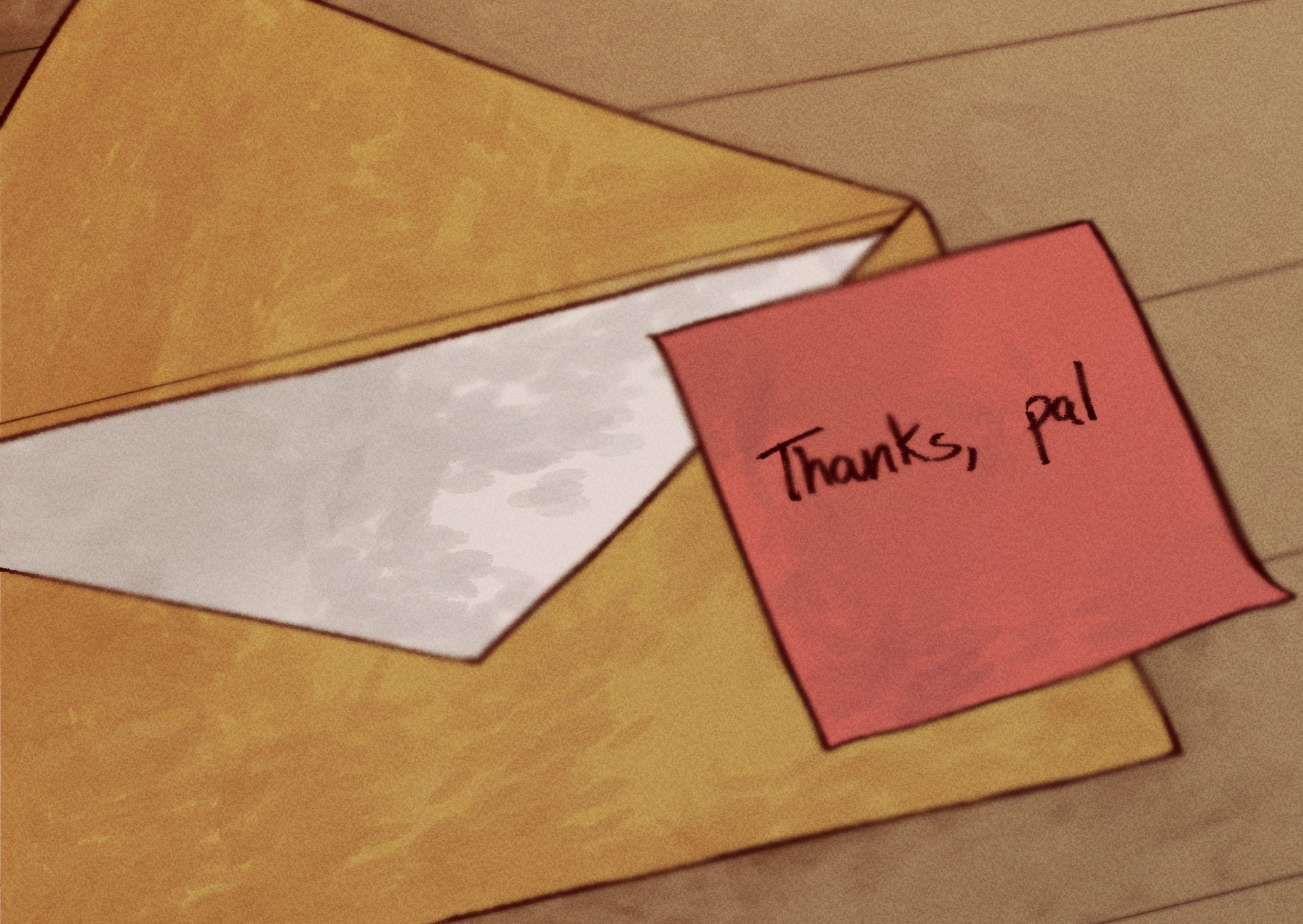
So that was the end of Sonny and Sal. On his first solo tour, Sonny kept in touch and sent me checks with Post-it notes saying “Thanks, pal, you made it all happen” or “Thanks again,” then simply “Thanks.” A few checks followed without notes before they stopped. When he got his first Vegas run, his bio note mentioned our act. His first run. After that I vanished from his profiles, never mentioned in interviews or bios. Well, NFL quarterbacks don’t boast about their high school touchdowns.
Two years ago when Price Matheson let me go, I tried a comeback and put our old pictures and clips on Facebook and YouTube. When I did a TikTok with our Sonny and Sal videos all hell broke loose. I got a cease and desist letter from Sonny’s lawyers in Los Angeles ordering me to remove any “image, likeness, recording, or reference” to Sonny Lane from any “website, publication, bio, profile, resume, memoir, broadcast, online presentation, interview, promotion, or publicity material.”
I signed the letter and returned it with a Post-It note: “Thanks, pal.”